

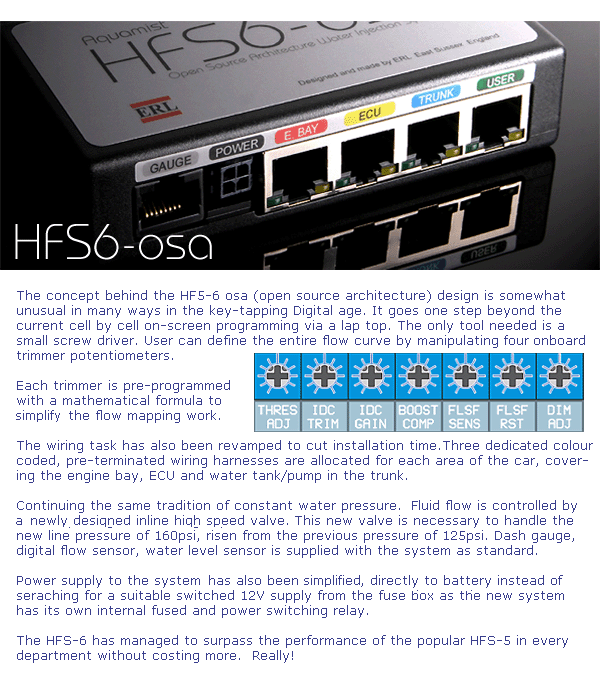
Quick summary of the functions of the HFS-6's main control panel

Jumper links (default):
- System is triggered by Fuel IDC % (second from left)
- Spare jumper link is in parked position
- Water injection is enabled. Unlink for "dry-run" test
Three onboard LEDs
- Green LED: Fuel idc detection. Grows brighter as IDC increases
- Amber LED: The trigger point is reached, water injection commences
- Red LED: The water injection has almost reached its full flow.
Potentiometers to manipulate the flow curve.
(Adjustment is optional - preset at 12 o'clock)
- THRES ADJ: Set triggering point to start injection. Default: 42% IDC
- IDC TRIM: Add or subtract IDC% from the starting point. Default: IDC-in = IDC-out
- IDC gain: Alter ramp rate of the IDC-out relative to the IDC-in Default: 1:1 ratio.
- BOOST COMP: Increase the flow to offset the manifold pressure. Default: 2.5V
- FLSF SENS: Failsafe sensitivity/response to over or under flow spikes. Default: 400mS
- FLSF RST: Failsafe reset time after trigger. Default: 3 seconds
- DIM ADJ: Gauge brightness for night driving: Default: 50%


Evolved Member
Man that is cool. It seems that the HFS-3 is very similar but without a few of the flow tuning options. I like it how you can control flow based on boost level and IDC%. It is also nice that you can trim the gain as well as simply add more IDC%. This would be extremely helpful for tuning more difficult setups that need some tweeking.
I have been playing with different gain setups, flow restrictors, and jet sizes. By adjusting these things I can alter the flow curve of my HFS-3. I could not even imagine all the possibilities of the HFS-6.
I have been playing with different gain setups, flow restrictors, and jet sizes. By adjusting these things I can alter the flow curve of my HFS-3. I could not even imagine all the possibilities of the HFS-6.