


Ralliart EGT's


Ralliart EGT's
Hey everybody. I did a small search and nothing majorly discussed about the subject. Just mentioned hear adn there, with not much detail. Pretty important issue.
To all the guys (and gals) who have an EGT gauge -Exhaust gas temerature- on there Ralliart turbo, NOS, N/A, or supercharged. What does your gauge read when you are daily driving, and when you are beating it.
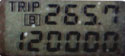
Mine reads about 1200 daily driving with minor abuse shooting to 1250-1300.
At the track last night, the EGT peaked at 1600, but was pretty much at 1500-1550 while at high rpms.
Keep in mind im turbo, thats why its so dang high.
What are your guys reading? Very interested in geardownson's and other turbo'd guys, but everybody really.
To all the guys (and gals) who have an EGT gauge -Exhaust gas temerature- on there Ralliart turbo, NOS, N/A, or supercharged. What does your gauge read when you are daily driving, and when you are beating it.
Mine reads about 1200 daily driving with minor abuse shooting to 1250-1300.
At the track last night, the EGT peaked at 1600, but was pretty much at 1500-1550 while at high rpms.
Keep in mind im turbo, thats why its so dang high.
What are your guys reading? Very interested in geardownson's and other turbo'd guys, but everybody really.
I know you guys are going to say WOW thats so hot. But the thing runs like a champ. No problems or anything. Just a small dip in power around 5800+ due to the heat soak i'd assume. Muy caliente in the motor bay.
But I want to know what the other turbo'd guys are running. See if either my motor is gonna grenade soon, or we just have a very HOT engine.
But I want to know what the other turbo'd guys are running. See if either my motor is gonna grenade soon, or we just have a very HOT engine.

in my opinion you should not pass beyond 900 turbo 1100 is pushing it...
cruising around, ok but gunning it no
if you are running "hot", you are running lean and you can go boom... so my recommendation is to take the pyrometer pawn it, sell it or give it away and INVEST on a wideband... you cant go wrong with it.
cruising around, ok but gunning it no
if you are running "hot", you are running lean and you can go boom... so my recommendation is to take the pyrometer pawn it, sell it or give it away and INVEST on a wideband... you cant go wrong with it.


in my opinion you should not pass beyond 900 turbo 1100 is pushing it...
cruising around, ok but gunning it no
if you are running "hot", you are running lean and you can go boom... so my recommendation is to take the pyrometer pawn it, sell it or give it away and INVEST on a wideband... you cant go wrong with it.
cruising around, ok but gunning it no
if you are running "hot", you are running lean and you can go boom... so my recommendation is to take the pyrometer pawn it, sell it or give it away and INVEST on a wideband... you cant go wrong with it.
I read
600 at idle
1200-1400 cruising at 55
around 1600 if im getting on it at higher speeds.
Whenever i boost i stay stuck around 10.5-11.5 afr
why is yours is different PR?

Which exhaust runner did you guys install your sensor in, and how far from the head?
I picked up an EGT a few weeks ago, haven't got around to installing it yet. I'm curious to see what a NA engine reads for exhaust temps.
I picked up an EGT a few weeks ago, haven't got around to installing it yet. I'm curious to see what a NA engine reads for exhaust temps.
Trending Topics

I generally install pyrometers after the exhaust housing ( at downpipe close to the housing +/- 4 inches away) not on the runner of the header in the turbo applications... at least that is how we do it here 90% of the time (depending on the brand), in n/a applications 4 to 6 inches away from he port or right in the collector, again depending on brand.
the reason or logic behind how we do this like this is to have the general egt of all cylinders not the egt of only 1 cylinder (like int he case of gds's setup) ergo the reading is deemed "cooler" not different "cooler"
this is also why you can have a 11.8 afr but see the egt at 14 to 16, see the reference?
i wrote 9 to 11 in my opinion, on my setups
as a general consensus 12 to 13.5 is "safe" but anything above that is a signal or symptom of deck damage or poor tunning and it will be a thing of when the engine is going to fail.
the reason or logic behind how we do this like this is to have the general egt of all cylinders not the egt of only 1 cylinder (like int he case of gds's setup) ergo the reading is deemed "cooler" not different "cooler"
this is also why you can have a 11.8 afr but see the egt at 14 to 16, see the reference?
i wrote 9 to 11 in my opinion, on my setups
as a general consensus 12 to 13.5 is "safe" but anything above that is a signal or symptom of deck damage or poor tunning and it will be a thing of when the engine is going to fail.
I would tend to think that by the time the exhaust has traveled through the manifold, turbine housing, and into the downpipe, it's significantly cooler than it was a few inches from the port. That would make me think I was safe running 1300*, when everyone else says I'll melt my engine at 1500*. Then my #2 piston would melt at 1300, and I'd be mad at you.

The only reason I would consider mounting the sensor after a turbo would be that if the tip of the sensor melts off, it would have to pass through your $turbo$ before making its way harmlessly through the rest of the exhaust system.
Most of the EGT installs I've seen or done up here have had the sensor about 4" from the port, on whichever was generally accepted (or proven) to be the hottest-running cylinder of a given engine. Cylinder #2 on my '91 GSX, for instance. I guess my question was really which cylinder on a 4G69 runs hottest?
I would tend to think that by the time the exhaust has traveled through the manifold, turbine housing, and into the downpipe, it's significantly cooler than it was a few inches from the port. That would make me think I was safe running 1300*, when everyone else says I'll melt my engine at 1500*. Then my #2 piston would melt at 1300, and I'd be mad at you.
The only reason I would consider mounting the sensor after a turbo would be that if the tip of the sensor melts off, it would have to pass through your $turbo$ before making its way harmlessly through the rest of the exhaust system.
I would tend to think that by the time the exhaust has traveled through the manifold, turbine housing, and into the downpipe, it's significantly cooler than it was a few inches from the port. That would make me think I was safe running 1300*, when everyone else says I'll melt my engine at 1500*. Then my #2 piston would melt at 1300, and I'd be mad at you.
The only reason I would consider mounting the sensor after a turbo would be that if the tip of the sensor melts off, it would have to pass through your $turbo$ before making its way harmlessly through the rest of the exhaust system.
i "could" gamble -i might be wrong- but i have opened engines where the port on #3 is the whiter leaner (ergo hotter) port
but did you understood the way we sometimes do this here? i didnt wrote it for posterity and i dont want to cause unwanted panic over this
also if you look at the registry (at my car) you will see he egt gage on the #4; 5 inches away.... i had a greaddy gage if it were an autometer i would have put it in the colector.
Last edited by PR_Mivec; Sep 10, 2007 at 04:13 PM.
