


How to: Tune your own MIVEC maps


How to: Tune your own MIVEC maps
Since the introduction of the evo IX mostly everybody had little to no idea what changing the mivec mapping in the ecu does. Many people have stated that the JDM mivec map is better than the USDM but with little or no data to back it up. Local reports have been that it increases low end torque about 15 foot lbs. I’ve never seen a before and after dyno with no other changes but the mivec map changes. I’ve also done little to no fixed cam timing tuning on other cars however I have talked to many people who have. The evo IX varies only the intake cam. From talking to people in industry and talking via people who have NABR accounts (because I am not a member) there are a few things that you should understand.
Nobody can really prove what the degrees in the mivec maps mean at this point. Nobody can as far as I’ve been able to decipher can prove that it is in crank degrees, cam degrees, or some arbitrary hex to decimal value. When doing fixed cam timing on a normal motor little to no advance at higher rpm’s yields more high rpm torque. More mivec advance at low rpm’s yields more low rpm torque and can spool the turbo significantly quicker providing even more low rpm’ torque. How much, where, and when still confuses people. Thank god we only got a single cam mivec instead of a dual cam else people would be really confused!
So because I’m ignorant to all this I decided to do my best to get some data. You can talk about it all you want but I like to learn by testing. The test vehicle is a 2006 evo IX 5 speed model. Car has a magnaflow 3” catback, MBC at 20psi, and a K&N drop in. AFR’s are flat 11’s at all times in boost. The car was brought up to temperature with an hour of highway driving. Then a flat level road was found. After every pull the car received a cool off period, and then a short driving period to get air over the motor, a check of the coolant temps, and then another pull was started at the exact same point in the same direction of the perfectly level road. When using the datalog lab dyno it is imperative to minimize the variables for good data collection or you are just like a bad dyno operator getting bad data. I was pleased with the data so I’ll post it below. Let’s see if we can confirm or deny suspicions on the mivec tuning.
After all the testing I did a pull of the JDM mivec map. All my pulls were plotted against this in DLL. The JDM mivec map is always the dark hp and tq lines while the mivec test pulls are always my benchmark lines. I did this because the JDM maps are a slight improvement over stock USDM maps and many people are running the JDM map therefore it is my baseline.
The first pull is the mivec put to all 0’s in every cell vs JDM mivec:
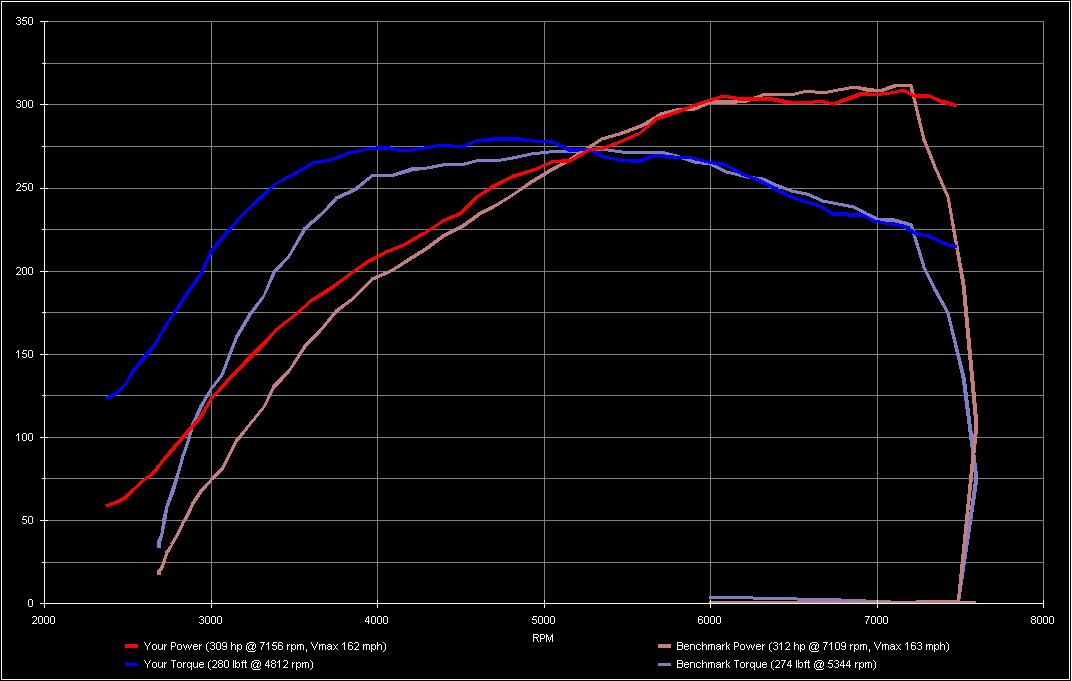
The second pull is the mivec put to all 10’s in every cell vs JDM mivec:
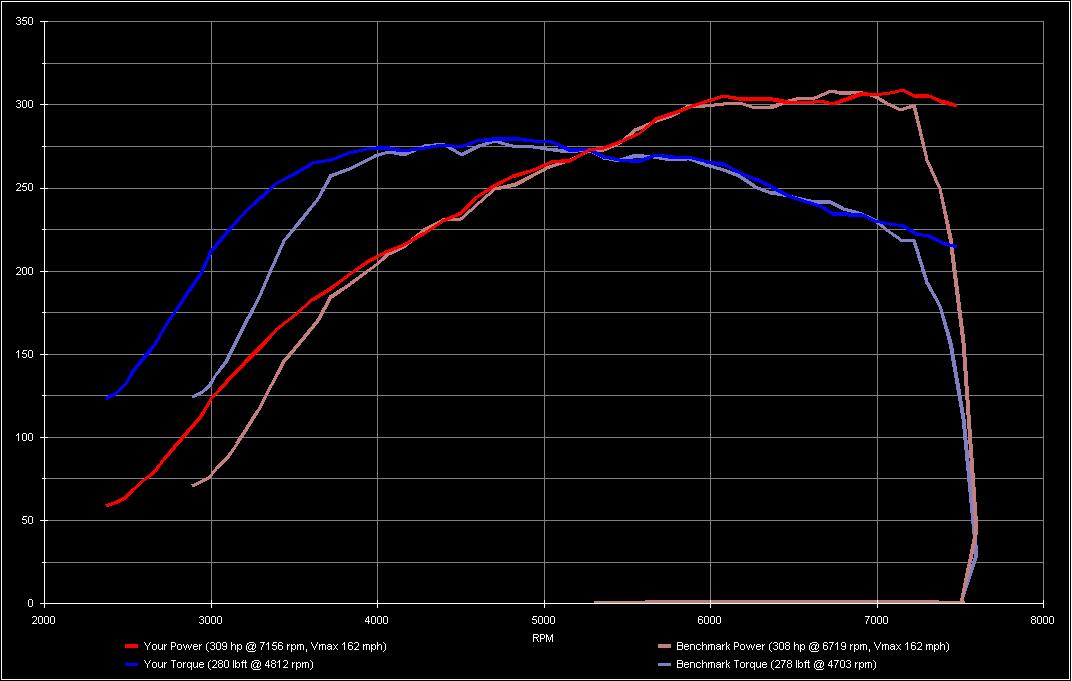
The third pull is the mivec put to all 20’s in every cell vs JDM mivec:
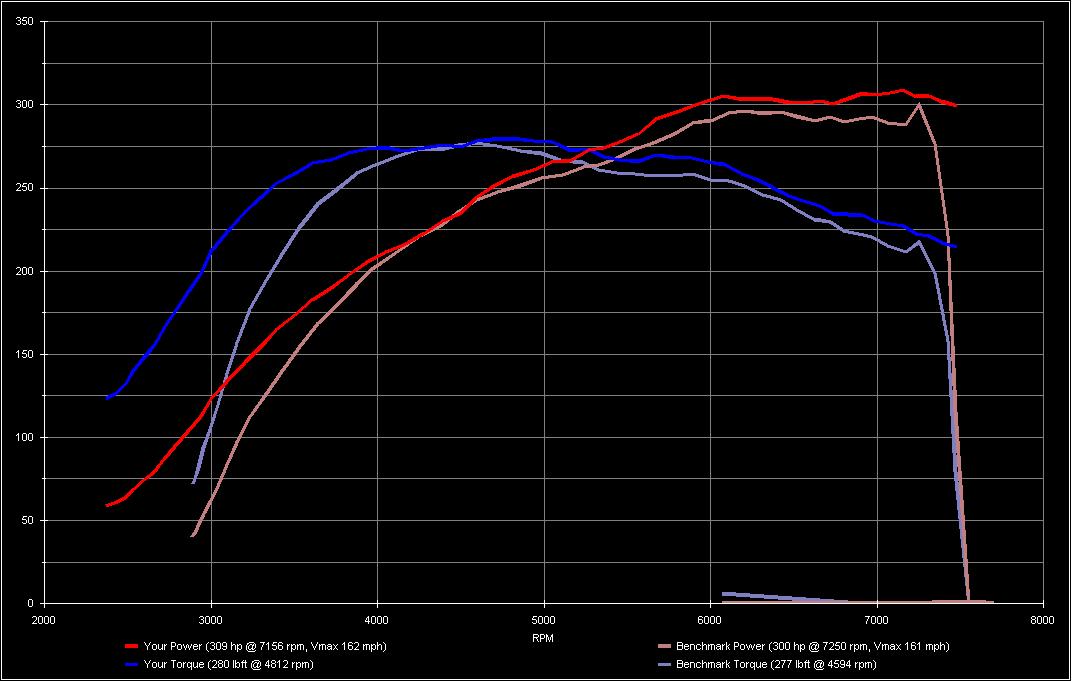
The fourth pull is the mivec put to all 30’s in every cell vs JDM mivec. Of note the car did not idle very well and wanted to stall a few times:
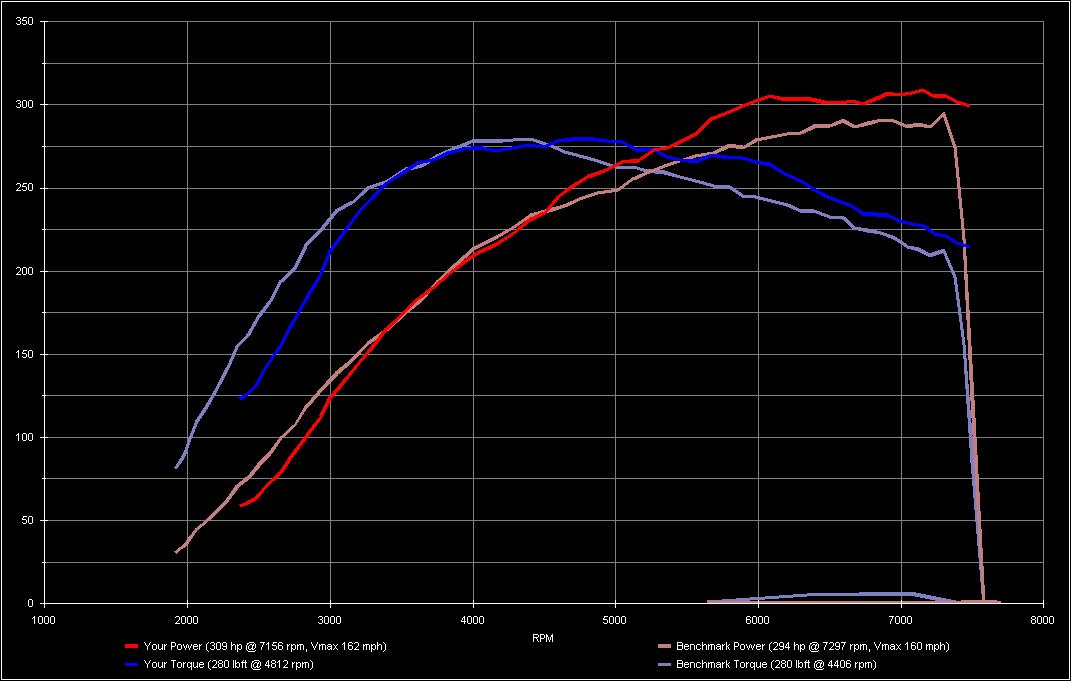
What someone would do is now take all this data and pick the best RPM vs LOAD bands and put it in their maps to “build” their own mivec maps. On this car we can make a significant amount of low rpm power with more mivec advance. We can also make more high rpm power with no mivec advance. The midrange will see little to no benefit from mivec tuning.
Anybody can tune this to dial in their mivec better. Just collect the data from different mivec values like I did and do some pulls and chart them against your current mivec map.
Nobody can really prove what the degrees in the mivec maps mean at this point. Nobody can as far as I’ve been able to decipher can prove that it is in crank degrees, cam degrees, or some arbitrary hex to decimal value. When doing fixed cam timing on a normal motor little to no advance at higher rpm’s yields more high rpm torque. More mivec advance at low rpm’s yields more low rpm torque and can spool the turbo significantly quicker providing even more low rpm’ torque. How much, where, and when still confuses people. Thank god we only got a single cam mivec instead of a dual cam else people would be really confused!
So because I’m ignorant to all this I decided to do my best to get some data. You can talk about it all you want but I like to learn by testing. The test vehicle is a 2006 evo IX 5 speed model. Car has a magnaflow 3” catback, MBC at 20psi, and a K&N drop in. AFR’s are flat 11’s at all times in boost. The car was brought up to temperature with an hour of highway driving. Then a flat level road was found. After every pull the car received a cool off period, and then a short driving period to get air over the motor, a check of the coolant temps, and then another pull was started at the exact same point in the same direction of the perfectly level road. When using the datalog lab dyno it is imperative to minimize the variables for good data collection or you are just like a bad dyno operator getting bad data. I was pleased with the data so I’ll post it below. Let’s see if we can confirm or deny suspicions on the mivec tuning.
After all the testing I did a pull of the JDM mivec map. All my pulls were plotted against this in DLL. The JDM mivec map is always the dark hp and tq lines while the mivec test pulls are always my benchmark lines. I did this because the JDM maps are a slight improvement over stock USDM maps and many people are running the JDM map therefore it is my baseline.
The first pull is the mivec put to all 0’s in every cell vs JDM mivec:
The second pull is the mivec put to all 10’s in every cell vs JDM mivec:
The third pull is the mivec put to all 20’s in every cell vs JDM mivec:
The fourth pull is the mivec put to all 30’s in every cell vs JDM mivec. Of note the car did not idle very well and wanted to stall a few times:
What someone would do is now take all this data and pick the best RPM vs LOAD bands and put it in their maps to “build” their own mivec maps. On this car we can make a significant amount of low rpm power with more mivec advance. We can also make more high rpm power with no mivec advance. The midrange will see little to no benefit from mivec tuning.
Anybody can tune this to dial in their mivec better. Just collect the data from different mivec values like I did and do some pulls and chart them against your current mivec map.


The problem is your benchmark value seems to not be the same in all of the tests..
I'm assuming the benchmark (pink/light blue) is the JDM Mivec..
But I can see where the value is..
Nevermind, it seems that your benchmark isn't the JDM map..
I'm assuming the benchmark (pink/light blue) is the JDM Mivec..
But I can see where the value is..
Nevermind, it seems that your benchmark isn't the JDM map..

THe best method would be first, give us the Load vs RPM chart, from there, we look at the graph and find the peak power produced by the 0/10/20/30 change and use that RPM as our starting point. We find the load at that RPM, and edit that cell to the type of pull that was done (ie 0/10/20/30) so say if 30s had peak tq. at 2500, we would find the coresponding load for 2500 and input 30 in that mivec map and we would do this for the 0/10/20/30, inputting the highest readings from each pull, when use the existing data in the mivec and smooth out the table. From there, it's just a matter of fine tuning open loop mid throttle
Last edited by ballistic speed; Dec 17, 2006 at 09:18 AM.
He's using the dark blue and dark pink as the bench mark map, wether it's the JDM map or not is the question.
What I'm gathering is the JDM Mivec map is pretty good at below 4500rpm.. with MIVEC essentially disabled (0's) after 4500??
Your right though, without the load relationship its difficult to make sense out of..
DLL is not the greatest for expressing multiple "Dyno" pulls.. And it can't do anything with multiple pulls with relation to load..
Your right though, without the load relationship its difficult to make sense out of..
DLL is not the greatest for expressing multiple "Dyno" pulls.. And it can't do anything with multiple pulls with relation to load..
I re-read what I had wrote, and what he wrote, and realized he says it was the dark blue dark red, was a JDM Mivec.. and the benchmarks were his custom settings..
Although the data is incomplete, I can see the relationship of how MIVEC helps at lower RPM, and it makes sense to me since we typically make tuning compromises with Cam gear settings for power band...
Trending Topics
I plotted the JDM map vs all the mivec changes. From here I will have to pick out the RPM bands at which each 0/10/20/30 value is the same or better than the mivec map that I am building upon. At this point yes I will have to plug in the numbers at the load values I'm hitting. That is not what is important because we should all know how to do this. The point is that anybody with a little time can perfect their mivec maps for WOT operation.
My other point is that you have to verify that yes mivec changes fall in line with real world cam gear changes. So you can read up on what advancing an intake cam does on a DOHC motor and it will apply to the mivec changes you make with your maps.
My other point is that you have to verify that yes mivec changes fall in line with real world cam gear changes. So you can read up on what advancing an intake cam does on a DOHC motor and it will apply to the mivec changes you make with your maps.
THe best method would be first, give us the Load vs RPM chart, from there, we look at the graph and find the peak power produced by the 0/10/20/30 change and use that RPM as our starting point. We find the load at that RPM, and edit that cell to the type of pull that was done (ie 0/10/20/30) so say if 30s had peak tq. at 2500, we would find the coresponding load for 2500 and input 30 in that mivec map and we would do this for the 0/10/20/30, inputting the highest readings from each pull, when use the existing data in the mivec and smooth out the table. From there, it's just a matter of fine tuning open loop mid throttle

I plotted the JDM map vs all the mivec changes. From here I will have to pick out the RPM bands at which each 0/10/20/30 value is the same or better than the mivec map that I am building upon. At this point yes I will have to plug in the numbers at the load values I'm hitting. That is not what is important because we should all know how to do this. The point is that anybody with a little time can perfect their mivec maps for WOT operation.
My other point is that you have to verify that yes mivec changes fall in line with real world cam gear changes. So you can read up on what advancing an intake cam does on a DOHC motor and it will apply to the mivec changes you make with your maps.
My other point is that you have to verify that yes mivec changes fall in line with real world cam gear changes. So you can read up on what advancing an intake cam does on a DOHC motor and it will apply to the mivec changes you make with your maps.

Dan, can't wait to get the car back out and start getting into some serious boost!!
~Zach


Since the introduction of the evo IX mostly everybody had little to no idea what changing the mivec mapping in the ecu does. Many people have stated that the JDM mivec map is better than the USDM but with little or no data to back it up. Local reports have been that it increases low end torque about 15 foot lbs. I’ve never seen a before and after dyno with no other changes but the mivec map changes. I’ve also done little to no fixed cam timing tuning on other cars however I have talked to many people who have.
Please check out my post Subject:
DYNO EVO9 USDM Mivec map VS JDM Mivec map
https://www.evolutionm.net/forums/sh...d.php?t=239848
Cheers


Another data point. I tuned two 9's on the dyno yesterday. Adding any mivec advancement in the 6000, 6500 and 7000 rpm columns lost whp.
I found the same thing months ago on a 9 on the dyno but I wanted to try again, same outcome.
I found the same thing months ago on a 9 on the dyno but I wanted to try again, same outcome.


So now that its too late this season I have already revamped all my MIVEC maps that I thought worked so well. I noticed one very interesting by product, boost taper (more than I had been anyway, instead of 25-23, now its 25-20/21) has reappeared. I am thinking this must be because I was actually hurting VE and just stacking air? What about those with exhaust cams (and/or intake) what amount of advance or retard (comparitive to stock) seems to have best results.