


What is the exact purpose for a fuel rail


From Wikipedia, the free encyclopedia
Fuel rail, injectors and fuel pressure regulator from a four cylinder engine.A fuel rail is essentially a pipe (usually resembling a rail) used to deliver fuel to individual fuel injectors on internal combustion engines. It is designed to have a pocket or seat for each injector as well as an inlet for a fuel supply. Some fuel rails also incorporate an attached fuel pressure regulator. Fuel rails are used on engines with multi-point fuel injection systems, although some multi-point systems use a fuel distributor with individual pipes or tubes to feed each injector.
Retrieved from "http://en.wikipedia.org/wiki/Fuel_rail"
Fuel rail, injectors and fuel pressure regulator from a four cylinder engine.A fuel rail is essentially a pipe (usually resembling a rail) used to deliver fuel to individual fuel injectors on internal combustion engines. It is designed to have a pocket or seat for each injector as well as an inlet for a fuel supply. Some fuel rails also incorporate an attached fuel pressure regulator. Fuel rails are used on engines with multi-point fuel injection systems, although some multi-point systems use a fuel distributor with individual pipes or tubes to feed each injector.
Retrieved from "http://en.wikipedia.org/wiki/Fuel_rail"


Because they're making more than 700 HP. Another reason is because some aftermarket fuel rails are tapped for the addition of a fuel pressure sensor, or a nitrous line. The only other reason is they like the "bling" factor.

it's the exact same reason why you upgrade exhaust from 2.5 inch to 3 inch exhaust, you get better fuel flow with an after market fuel rail better than stock.... the more volume of fuel you can flow before the injectors the less likely you will starve your motor of fuel. most people making alot of power replace their stock fuel lines with an aftermarket fuel line, like for instance a -6 line. those lines use AN fitting and AN fitting flow more than Stock Banjo fittings, which the stock rail uses. after market fuel rails are easier to adapt aftermarket fuel pressure regulators also, like aeromotive, which is very usesful to increase the pressure of fuel flow to the rail..
Bottom line aftermarket fuel rails have a bigger inside diameter than stock fuel rail.. it will flow more volume of fuel than the stock one.
Bottom line aftermarket fuel rails have a bigger inside diameter than stock fuel rail.. it will flow more volume of fuel than the stock one.
Last edited by Top_End_EVO; Feb 6, 2007 at 05:20 AM. Reason: fixed some typo's lol

Trending Topics
it's the exact same reason why you upgrade exhaust from 2.5 inch to 3 inch exhaust, you get better fuel flow with an after market fuel rail better than stock.... the more volume of fuel you can flow before the injectors the less likely you will starve your motor of fuel. most people making alot of power replace their stock fuel lines with an aftermarket fuel line, like for instance a -6 line. those lines use AN fitting and AN fitting flow more than Stock Banjo fittings, which the stock rail uses. after market fuel rails are easier to adapt aftermarket fuel pressure regulators also, like aeromotive, which is very usesful to increase the pressure of fuel flow to the rail..
Bottom line aftermarket fuel rails have a bigger inside diameter than stock fuel rail.. it will flow more volume of fuel than the stock one.
Bottom line aftermarket fuel rails have a bigger inside diameter than stock fuel rail.. it will flow more volume of fuel than the stock one.
Agreed. However, if you're only looking at it from an "I need more fuel to make more horsepower" point of view, you don't need to change the stock Evo fuel rail until you are making over 700HP.

Evolved Member
Joined: Jun 2006
Posts: 822
Likes: 0
From: Jacksonville/Boca Raton
True, but it is just convience. Rather than having a fuel rail with a rubber hose coming off of it that I have spliced a T fitting into and hose clamped together the system to provide fuel to my nitrous system, I could have an aftermarket fuel rail with a simple AN- fitting to tap into. It is just cleaner and better looking, but more flow is always better.
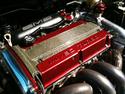

From what I have read fuel rails that incorporate fuel pressure regulators and fuel distributors, help against fuel starvation in some cylinders leading to overly lean conditions. Basically they help ensure that the same amount of fuel gets directed to each cylinder and that sufficient pressure exists to direct the necessary amount. Upgraded rail can also increase the flow compared to what stock fuel rails can handle ...
There were instances were the 4th cylinder in the WRX could go into lean conditions after modding, as less fuel would be directed to that cylinder compared to the rest. Therefore Perrin sold a fuel rail upgrade that protected against that ...
There were instances were the 4th cylinder in the WRX could go into lean conditions after modding, as less fuel would be directed to that cylinder compared to the rest. Therefore Perrin sold a fuel rail upgrade that protected against that ...
but that goes the same for headstuds and fuel pump also. why upgrade it if your not going over a certain amount of horsepower. it's just a supporting mod that gives you peice of mind. If you upgrade injectors why would you not replace the fuel rail also for peice of mind? the bigger volume of fuel sitting before it go through the injector is just added safety from fuel starvation.

Account Disabled
Joined: Mar 2005
Posts: 2,001
Likes: 0
Yeah, it's like saying that you don't need to upgrade your fuel injectors until you reach 100 percent injector duty cycle. Taking things to their maximum limit is just not safe. Waiting for something to fail should not be a deciding factor when it comes to upgrading. The higher that power gets the lesser the safety margin and the shorter lifespan of a part. If you stick with the mentality, "don't fix until it's broke", you will end up spending more money in the long run from catastrophic failures.
If you are going to upgrade your fuel injectors and fuel pump, you might as well get a higher flowing fuel rail for piece of mind. A fuel rail is not that expensive.
If you are going to upgrade your fuel injectors and fuel pump, you might as well get a higher flowing fuel rail for piece of mind. A fuel rail is not that expensive.
True, but it is just convience. Rather than having a fuel rail with a rubber hose coming off of it that I have spliced a T fitting into and hose clamped together the system to provide fuel to my nitrous system, I could have an aftermarket fuel rail with a simple AN- fitting to tap into. It is just cleaner and better looking, but more flow is always better.

....As anyone that actually knows anything about us knows, we pride ourselves on selling you what you need and what works more than just selling crap that isn't needed or won't work as well as something else we know exists. That's how we want treated and that's how we treat our customers.
....Neither of us wanted to cut up our perfectly good EVO's to put in fuel cells. Neither of us wanted to run AN lines, I do not like AN lines. They dry out and crack and are prone to leaking after about 5 years. They are heavy, there is no real nice way to install them perfectly on a car. They are expensive and mostly, they just aren't needed.
....I called the best in the industry and got some flow rates of what the factory fuel lines could handle. Pushing fuel through a 5/16" fuel line you can supply enough fuel for 1,000 flywheel horsepower. This is exactly what I wanted to hear. No street EVO that I am going to want to actually drive is going to make that much power.
....First pull on the dyno the car was LEANER with the new fuel rail. I was puzzled. I checked the vaccum sourse to the regulator, check air temps, coolant temps. All was the same. Made another pull, same leaner AFR's. At this point I am thinking WTF?! I go get my stock EVO8 pressure regulator and bend the outlet back where it is suppose to be, bolt it back onto the new fuel rail and make another pull. This put the AFR exactly where it was with the stock rail. Conclusion is, the stock fuel rail is good enough for up to 740 whp on our dyno, figure about 890 flywheel or Dynojet power.