


Forged Rims


Forged Rims
Ok so forged rims are lighter than cast rims and thanks in small part to ads by Volk, Advan, OZ, BBS, etc. i was under the impression that forged rims were also stronger than cast rims. This also seems to make sense to me. Pressed by 10000 tons per square in of pressure or whatever bbs says in their ads, it must be stronger...
However i read yesterday in my friends honda tuning they were using cast rims on their project car instead of forged rims because they were going to be driving it in pot hole ridden streets and didnt want to bend a rim.
This gives me the impression that either: a) forged rims are not as strong and they will bend before cast rims. b) forged rims are more expensive than cast rims so even if they were just as strong or stronger, they're not indestructable so they would be more expensive to replace. A nice side note, i have read that OZ will replace bent rims for free under warranty. This also makes me think that it is really hard to bend a forged rim otherwise OZ would be losing a lot of money!
This may sound like common sense and it did to me at one time but now i am having doubts so someone please verify for me that forged rims are indeed just as strong or stronger than cast rims so i can feel even better about the Advan RG-II's i just ordered!
However i read yesterday in my friends honda tuning they were using cast rims on their project car instead of forged rims because they were going to be driving it in pot hole ridden streets and didnt want to bend a rim.
This gives me the impression that either: a) forged rims are not as strong and they will bend before cast rims. b) forged rims are more expensive than cast rims so even if they were just as strong or stronger, they're not indestructable so they would be more expensive to replace. A nice side note, i have read that OZ will replace bent rims for free under warranty. This also makes me think that it is really hard to bend a forged rim otherwise OZ would be losing a lot of money!
This may sound like common sense and it did to me at one time but now i am having doubts so someone please verify for me that forged rims are indeed just as strong or stronger than cast rims so i can feel even better about the Advan RG-II's i just ordered!

rgII's are cast...
http://www.mackinindustries.com/md/yokohama/rgii.html
and yes, they're usually stronger than cast rims, but that doesn't mean they're indestructible. the honda was probably getting cast rims because they are generally cheaper to replace than forged. why get forged on a daily driver if you know your streets are potholed all to hell?
http://www.mackinindustries.com/md/yokohama/rgii.html
and yes, they're usually stronger than cast rims, but that doesn't mean they're indestructible. the honda was probably getting cast rims because they are generally cheaper to replace than forged. why get forged on a daily driver if you know your streets are potholed all to hell?


Evolving Member
Joined: Jun 2004
Posts: 361
Likes: 0
From: Memphis, TN
b.
I can only guess that they don't want to replace the expensive forged rims after tapping a pothole. Forged rims ARE expensive, but with anything else, you get what you pay for. It take a lot to bend one. It took an offroad excursion at 90mph to bend two Fuchs forged rims (16x7, 16x9) on my 911. In 17 years with that car, no pothole has done any damage.
Go forged...
I can only guess that they don't want to replace the expensive forged rims after tapping a pothole. Forged rims ARE expensive, but with anything else, you get what you pay for. It take a lot to bend one. It took an offroad excursion at 90mph to bend two Fuchs forged rims (16x7, 16x9) on my 911. In 17 years with that car, no pothole has done any damage.
Go forged...

It depends how you define "stronger"
Forged metals are less ductile than cast metals, and have less bend recovery than cast metals. However, this also depends on the casting process and forging process. A cheap cast wheel can be very brittle, meaning it won't bend, it just cracks. A good cast wheel will bend before it breaks. A Forged wheel will almost always bend before it breaks, unless the impact shoots directly over the ultimate strength threshold. Every material has a strenth point at which a load is recoverable, or unrecoverable. If it is recoverable the metal will deflect, and as soon as the load is removed, it will naturally go back to where it was. If you go beyond that point you get an unrecoverable load, the metal will bend back, but not back to it's starting point. That's how you end up with a bent wheel.
Since forged metals typically have higher load capacities than cast metals, you can do two things with them. You can
A: Make a part the same dimensions as it was when it was cast. This will result in nearly the same weight as the cast part, but higher strength and a more durable part. (connecting rods come to mind)
B: Make a part with thinner load carrying structures. This results in a part with the same strength as a cast part, but since less material was used, the part is lighter.
So a lightweight racing wheel may have the same strength as a cast wheel, meaning it won't be and stronger than a cast wheel, but it will weigh less. Or the wheel will be the same weight as a cast wheel, but will be much stronger.
Make sense?
- Steve
Forged metals are less ductile than cast metals, and have less bend recovery than cast metals. However, this also depends on the casting process and forging process. A cheap cast wheel can be very brittle, meaning it won't bend, it just cracks. A good cast wheel will bend before it breaks. A Forged wheel will almost always bend before it breaks, unless the impact shoots directly over the ultimate strength threshold. Every material has a strenth point at which a load is recoverable, or unrecoverable. If it is recoverable the metal will deflect, and as soon as the load is removed, it will naturally go back to where it was. If you go beyond that point you get an unrecoverable load, the metal will bend back, but not back to it's starting point. That's how you end up with a bent wheel.
Since forged metals typically have higher load capacities than cast metals, you can do two things with them. You can
A: Make a part the same dimensions as it was when it was cast. This will result in nearly the same weight as the cast part, but higher strength and a more durable part. (connecting rods come to mind)
B: Make a part with thinner load carrying structures. This results in a part with the same strength as a cast part, but since less material was used, the part is lighter.
So a lightweight racing wheel may have the same strength as a cast wheel, meaning it won't be and stronger than a cast wheel, but it will weigh less. Or the wheel will be the same weight as a cast wheel, but will be much stronger.
Make sense?
- Steve
wow why did i think the RG-II were forged.. probably because of the price  thanks guys for putting in perspective!
Steve you really do know stuff. thanks for the explanation; i read it, it makes sense. you really know what you're talking about, thanks again.
thanks guys for putting in perspective! Steve you really do know stuff. thanks for the explanation; i read it, it makes sense. you really know what you're talking about, thanks again.
Trending Topics

Newbie
Joined: Aug 2005
Posts: 3
Likes: 0
From: USA
Originally Posted by SuperHatch
It depends how you define "stronger"
Forged metals are less ductile than cast metals, and have less bend recovery than cast metals. However, this also depends on the casting process and forging process. A cheap cast wheel can be very brittle, meaning it won't bend, it just cracks. A good cast wheel will bend before it breaks. A Forged wheel will almost always bend before it breaks, unless the impact shoots directly over the ultimate strength threshold. Every material has a strenth point at which a load is recoverable, or unrecoverable. If it is recoverable the metal will deflect, and as soon as the load is removed, it will naturally go back to where it was. If you go beyond that point you get an unrecoverable load, the metal will bend back, but not back to it's starting point. That's how you end up with a bent wheel.
Since forged metals typically have higher load capacities than cast metals, you can do two things with them. You can
A: Make a part the same dimensions as it was when it was cast. This will result in nearly the same weight as the cast part, but higher strength and a more durable part. (connecting rods come to mind)
B: Make a part with thinner load carrying structures. This results in a part with the same strength as a cast part, but since less material was used, the part is lighter.
So a lightweight racing wheel may have the same strength as a cast wheel, meaning it won't be and stronger than a cast wheel, but it will weigh less. Or the wheel will be the same weight as a cast wheel, but will be much stronger.
Make sense?
- Steve
Forged metals are less ductile than cast metals, and have less bend recovery than cast metals. However, this also depends on the casting process and forging process. A cheap cast wheel can be very brittle, meaning it won't bend, it just cracks. A good cast wheel will bend before it breaks. A Forged wheel will almost always bend before it breaks, unless the impact shoots directly over the ultimate strength threshold. Every material has a strenth point at which a load is recoverable, or unrecoverable. If it is recoverable the metal will deflect, and as soon as the load is removed, it will naturally go back to where it was. If you go beyond that point you get an unrecoverable load, the metal will bend back, but not back to it's starting point. That's how you end up with a bent wheel.
Since forged metals typically have higher load capacities than cast metals, you can do two things with them. You can
A: Make a part the same dimensions as it was when it was cast. This will result in nearly the same weight as the cast part, but higher strength and a more durable part. (connecting rods come to mind)
B: Make a part with thinner load carrying structures. This results in a part with the same strength as a cast part, but since less material was used, the part is lighter.
So a lightweight racing wheel may have the same strength as a cast wheel, meaning it won't be and stronger than a cast wheel, but it will weigh less. Or the wheel will be the same weight as a cast wheel, but will be much stronger.
Make sense?
- Steve
None of the Advan wheels are forged. Popular forged wheels are Volks (real Volks, not Gram Lights), SSRs and many BBS.

Evolving Member
Joined: Jan 2004
Posts: 356
Likes: 0
From: S. Houston ClearLake
These are forged...made in England by Team Dynamics(who also sells a cast version for $200 a wheel) and are the only Team Dynamics wheels able to use stock OEM lugs (not special narrow race lugs) and OEM FQ400 sexy
http://www.worksevo.com/store/produc...roducts_id=220
http://www.worksevo.com/store/produc...roducts_id=220

Originally Posted by threepointsix
These are forged...made in England by Team Dynamics(who also sells a cast version for $200 a wheel) and are the only Team Dynamics wheels able to use stock OEM lugs (not special narrow race lugs) and OEM FQ400 sexy
http://www.worksevo.com/store/produc...roducts_id=220
http://www.worksevo.com/store/produc...roducts_id=220
Evolving Member
Joined: Jan 2004
Posts: 356
Likes: 0
From: S. Houston ClearLake
Originally Posted by TheGVR4kid
404: Lightness not found.
AWDrift07: I WISH I had a set of WORKS staggered forged on my car. They are the best looking 5 spoke wheel ive ever seen on an evo yet and fill out the fenders equally due to the offsets.
Note the union jack flag symbol on the part#...
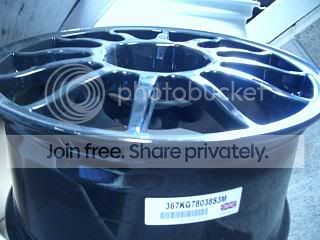
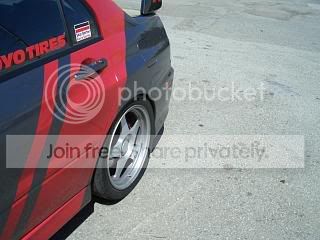
WORKS forged on Petes shop car...
Originally Posted by threepointsix
These are forged...made in England by Team Dynamics(who also sells a cast version for $200 a wheel) and are the only Team Dynamics wheels able to use stock OEM lugs (not special narrow race lugs) and OEM FQ400 sexy
http://www.worksevo.com/store/produc...roducts_id=220
http://www.worksevo.com/store/produc...roducts_id=220
Kei Office has a forged wheel which is very similar in style to the Regamaster/Works wheel, it may actually come out of the same factory for all I know, but it's 17x8 and 13lbs, what a forged wheel "should" weigh.
Originally Posted by hueman
where'd you get that they're forged? i'm pretty positive all the pro race series (which is what those fq400 wheels are, except the fq's are in a gloss black instead of flat black) are cast. and since they weigh 19.5 lbs, i'm going to go ahead and assume they're cast since the normal pro race 1's weigh that much. TDR does offer a forged wheel specifically for the evo and completely customizable though.
- Steve