


Front camber adjust


Since you have camber plates you will be able to fine tune the camber. Looking at the two bolts that attach the strut to the knuckle the top one is the ecentric bolt and has a little lobe on it. The bottom bolt is just a regular bolt. If you look closely you will see an arrow that either points away from the car or towards it. Make sure the top ecentric bolt is facing inward on both sides or outward depending on how aggressive you want to go.
After you set the bolts the same then you want to dial in the camber with the plates.
After you set the bolts the same then you want to dial in the camber with the plates.

Thread Starter
Evolved Member
Joined: Jul 2011
Posts: 611
Likes: 0
From: Staten Island
Since you have camber plates you will be able to fine tune the camber. Looking at the two bolts that attach the strut to the knuckle the top one is the ecentric bolt and has a little lobe on it. The bottom bolt is just a regular bolt. If you look closely you will see an arrow that either points away from the car or towards it. Make sure the top ecentric bolt is facing inward on both sides or outward depending on how aggressive you want to go.
After you set the bolts the same then you want to dial in the camber with the plates.
After you set the bolts the same then you want to dial in the camber with the plates.

how many threads are you going to start about this?
take a wheel off and look at the two bolt heads, the top one should have an arrow on it, they should both be pointing in the same direction. verify me here, but i believe pointing out is "max camber", which is probably what it is set to on the drivers side.
i dont see how you would flip the bolt with a wheel on. its not a precise adjustment, you have to take the bolt out and flip it one way or the other.
i stupidly read that as toe in in his last thread. you'll also want to get that fixed to either zero at least or even a tad of toe in (say +0.1)
for the rear the tech needs to set the toe, set the camber, then go back to toe, then recheck the camber once the toe is finalized. the two measurements effect each other on the rear.
i'm sharing all this because i went through the same battle with an idiot tech until i had to show him how to do it myself after he left my camber plates loose and tried to charge me 4 hours labor to do the alignment via the camber plates anyway.
take a wheel off and look at the two bolt heads, the top one should have an arrow on it, they should both be pointing in the same direction. verify me here, but i believe pointing out is "max camber", which is probably what it is set to on the drivers side.
i dont see how you would flip the bolt with a wheel on. its not a precise adjustment, you have to take the bolt out and flip it one way or the other.
i stupidly read that as toe in in his last thread. you'll also want to get that fixed to either zero at least or even a tad of toe in (say +0.1)
for the rear the tech needs to set the toe, set the camber, then go back to toe, then recheck the camber once the toe is finalized. the two measurements effect each other on the rear.
i'm sharing all this because i went through the same battle with an idiot tech until i had to show him how to do it myself after he left my camber plates loose and tried to charge me 4 hours labor to do the alignment via the camber plates anyway.
Thread Starter
Evolved Member
Joined: Jul 2011
Posts: 611
Likes: 0
From: Staten Island
how many threads are you going to start about this?
take a wheel off and look at the two bolt heads, the top one should have an arrow on it, they should both be pointing in the same direction. verify me here, but i believe pointing out is "max camber", which is probably what it is set to on the drivers side.
i dont see how you would flip the bolt with a wheel on. its not a precise adjustment, you have to take the bolt out and flip it one way or the other.
i stupidly read that as toe in in his last thread. you'll also want to get that fixed to either zero at least or even a tad of toe in (say +0.1)
for the rear the tech needs to set the toe, set the camber, then go back to toe, then recheck the camber once the toe is finalized. the two measurements effect each other on the rear.
i'm sharing all this because i went through the same battle with an idiot tech until i had to show him how to do it myself after he left my camber plates loose and tried to charge me 4 hours labor to do the alignment via the camber plates anyway.
take a wheel off and look at the two bolt heads, the top one should have an arrow on it, they should both be pointing in the same direction. verify me here, but i believe pointing out is "max camber", which is probably what it is set to on the drivers side.
i dont see how you would flip the bolt with a wheel on. its not a precise adjustment, you have to take the bolt out and flip it one way or the other.
i stupidly read that as toe in in his last thread. you'll also want to get that fixed to either zero at least or even a tad of toe in (say +0.1)
for the rear the tech needs to set the toe, set the camber, then go back to toe, then recheck the camber once the toe is finalized. the two measurements effect each other on the rear.
i'm sharing all this because i went through the same battle with an idiot tech until i had to show him how to do it myself after he left my camber plates loose and tried to charge me 4 hours labor to do the alignment via the camber plates anyway.
no one can see the arrow on the bolt in that picture. it sounds like your confused, there is one bolt that matters on each side of the car not that the two bolts on each strut should match. i wouldn't go back to that shop unless they are going to work on it until its fixed for free. my car isn't slammed but its pretty low and we had no trouble getting the toe where i wanted.
Thread Starter
Evolved Member
Joined: Jul 2011
Posts: 611
Likes: 0
From: Staten Island
no one can see the arrow on the bolt in that picture. it sounds like your confused, there is one bolt that matters on each side of the car not that the two bolts on each strut should match. i wouldn't go back to that shop unless they are going to work on it until its fixed for free. my car isn't slammed but its pretty low and we had no trouble getting the toe where i wanted.
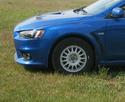
That first step is a waste of time. You always do camber before toe. Changes in camber have large effects on toe (because toe and steering arms never hit the knuckle at the same height as the lower ball-joint). Changes in toe, in contrast, have little or no effect on camber (because the location of the knuckle is determined by the lateral arm, not the toe or steering arm).
Thread Starter
Evolved Member
Joined: Jul 2011
Posts: 611
Likes: 0
From: Staten Island
I have made my decision i am bringing the car to akuma an import shop, my main concern is the car not driving straight once set equal, if it drives straight now will it drive straight after???

Can see sh*t on in the pics you posted. Refer to this:
See the two bolts bolting the shock to the knuckle? The top one has an arrow, you point it in or out depending on how much camber you want to run. You must do this prior to adjust for additional camber on the camber plates. Something is wrong with your mechanic if he/she cant get this right.

See the two bolts bolting the shock to the knuckle? The top one has an arrow, you point it in or out depending on how much camber you want to run. You must do this prior to adjust for additional camber on the camber plates. Something is wrong with your mechanic if he/she cant get this right.
Thread Starter
Evolved Member
Joined: Jul 2011
Posts: 611
Likes: 0
From: Staten Island
Can see sh*t on in the pics you posted. Refer to this:
See the two bolts bolting the shock to the knuckle? The top one has an arrow, you point it in or out depending on how much camber you want to run. You must do this prior to adjust for additional camber on the camber plates. Something is wrong with your mechanic if he/she cant get this right.
See the two bolts bolting the shock to the knuckle? The top one has an arrow, you point it in or out depending on how much camber you want to run. You must do this prior to adjust for additional camber on the camber plates. Something is wrong with your mechanic if he/she cant get this right.
Last edited by deadstockkpomp; May 7, 2013 at 08:34 AM.

The whole point of an alignment is for the car to track straight. After the alignment you should be able to take your hands off the wheel and the car will track straight, unless there's some other problem that an alignment can't fix.
Be absolutely sure to stress that the upper bolt is not the typical eccentric bolt. It is a remove/flip/reinstall bolt with only two possible settings. If the tech tries to rotate the upper bolt in place, he or she will cause damage.
As to whether you should get your extra camber entirely from the plate or partly from the bolt is a matter of debate. Google "included angle" to get an idea of what the issues are. What it all boils down to is scrub radius. If you have a lower-than-OE offset wheel, you should lean towards leaving the bolts at only -1* and getting the extra camber from the plate.
As to whether you should get your extra camber entirely from the plate or partly from the bolt is a matter of debate. Google "included angle" to get an idea of what the issues are. What it all boils down to is scrub radius. If you have a lower-than-OE offset wheel, you should lean towards leaving the bolts at only -1* and getting the extra camber from the plate.
Thread Starter
Evolved Member
Joined: Jul 2011
Posts: 611
Likes: 0
From: Staten Island
So if it tracks straight now it will deffinitly track straight after the new alignment?