


View Poll Results: Does your Evo X insurance cost more, less, or the same as what you paid on your CT9A?
More


6
21.43%
Same


3
10.71%
Less


4
14.29%
I've never owned a CT9A, so my input here is worthless


15
53.57%
Voters: 28. You may not vote on this poll
Evo X vs 8/9 - insurance costs


Evo X vs 8/9 - insurance costs
I am well aware that insurance fluctuates greatly between companies, regions, driving records, etc. As it is, I have a question for previous CT9A owners- assuming that you kept the same coverages you had previously on your old Evo, does the insurance cost more or less or the same as your previous 8 or 9? I'm just curious to see the results.

Evolved Member
Joined: Mar 2003
Posts: 2,080
Likes: 27
From: Southern California
I work in insurance, and have insured people with VIIIs, IXs and Xs. I've also toyed around with the rates for myself and with other carriers since we work with multiple companies. What I've seen is that as of now, the current Evo is a bit more expensive to insure, though it didn't start out that way.
When the Evo X first came out, its rates were better than the CT9A's rates, possibly due to it being a new platform with more airbags, better crash ratings, etc. Cars have symbols that dictate their risk, a lot of times based on its value and performance, though it can be adjusted depending on correlation with driver activity (violations, accidents, etc.). Generally it was on a scale of 1-30 (though I don't remember seeing anything higher than a 27, though most of the uber cars -- Ferraris, Lamborghinis, Rolls Royces -- aren't rated). Here are the ratings for the CT9As (which have pretty much been the same since they went out of production):
2003 Evo - 24h
2004 Evo - 26h
2004 Evo RS - 25h
2005 Evo - 26h
2005 Evo RS - 26h
2006 Evo - 26h
2006 Evo RS - 26h
(For comparison's sake for 2006 models, the M3 is a 23h, the M5 is a 27h, the 911 is a 24h and the 911 Turbo is a 27h.)
In 2008, the Evo Xs were rated at 20h for the GSR and 22h for the MR, and the rates were better. But again, once people started doing stupid things in them, the cars got re-rated. All 2008s and 2010s, regardless of trim level, ended up being adjusted to 26h, and they ended up being pretty similar to what the CT9As cost to insure, maybe a tad more.
However, the Department of Insurance adjusted their rating systems for all 2011+ models, kind of like how the EPA adjusted the way that they determine fuel economy. (All 2010 and earlier models did not get re-rated though, they are still on the original scale.) The scale was changed from 1-30 to pretty much 1-100, which kind of screwed things up in some cases. So even though the 2010 and 2011 Evo are pretty much the same car, the 2011 (and later models) are a little bit more expensive to insure (and not because it's "newer" and is "worth more," as the 2008 and 2010 have the same rates as each other, just as the 2011-2014s have more or less the same rates). I spoke to some underwriters with a few companies on my own time, and they don't really get my point when I was trying to see if they could apply the rates of a 2010 to the 2011+ models, as they said crap about it being re-rated due to risk, even though I told them it was the exact same car. But here are the current ratings:
2011+ Evo GSR - 73h
2011+ Evo MR - 75h
And just for comparison's sake, for 2013s:
WRX STI - 60h
FR-S - 37i
BRZ Premium - 38i
BRZ Limited - 41i
GT-R - 70h
C63 AMG - 71h
S63 AMG - 70h
S600 - 98h
S65 AMG - 98h
SLS AMG - 98h
So you can see that it is rated pretty high... higher than a lot of cars south of the twin-turbo V-12 Benzes.
When the Evo X first came out, its rates were better than the CT9A's rates, possibly due to it being a new platform with more airbags, better crash ratings, etc. Cars have symbols that dictate their risk, a lot of times based on its value and performance, though it can be adjusted depending on correlation with driver activity (violations, accidents, etc.). Generally it was on a scale of 1-30 (though I don't remember seeing anything higher than a 27, though most of the uber cars -- Ferraris, Lamborghinis, Rolls Royces -- aren't rated). Here are the ratings for the CT9As (which have pretty much been the same since they went out of production):
2003 Evo - 24h
2004 Evo - 26h
2004 Evo RS - 25h
2005 Evo - 26h
2005 Evo RS - 26h
2006 Evo - 26h
2006 Evo RS - 26h
(For comparison's sake for 2006 models, the M3 is a 23h, the M5 is a 27h, the 911 is a 24h and the 911 Turbo is a 27h.)
In 2008, the Evo Xs were rated at 20h for the GSR and 22h for the MR, and the rates were better. But again, once people started doing stupid things in them, the cars got re-rated. All 2008s and 2010s, regardless of trim level, ended up being adjusted to 26h, and they ended up being pretty similar to what the CT9As cost to insure, maybe a tad more.
However, the Department of Insurance adjusted their rating systems for all 2011+ models, kind of like how the EPA adjusted the way that they determine fuel economy. (All 2010 and earlier models did not get re-rated though, they are still on the original scale.) The scale was changed from 1-30 to pretty much 1-100, which kind of screwed things up in some cases. So even though the 2010 and 2011 Evo are pretty much the same car, the 2011 (and later models) are a little bit more expensive to insure (and not because it's "newer" and is "worth more," as the 2008 and 2010 have the same rates as each other, just as the 2011-2014s have more or less the same rates). I spoke to some underwriters with a few companies on my own time, and they don't really get my point when I was trying to see if they could apply the rates of a 2010 to the 2011+ models, as they said crap about it being re-rated due to risk, even though I told them it was the exact same car. But here are the current ratings:
2011+ Evo GSR - 73h
2011+ Evo MR - 75h
And just for comparison's sake, for 2013s:
WRX STI - 60h
FR-S - 37i
BRZ Premium - 38i
BRZ Limited - 41i
GT-R - 70h
C63 AMG - 71h
S63 AMG - 70h
S600 - 98h
S65 AMG - 98h
SLS AMG - 98h
So you can see that it is rated pretty high... higher than a lot of cars south of the twin-turbo V-12 Benzes.


Evolved Member
Joined: Mar 2003
Posts: 2,080
Likes: 27
From: Southern California
Just to clarify, if one car is a 60 and another car is a 70 on that scale, it doesn't always mean that the 70 is going to cost more to insure (though it often does end up being more expensive). It's just how much of a risk the insurance company views the vehicle.

Newbie

Joined: Oct 2013
Posts: 39
Likes: 0
From: United States
I got three quotes from my insurance company for 2013 370z, sti, and a evolution gsr. Both the Z and the sti were about the same a month. Whereas the evo was an additional $800 a year for the same coverage.

Trending Topics
A lot of good info DeeezNuuuts83. What does h and i stand for after the numbers? Also, are cars pre 2011 on the same new 1-100 scale, thus looking like a lower risk car, or are they kept on the old 1-30 scale?
Evolved Member
Joined: Mar 2003
Posts: 2,080
Likes: 27
From: Southern California
The "h" stands for high performance (usually), and I think the "i" might stand for intermediate performance (I can't remember). I mentioned that the pre-2011 cars are on the original 1-30 scale and were not re-rated. It's not necessarily viewed as a "lower risk car" despite a lower number (because they're on different scales... maybe like comparing inches vs. centimeters), and the ratings already exist.

This is what I am currently paying for both of my Evos.
I have the same full converge on both and it includes roadside assistance and rental car.
I have also qualified for the following discounts on my insurance as well.
Accident Free, Violation Free, Multi-Car, Low Mileage, and Anti-Theft.
I am almost 27 years old with a clean record
2003 Evo 8 GSR - $80.67 per month.
2008 Evo X GSR - $102.35 per month.
My insurance cost has come a long way form when I got my first Evo over 7 years ago though
My first Evo I bought when I was 19 (hand no other real responsibility other than college and work) I was paying around $320-330 a month for my insurance!! This was dude to the fact of my age, not being covered under my dads insurance anymore like a lot of younger kids do (My dad told me if I bought an Evo I was cut off from his insurance even though it would have saved me a lot of money) and not really shopping around to much, just going with one of the first insurance companies I found.
4 Evos, 3 different insurance companies and 7 years older/ later I am a lot cheaper for insurance and it helps that I make a lot more money too than at 19 years old
I feel that really the only difference in the insurance cost is due to the age difference between the two cars. I would say that insurance is pretty close to the same other wise.
I am currently finishing up a safe driver discount program with my insurance company that can save me an additional 30% off what I am currently paying. It monitors my driving by being plugged into my OBDII port for 100 days and watches for the following. Aggressive Braking, Aggressive Acceleration, Speeding, and Night Time Driving. I am in the middle yellow area for safe driving and I have 5 days left on my program. I should see what my new rates are in the next few weeks
I am also looking into additional coverage on both of my cars to help cover most of the aftermarket parts too that a lot of Evo owners should consider if they have a lot of money put into their cars.
I was quoted at $25 more per month per car for an additional $7k in coverage on top of each cars current value. This will cover my wheels, coilovers, exhaust, aftermarket seats, etc. One thing I have learned from insurance companies and quoting on additional parts is (Don't Say That You Have any Engine Modifications) :P Apparently they will just say no they can't cover the car anymore {thumbudwn} Found that out with the 2 last companies so just say you have other things like a custom interior and stereo system with a stock motor and then you should be covered on the additional parts
I have the same full converge on both and it includes roadside assistance and rental car.
I have also qualified for the following discounts on my insurance as well.
Accident Free, Violation Free, Multi-Car, Low Mileage, and Anti-Theft.
I am almost 27 years old with a clean record
2003 Evo 8 GSR - $80.67 per month.
2008 Evo X GSR - $102.35 per month.
My insurance cost has come a long way form when I got my first Evo over 7 years ago though
My first Evo I bought when I was 19 (hand no other real responsibility other than college and work) I was paying around $320-330 a month for my insurance!! This was dude to the fact of my age, not being covered under my dads insurance anymore like a lot of younger kids do (My dad told me if I bought an Evo I was cut off from his insurance even though it would have saved me a lot of money)
and not really shopping around to much, just going with one of the first insurance companies I found. 4 Evos, 3 different insurance companies and 7 years older/ later I am a lot cheaper for insurance and it helps that I make a lot more money too than at 19 years old
I feel that really the only difference in the insurance cost is due to the age difference between the two cars. I would say that insurance is pretty close to the same other wise.
I am currently finishing up a safe driver discount program with my insurance company that can save me an additional 30% off what I am currently paying. It monitors my driving by being plugged into my OBDII port for 100 days and watches for the following. Aggressive Braking, Aggressive Acceleration, Speeding, and Night Time Driving. I am in the middle yellow area for safe driving and I have 5 days left on my program. I should see what my new rates are in the next few weeks
I am also looking into additional coverage on both of my cars to help cover most of the aftermarket parts too that a lot of Evo owners should consider if they have a lot of money put into their cars.
I was quoted at $25 more per month per car for an additional $7k in coverage on top of each cars current value. This will cover my wheels, coilovers, exhaust, aftermarket seats, etc. One thing I have learned from insurance companies and quoting on additional parts is (Don't Say That You Have any Engine Modifications) :P Apparently they will just say no they can't cover the car anymore {thumbudwn} Found that out with the 2 last companies so just say you have other things like a custom interior and stereo system with a stock motor and then you should be covered on the additional parts
Evolved Member
Joined: Mar 2003
Posts: 2,080
Likes: 27
From: Southern California
But it also may depend on how your insurance company listed the vehicles... one could have higher/lower mileage, they may list one as a commute vehicle while the other is a pleasure/excess vehicle, etc. All of those things may play a role. Not saying you're wrong, it's just something to consider.

Evolving Member
Joined: Sep 2012
Posts: 237
Likes: 0
From: new yawk
Snapshot discount is from progressive.
Unless you drive like a senior citizen, you will not save money.
You drive an evo, do you drive at or below posted limits.
I'd never let anything like that into the picture, bad enough there are black boxes.
Just imagine your claim is denied because you accelerated to quickly, or didn't stop fast enough.
That's for people with Camrys not evos.
Insurance also goes by your credit score, so that's why I'm getting Rick Rolled by insurance co.
Have both vehicles listed as pleasure only, with 7500 miles a year or less. I'm embarrassed to even tell people.
When a 25 & under pays less than me, I'm married & way past 25. No accidents or tickets, just bad credit due to layoff. Insurance companies are leaches & are the 2nd most corrupt business privately. As opposed to wall st is making more cash than everyone.
Unless you drive like a senior citizen, you will not save money.
You drive an evo, do you drive at or below posted limits.
I'd never let anything like that into the picture, bad enough there are black boxes.
Just imagine your claim is denied because you accelerated to quickly, or didn't stop fast enough.
That's for people with Camrys not evos.
Insurance also goes by your credit score, so that's why I'm getting Rick Rolled by insurance co.
Have both vehicles listed as pleasure only, with 7500 miles a year or less. I'm embarrassed to even tell people.
When a 25 & under pays less than me, I'm married & way past 25. No accidents or tickets, just bad credit due to layoff. Insurance companies are leaches & are the 2nd most corrupt business privately. As opposed to wall st is making more cash than everyone.
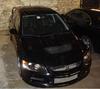
I work in insurance, and have insured people with VIIIs, IXs and Xs. I've also toyed around with the rates for myself and with other carriers since we work with multiple companies. What I've seen is that as of now, the current Evo is a bit more expensive to insure, though it didn't start out that way.
When the Evo X first came out, its rates were better than the CT9A's rates, possibly due to it being a new platform with more airbags, better crash ratings, etc. Cars have symbols that dictate their risk, a lot of times based on its value and performance, though it can be adjusted depending on correlation with driver activity (violations, accidents, etc.). Generally it was on a scale of 1-30 (though I don't remember seeing anything higher than a 27, though most of the uber cars -- Ferraris, Lamborghinis, Rolls Royces -- aren't rated). Here are the ratings for the CT9As (which have pretty much been the same since they went out of production):
2003 Evo - 24h
2004 Evo - 26h
2004 Evo RS - 25h
2005 Evo - 26h
2005 Evo RS - 26h
2006 Evo - 26h
2006 Evo RS - 26h
(For comparison's sake for 2006 models, the M3 is a 23h, the M5 is a 27h, the 911 is a 24h and the 911 Turbo is a 27h.)
In 2008, the Evo Xs were rated at 20h for the GSR and 22h for the MR, and the rates were better. But again, once people started doing stupid things in them, the cars got re-rated. All 2008s and 2010s, regardless of trim level, ended up being adjusted to 26h, and they ended up being pretty similar to what the CT9As cost to insure, maybe a tad more.
However, the Department of Insurance adjusted their rating systems for all 2011+ models, kind of like how the EPA adjusted the way that they determine fuel economy. (All 2010 and earlier models did not get re-rated though, they are still on the original scale.) The scale was changed from 1-30 to pretty much 1-100, which kind of screwed things up in some cases. So even though the 2010 and 2011 Evo are pretty much the same car, the 2011 (and later models) are a little bit more expensive to insure (and not because it's "newer" and is "worth more," as the 2008 and 2010 have the same rates as each other, just as the 2011-2014s have more or less the same rates). I spoke to some underwriters with a few companies on my own time, and they don't really get my point when I was trying to see if they could apply the rates of a 2010 to the 2011+ models, as they said crap about it being re-rated due to risk, even though I told them it was the exact same car. But here are the current ratings:
2011+ Evo GSR - 73h
2011+ Evo MR - 75h
And just for comparison's sake, for 2013s:
WRX STI - 60h
FR-S - 37i
BRZ Premium - 38i
BRZ Limited - 41i
GT-R - 70h
C63 AMG - 71h
S63 AMG - 70h
S600 - 98h
S65 AMG - 98h
SLS AMG - 98h
So you can see that it is rated pretty high... higher than a lot of cars south of the twin-turbo V-12 Benzes.
When the Evo X first came out, its rates were better than the CT9A's rates, possibly due to it being a new platform with more airbags, better crash ratings, etc. Cars have symbols that dictate their risk, a lot of times based on its value and performance, though it can be adjusted depending on correlation with driver activity (violations, accidents, etc.). Generally it was on a scale of 1-30 (though I don't remember seeing anything higher than a 27, though most of the uber cars -- Ferraris, Lamborghinis, Rolls Royces -- aren't rated). Here are the ratings for the CT9As (which have pretty much been the same since they went out of production):
2003 Evo - 24h
2004 Evo - 26h
2004 Evo RS - 25h
2005 Evo - 26h
2005 Evo RS - 26h
2006 Evo - 26h
2006 Evo RS - 26h
(For comparison's sake for 2006 models, the M3 is a 23h, the M5 is a 27h, the 911 is a 24h and the 911 Turbo is a 27h.)
In 2008, the Evo Xs were rated at 20h for the GSR and 22h for the MR, and the rates were better. But again, once people started doing stupid things in them, the cars got re-rated. All 2008s and 2010s, regardless of trim level, ended up being adjusted to 26h, and they ended up being pretty similar to what the CT9As cost to insure, maybe a tad more.
However, the Department of Insurance adjusted their rating systems for all 2011+ models, kind of like how the EPA adjusted the way that they determine fuel economy. (All 2010 and earlier models did not get re-rated though, they are still on the original scale.) The scale was changed from 1-30 to pretty much 1-100, which kind of screwed things up in some cases. So even though the 2010 and 2011 Evo are pretty much the same car, the 2011 (and later models) are a little bit more expensive to insure (and not because it's "newer" and is "worth more," as the 2008 and 2010 have the same rates as each other, just as the 2011-2014s have more or less the same rates). I spoke to some underwriters with a few companies on my own time, and they don't really get my point when I was trying to see if they could apply the rates of a 2010 to the 2011+ models, as they said crap about it being re-rated due to risk, even though I told them it was the exact same car. But here are the current ratings:
2011+ Evo GSR - 73h
2011+ Evo MR - 75h
And just for comparison's sake, for 2013s:
WRX STI - 60h
FR-S - 37i
BRZ Premium - 38i
BRZ Limited - 41i
GT-R - 70h
C63 AMG - 71h
S63 AMG - 70h
S600 - 98h
S65 AMG - 98h
SLS AMG - 98h
So you can see that it is rated pretty high... higher than a lot of cars south of the twin-turbo V-12 Benzes.
Evolved Member
Joined: Mar 2003
Posts: 2,080
Likes: 27
From: Southern California
Snapshot discount is from progressive.
Unless you drive like a senior citizen, you will not save money.
You drive an evo, do you drive at or below posted limits.
I'd never let anything like that into the picture, bad enough there are black boxes.
Just imagine your claim is denied because you accelerated to quickly, or didn't stop fast enough.
That's for people with Camrys not evos.
Unless you drive like a senior citizen, you will not save money.
You drive an evo, do you drive at or below posted limits.
I'd never let anything like that into the picture, bad enough there are black boxes.
Just imagine your claim is denied because you accelerated to quickly, or didn't stop fast enough.
That's for people with Camrys not evos.
The way Snapshot works is you plug it into your OBDII port. It measures several things that help determine what kind of discount you get. Yes, some have to do with your acceleration and deceleration, so if you're a careful driver, it'll likely discount your rate. Remember, you do not have to drive like a senior citizen... you just can't drive like a psycho in a hurry, gunning the engine and slamming on the brakes. Other measurements have to do with how frequently you drive and during what hours you drive.
After a certain amount of days (it's either 30 or 45, I can't remember off the top of my head), you unplug it, send it back to Progressive, and then they apply whatever discount you can get based on your documented driving habits. But once it's unplugged, your car is longer monitored. Worst case scenario, you just don't get a discount, but it alone won't cause an uprate if your driving is less-than-ideal. But in most cases, you'll at least get a partial discount (as each of those parameters result in a certain percentage).