


HPDE insurance


I've had a student ask me to please drive his car to help him understand whats hes doing wrong and I said NO WAY!
I wont drive a students car... to risky, anything could happen.
-Kyle
I wont drive a students car... to risky, anything could happen.
-Kyle

As for whether you can sue someone who damages your car at the track, the answer is yes. You can sue anyone for anything. The real question you are asking is: Would a judge or jury find in my favor if I sued that other driver?
If that other driver was negligent, his negligence caused your damage, and you can prove that in court, then yes, you will probably be able to get money from him (or his insurance company) even though you all signed waivers. If it was just a "racing incident" where incidental contact caused someone to crash, then you probably won't win. There's a lot of gray area in there, but the key is proving that the person who caused the damage was willfully negligent and should have behaved better.
I have all drivers, workers, and spectators sign the standard "restricted area" waiver at all the speed events I run. The waiver is an important legal step, and I wouldn't run a driving event without it, but the waiver alone does not offer complete protection. People can still sue, and if they can prove negligence to a judge or jury, they can win compensation, no matter what they signed.
So if you can't afford to total your car, get HPDE insurance from Chris's company (contact info listed earlier in this thread) because chances are your regular street driving insurance won't cover you . If you can't afford to total someone else's car, don't do anything negligent at the track.
If that other driver was negligent, his negligence caused your damage, and you can prove that in court, then yes, you will probably be able to get money from him (or his insurance company) even though you all signed waivers. If it was just a "racing incident" where incidental contact caused someone to crash, then you probably won't win. There's a lot of gray area in there, but the key is proving that the person who caused the damage was willfully negligent and should have behaved better.
I have all drivers, workers, and spectators sign the standard "restricted area" waiver at all the speed events I run. The waiver is an important legal step, and I wouldn't run a driving event without it, but the waiver alone does not offer complete protection. People can still sue, and if they can prove negligence to a judge or jury, they can win compensation, no matter what they signed.
So if you can't afford to total your car, get HPDE insurance from Chris's company (contact info listed earlier in this thread) because chances are your regular street driving insurance won't cover you . If you can't afford to total someone else's car, don't do anything negligent at the track.
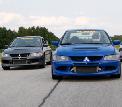
I believe the risk factor depends on you, the specific track, and very importanlty the organization. Out of all the ones I have been two, only one event had wrecks. It was PBOC winterfest at sebring and they were allowing ALMS cars with pro drivers to go in practically beginner groups. Basically if you were racing with them, you could run in any group you wanted. Probably 10-12 accidents that weekend including several totalled. Almost every lap there were people going off and way too many cars on track.
With NASA at the same track, nothing
Anyone delt with progressive? I would have to guess they wouldnt cover anything as they are pretty cheap about covering things
With NASA at the same track, nothing
Anyone delt with progressive? I would have to guess they wouldnt cover anything as they are pretty cheap about covering things

Out of all the HPDE events I've been to, I've never seen any car-to-car incidents. Most cars I've seen wrecked were from the driver driving past their (and the cars's) ability, losing it, and ending up in the wall. So the biggest thing a person can do to minimize the risk is to stay within their limits!


As for whether you can sue someone who damages your car at the track, the answer is yes. You can sue anyone for anything. The real question you are asking is: Would a judge or jury find in my favor if I sued that other driver?
If that other driver was negligent, his negligence caused your damage, and you can prove that in court, then yes, you will probably be able to get money from him (or his insurance company) even though you all signed waivers. If it was just a "racing incident" where incidental contact caused someone to crash, then you probably won't win. There's a lot of gray area in there, but the key is proving that the person who caused the damage was willfully negligent and should have behaved better.
I have all drivers, workers, and spectators sign the standard "restricted area" waiver at all the speed events I run. The waiver is an important legal step, and I wouldn't run a driving event without it, but the waiver alone does not offer complete protection. People can still sue, and if they can prove negligence to a judge or jury, they can win compensation, no matter what they signed.
So if you can't afford to total your car, get HPDE insurance from Chris's company (contact info listed earlier in this thread) because chances are your regular street driving insurance won't cover you . If you can't afford to total someone else's car, don't do anything negligent at the track.
If that other driver was negligent, his negligence caused your damage, and you can prove that in court, then yes, you will probably be able to get money from him (or his insurance company) even though you all signed waivers. If it was just a "racing incident" where incidental contact caused someone to crash, then you probably won't win. There's a lot of gray area in there, but the key is proving that the person who caused the damage was willfully negligent and should have behaved better.
I have all drivers, workers, and spectators sign the standard "restricted area" waiver at all the speed events I run. The waiver is an important legal step, and I wouldn't run a driving event without it, but the waiver alone does not offer complete protection. People can still sue, and if they can prove negligence to a judge or jury, they can win compensation, no matter what they signed.
So if you can't afford to total your car, get HPDE insurance from Chris's company (contact info listed earlier in this thread) because chances are your regular street driving insurance won't cover you . If you can't afford to total someone else's car, don't do anything negligent at the track.
Another good post, this time from nsxprime.com:
Most of us understand that there is a risk of damaging our cars. Almost all on-track incidents in HPDE events involve only one car. And it is extremely rare that serious injuries occur in such incidents. So it is extremely rare for anything other than the value of the car to be at stake in the event of an on-track incident.
Therefore, think about the most common scenario in the unlikely event you experience an on-track incident that isn't covered by insurance: you have to incur the cost to repair or replace your car. The most you would need to pay is the value of the car itself, let's say $30K for an older NSX, or up to $50-60K for a newer one. Losses can happen. It's like experiencing a major mechanical failure; all of the sudden, your car drops in value by a lot of money, and there isn't anything you can do about it. Can you afford this? Would it wipe you out financially? If so, then you shouldn't be driving your car on the track. (Although if that much of your financial equity is tied up in your car, maybe you shouldn't own such an expensive car in the first place.) If it would be something you could work out, and you're willing to accept this risk, then keep driving on the track, and just hope that it doesn't come to that. (It's also worth noting that you can minimize the chances of this happening by not driving on the "ragged edge" of your capabilities when driving around the track, and building up speed in small increments while staying well within the boundaries of car control.)
Let's also consider the UNcommon scenario, where more than your car is at risk - specifically, your liability in the event of death or serious injury to someone else. This is where you could be liable for far more than the value of your car, possibly into the millions of dollars. The chances of this occurring are extremely remote - I doubt that they are as high as 1 in 1000 track incidents, and track incidents happen to perhaps 1 in 100 participants in a track event. But IF it happens, the financial consequences could be catastrophic. What's worse is that, while many of us (myself included) are aware of the risks involved in what we do, and would be highly reluctant to sue another track participant, that understanding and reluctance may not apply to our heirs in the event of a fatality. That's exactly what's going on in the litigation following the fatal Carrera GT incident at California Speedway (as noted here (http://www.businessweek.com/autos/co...608_466074.htm) and here (http://www.sportscarmarket.com/articles/archives/956)). FWIW, I consider the chances of such a possibility to be so remote that it's not worth worrying about - but that evaluation may not apply to those insurance companies who are changing the wording of their policies.
Most of us understand that there is a risk of damaging our cars. Almost all on-track incidents in HPDE events involve only one car. And it is extremely rare that serious injuries occur in such incidents. So it is extremely rare for anything other than the value of the car to be at stake in the event of an on-track incident.
Therefore, think about the most common scenario in the unlikely event you experience an on-track incident that isn't covered by insurance: you have to incur the cost to repair or replace your car. The most you would need to pay is the value of the car itself, let's say $30K for an older NSX, or up to $50-60K for a newer one. Losses can happen. It's like experiencing a major mechanical failure; all of the sudden, your car drops in value by a lot of money, and there isn't anything you can do about it. Can you afford this? Would it wipe you out financially? If so, then you shouldn't be driving your car on the track. (Although if that much of your financial equity is tied up in your car, maybe you shouldn't own such an expensive car in the first place.) If it would be something you could work out, and you're willing to accept this risk, then keep driving on the track, and just hope that it doesn't come to that. (It's also worth noting that you can minimize the chances of this happening by not driving on the "ragged edge" of your capabilities when driving around the track, and building up speed in small increments while staying well within the boundaries of car control.)
Let's also consider the UNcommon scenario, where more than your car is at risk - specifically, your liability in the event of death or serious injury to someone else. This is where you could be liable for far more than the value of your car, possibly into the millions of dollars. The chances of this occurring are extremely remote - I doubt that they are as high as 1 in 1000 track incidents, and track incidents happen to perhaps 1 in 100 participants in a track event. But IF it happens, the financial consequences could be catastrophic. What's worse is that, while many of us (myself included) are aware of the risks involved in what we do, and would be highly reluctant to sue another track participant, that understanding and reluctance may not apply to our heirs in the event of a fatality. That's exactly what's going on in the litigation following the fatal Carrera GT incident at California Speedway (as noted here (http://www.businessweek.com/autos/co...608_466074.htm) and here (http://www.sportscarmarket.com/articles/archives/956)). FWIW, I consider the chances of such a possibility to be so remote that it's not worth worrying about - but that evaluation may not apply to those insurance companies who are changing the wording of their policies.

Just got a full policy listing from Progressive and it states...
"any driving activity conducted on a permanent or temporary racetrack or racecourse" is NOT covered.
So, is there anyone out there that does not have such restrictive language? I do not care to race wheel to wheel or run timed events but I do intend to track the car. I will change who I work with as a result as I don't care to spend a huge sum of cash to take track day coverage for a handful of events a year. Then again if I must, I must.
That brings us back to wondering if we could get a group rate and as such maybe getting a little better deal?
Thoughts?
"any driving activity conducted on a permanent or temporary racetrack or racecourse" is NOT covered.
So, is there anyone out there that does not have such restrictive language? I do not care to race wheel to wheel or run timed events but I do intend to track the car. I will change who I work with as a result as I don't care to spend a huge sum of cash to take track day coverage for a handful of events a year. Then again if I must, I must.
That brings us back to wondering if we could get a group rate and as such maybe getting a little better deal?
Thoughts?

Evolving Member
Joined: Apr 2004
Posts: 118
Likes: 0
From: Cold ass North-east
There is a thread going on one of the Porsche forums on HPDE insurance that I think many will find interesting.
http://forums.rennlist.com/rennforum...d.php?t=337509
http://forums.rennlist.com/rennforum...d.php?t=337509
Last edited by splurta; Mar 22, 2007 at 06:50 AM.

Evolved Member
Joined: Oct 2004
Posts: 1,481
Likes: 0
BTW, great avatar. I want to be just like Al Swearingen when I grow up.

Has anyone given Ellington and Associates a call yet? If not why? If yes, spill the beans. I'll try to give them a ring later today and see what they have to offer as this may be something we can do as a group to get ourselves better rates.
Update...
I'm getting a quote from Ellington and Associates. They tell me that they have had so much interest to this point that they are trying to get good info for as many states as possible. They can cover just one car or everything you own.
To top it off the young lady who is overseeing the program is a bit of a gearhead as well. She'll be at VIR this weekend and tells me that she hopes to expand the program as so many of us are having trouble getting this coverage.
If you like you can give them a ring for more info or a quote at 919-782-8855.
I'm getting a quote from Ellington and Associates. They tell me that they have had so much interest to this point that they are trying to get good info for as many states as possible. They can cover just one car or everything you own.
To top it off the young lady who is overseeing the program is a bit of a gearhead as well. She'll be at VIR this weekend and tells me that she hopes to expand the program as so many of us are having trouble getting this coverage.
If you like you can give them a ring for more info or a quote at 919-782-8855.

Anyone end up with Track Day insurance this year? Specifically for timed events.
If so, please give us some feedback!
Old post....
If so, please give us some feedback!
Old post....
There is now HPDE insurance available and its not that bad!
Chris Maume at Snellings Walters Motorsports Insurance
678.643.8415
is offering DE insurance on any car for 3% of the cars value. So your premium is 3% + tax.... with a $2,000 deductable.
If you do 20 track days per year... it would cost about $45 per event to insure your Evo if you wreck.
Not a bad option.
-Kyle
Chris Maume at Snellings Walters Motorsports Insurance
678.643.8415
is offering DE insurance on any car for 3% of the cars value. So your premium is 3% + tax.... with a $2,000 deductable.
If you do 20 track days per year... it would cost about $45 per event to insure your Evo if you wreck.
Not a bad option.
-Kyle
Last edited by boomn29; Jul 9, 2007 at 12:19 PM.
Evolved Member
Joined: Oct 2004
Posts: 1,481
Likes: 0
