


Looking to track for first time


Looking to track for first time
Hey guys, I've had my GSR for a little over 2 years now and this summer I really want to start tracking the car. I've got a Cobb stage 1 flash with Cobb intake and getting Exedy stage 1 clutch and Dunlop Star Specs installed this weekend; everything else is stock. I'd like to know a few things. First, what exactly do I need to hop on a track and do timed laps? I'm not really interested in drag. I looked on Englishtown's website and apparently you need to take a few lessons to obtain a license and there are different levels to this license allowing different levels of racing? Are all tracks like this? I'd just like to know the quickest and easiest way to get my Evo on a track so I can really open her up. Thanks in advance.

You will reach the limits of a stock braking system quickly. I switched to some track pads (carbotech XP8) and some good fluid (Motol 600) The rest of the car should be good for a while.

Seconded on the brake pads and fluid. Look, instead, for a HPDE group where you will get some one-on-one instruction. Time with a good instructor is invaluable as you get out on the track and start turning up the wick.

- Andrew

As others have stated your brakes will be the only issue.. Track pads and DOT4 fluid is all you really NEED. Do yourself a favor and stay away from the road course at Englishtown too, NJMP is a much better choice.
Ok so stock pads won't cut it. What's wrong with the Englishtown road course though?

Evolving Member
Joined: Apr 2004
Posts: 303
Likes: 0
From: Western North Carolina
I can't speak about Englishtown, but I can speak about track days.
First time out, don't worry about being fast. Worry about being consistent and learning the lines. A driver in a much less powerful car can run away and leave you just by driving the proper line.
If someone catches you, let them pass, then follow them. They're faster than you; learn from them. I have knocked seconds off my lap times and learned alternate lines around corners (which you need if you're behind someone, racing, or driving in the rain) by chasing someone who's just passed me.
Videotape your laps and get the times from them later. Compare laps and learn where you're fast, where you're on the right line (and the wrong line), and where you need to be careful.
Every single track day I've been to someone's totalled their car. It is usually a combination of being overly aggressive and not having enough options of what to do when things go wrong. Look at the track and know where there is little margin for error; go slower there. If you're going off, go off straight. I've seen too many on track accidents that would have just been a little two wheels off incident if the driver would have just accepted that they were going wide.
I can afford to race my car, and I don't. Why? Because 1) I will never make money at it (driving is my hobby, not my job) and 2) it costs too much money unless someone else is paying for it. If you try to go fast on your dime quickly, it will cost you.
My advice; learn about your car at the limits before you go fast, listen to your instructor, and get passed by other cars and learn from it. They don't give out trophies for driving school, after all.
Oh, and change your pads and brake fluid. Get some ATE or RBF and flush the whole system, throw some Carbotech XP10's on the front only (clean the discs and make sure you bed them properly) and learn to brake and you'll pass most drivers in an HPDE.
Happy Motoring!
First time out, don't worry about being fast. Worry about being consistent and learning the lines. A driver in a much less powerful car can run away and leave you just by driving the proper line.
If someone catches you, let them pass, then follow them. They're faster than you; learn from them. I have knocked seconds off my lap times and learned alternate lines around corners (which you need if you're behind someone, racing, or driving in the rain) by chasing someone who's just passed me.
Videotape your laps and get the times from them later. Compare laps and learn where you're fast, where you're on the right line (and the wrong line), and where you need to be careful.
Every single track day I've been to someone's totalled their car. It is usually a combination of being overly aggressive and not having enough options of what to do when things go wrong. Look at the track and know where there is little margin for error; go slower there. If you're going off, go off straight. I've seen too many on track accidents that would have just been a little two wheels off incident if the driver would have just accepted that they were going wide.
I can afford to race my car, and I don't. Why? Because 1) I will never make money at it (driving is my hobby, not my job) and 2) it costs too much money unless someone else is paying for it. If you try to go fast on your dime quickly, it will cost you.
My advice; learn about your car at the limits before you go fast, listen to your instructor, and get passed by other cars and learn from it. They don't give out trophies for driving school, after all.
Oh, and change your pads and brake fluid. Get some ATE or RBF and flush the whole system, throw some Carbotech XP10's on the front only (clean the discs and make sure you bed them properly) and learn to brake and you'll pass most drivers in an HPDE.
Happy Motoring!
Trending Topics


all great advice. i'm also interested in the sequence of events. i too would like to get some track time in this summer and learn some technique. can you kill two birds with one stone and get a novice license while your at and HPDE or PDX? or must the license be done independently.also are there any requirements anyone might have overlooked? helmet? 4 point or 5 point harness? rollcage? when do these extra safety requirements come into play? I have been reading the rulebook for this year, it's very lengthy but some events may or may not require certain safety equipment. just my 2 cents for people who read this that they might want to consider. (i'm wired on monster watchin the australian gran prix and it's 2:50 am where i am! haha)


Hey guys, I've had my GSR for a little over 2 years now and this summer I really want to start tracking the car. I've got a Cobb stage 1 flash with Cobb intake and getting Exedy stage 1 clutch and Dunlop Star Specs installed this weekend; everything else is stock. I'd like to know a few things. First, what exactly do I need to hop on a track and do timed laps? I'm not really interested in drag. I looked on Englishtown's website and apparently you need to take a few lessons to obtain a license and there are different levels to this license allowing different levels of racing? Are all tracks like this? I'd just like to know the quickest and easiest way to get my Evo on a track so I can really open her up. Thanks in advance.
http://www.motorsportreg.com/
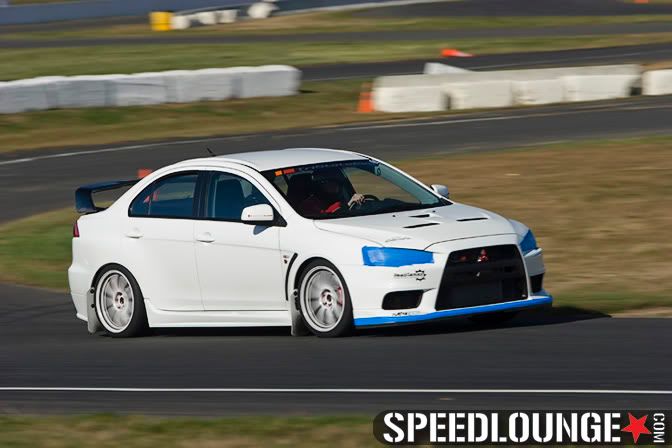
I had a test day with them and they idea and so on just perfect. Forget English town. NJMP is not even a same level. Nice thigh track/ thunderbolt/ with blind turns , perfect staging - service - bath rooms etc. Not even expensive! ALso the NJMP is designed for road racing before they build, there for run off zones , help all around escape routes etc. vs the drag place build the road track on the free field in side they territory where they find a place... There is literally no off zones or your off zone is actually cut of the oncoming traffic or the famous on track walls...
look the difference your self
NJMP :

gas station on the service area:

English town:
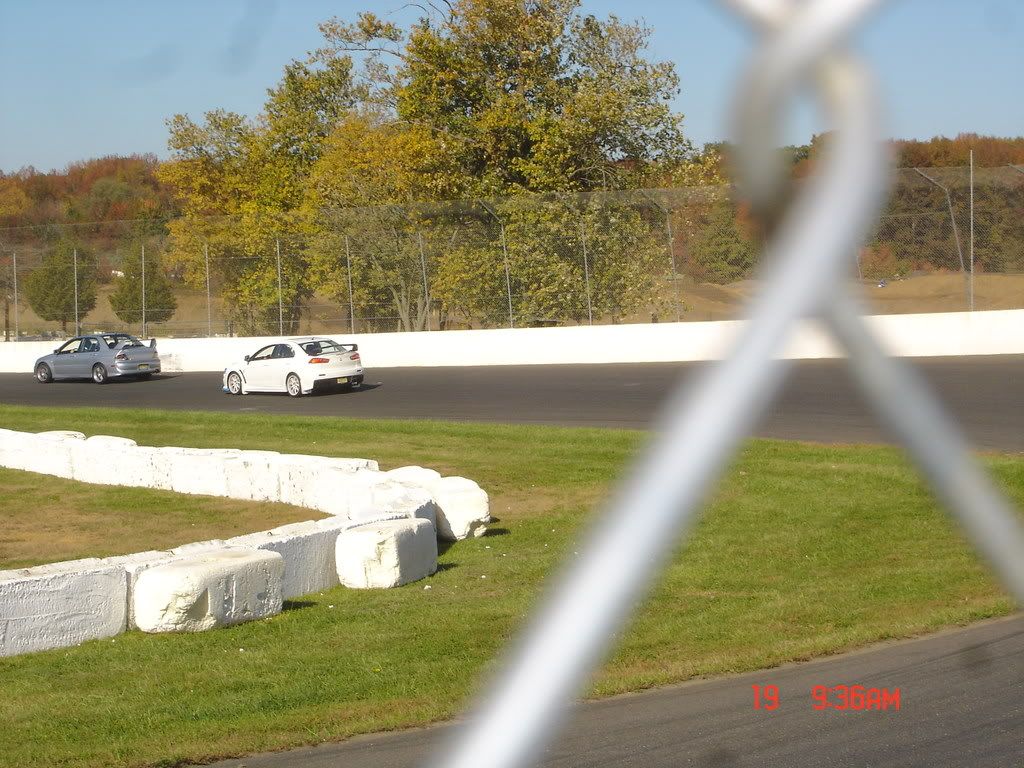

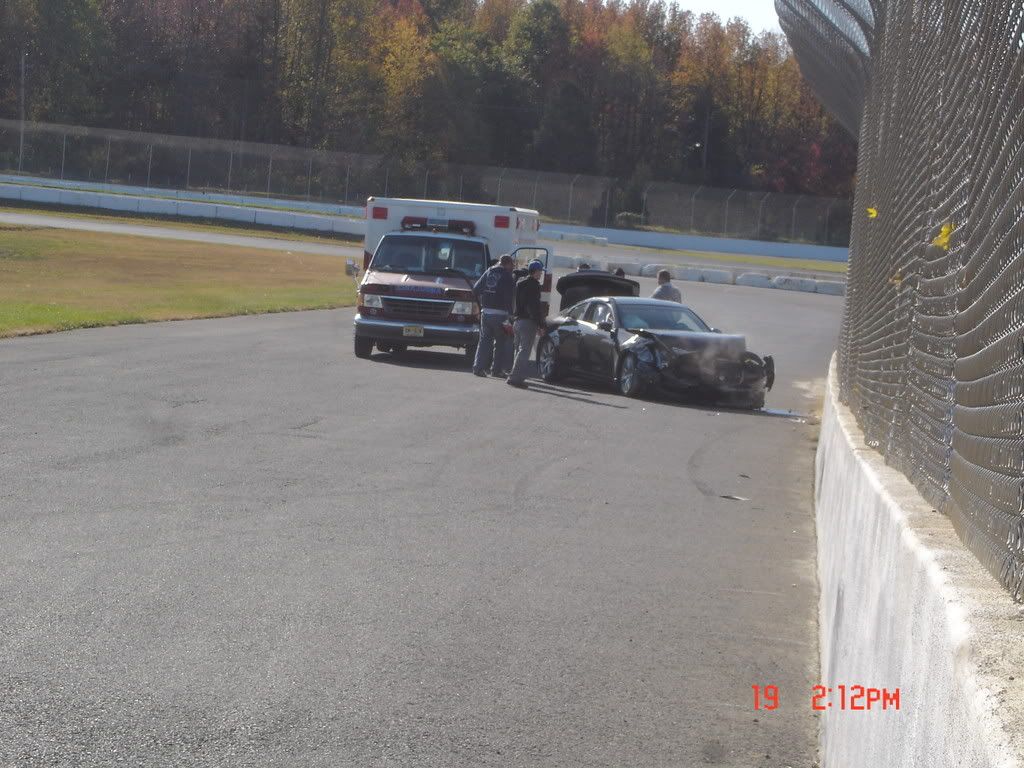
Only thing and i am serious, for the Evo to do nice laps and feeling is the following:
TIRES
brake pads and fluids.
The you are more set for the day then you think. !
As others mentioned dont worry about ANYTHING!. Get an instructor, not because you cant drive, he Knows the track that is why!
Also if you get flat or so he can tell you what you suppose to do n the track , and you dont do rookie things or endanger yourself and others

You got a right idea from the begin with. You are asking, keep that up and you will learn and enjoy your day , then a "i know this, how hard can be" guys at the first time !
Keep us posted and good luck
ROb
Last edited by Robevo RS; Mar 27, 2011 at 09:32 AM.

don't worry about a license for racing, you can drive on a track for fun without a license. Many car clubs will allow you to drive with them, they will want to know you are safe and know the routine. They will start you with an instructor. When you are good they will let you drive solo.
(might take a few events to get to that level)
here is a hint, remember when you rode your bicycle fast down a hill and around a corner. You tracked as wide as you could, cut the inside corner close and tracked out wide again. Same line for driving. If you start the corner to soon you crashed your bike, to late and you ran off the road.
The thing to learn, how much later than you think to start the turn in. And although it has four wheels treat it like every input you make you want to keep your balance.
btw, a SA rated helmet is or should be mandatory. get a recent dated SA helmet. Some clubs insist on gloves some don't, any club will tell you their rules. Most have websites.
(might take a few events to get to that level)
here is a hint, remember when you rode your bicycle fast down a hill and around a corner. You tracked as wide as you could, cut the inside corner close and tracked out wide again. Same line for driving. If you start the corner to soon you crashed your bike, to late and you ran off the road.
The thing to learn, how much later than you think to start the turn in. And although it has four wheels treat it like every input you make you want to keep your balance.
btw, a SA rated helmet is or should be mandatory. get a recent dated SA helmet. Some clubs insist on gloves some don't, any club will tell you their rules. Most have websites.
Last edited by nothere; Mar 27, 2011 at 09:29 AM.
Lot of good info, thanks. I'm not going to front and say I know how to race because I don't so I don't mind taking lessons or riding with an instructor; I'd actually want to learn the proper way. So do these places rent out helmets so I don't have to buy one just yet? And the stock Brembo's, good enough for the first few times at least? Robevo says fluids, as in bring extra or change them before? Or upgrade them? I don't think I'll be going crazy my first time out there but you guys know best.
Evolving Member
Joined: Apr 2004
Posts: 303
Likes: 0
From: Western North Carolina
The first few days I went to VIR (which is not particularly hard on brakes) I did not over heat them except in August. As I got faster, I started getting fade in the hotter months and also started wearing out a set of pads in two days.
You can go out on the stock pads, but be prepared to buy or take replacements. I always take an old set to get me home if I fry the track pads. You can also go hard for a few laps, then cool them down to conserve brakes. On one of my last sessions of the day recently I was out of pads, so someone told me to slow early and gradually in all the braking zones, then find the optimal entry speed into the corner after the braking zone; I learned a lot by doing that.
You can flush the fluid before you go to the track. I usually put the track pads in at home and squeak my way there and back.
You can go out on the stock pads, but be prepared to buy or take replacements. I always take an old set to get me home if I fry the track pads. You can also go hard for a few laps, then cool them down to conserve brakes. On one of my last sessions of the day recently I was out of pads, so someone told me to slow early and gradually in all the braking zones, then find the optimal entry speed into the corner after the braking zone; I learned a lot by doing that.
You can flush the fluid before you go to the track. I usually put the track pads in at home and squeak my way there and back.
Lot of good info, thanks. I'm not going to front and say I know how to race because I don't so I don't mind taking lessons or riding with an instructor; I'd actually want to learn the proper way. So do these places rent out helmets so I don't have to buy one just yet? And the stock Brembo's, good enough for the first few times at least? Robevo says fluids, as in bring extra or change them before? Or upgrade them? I don't think I'll be going crazy my first time out there but you guys know best.
You need better fluids just to be safe.
There is many options and cheap insurance against braking failure.
Better if you buy your own helmet. Just make sure you will buy the right one. You can even use them for go-karting LOL.
If you do these steps you will be already ahead of the game.

Some regions in NASA do have helment rentals, I know the southeast does for sure. If this is something that you are definately sure you're going to do a few times a year and not just one and done, I would suggest purchasing your own helmet.
Swap your brake fluid prior to the event so that you can test drive to make sure all is good. Also bring enough fluid to flush entire system incase you boil the fluid while on track (I always bring way more stuff to the track than I ever would hopefully need).
For a newbie I always suggest running a more aggresive pad than stock, something along the lines of Hawk HP+ (I am partial to hawk products). More initial bite and higher operating, and it wont exceed the grip of street tires in the braking zone.
Swap your brake fluid prior to the event so that you can test drive to make sure all is good. Also bring enough fluid to flush entire system incase you boil the fluid while on track (I always bring way more stuff to the track than I ever would hopefully need).
For a newbie I always suggest running a more aggresive pad than stock, something along the lines of Hawk HP+ (I am partial to hawk products). More initial bite and higher operating, and it wont exceed the grip of street tires in the braking zone.

Seems like guys have covered this thread, as for English town - it's a fun layout, but very harsh and narrow track...
Honestly, one of the worst track surfaces I have been on...(I have been to many tracks on east coast), Nelson Ledges comes in 2nd after Englishtown
Honestly, one of the worst track surfaces I have been on...(I have been to many tracks on east coast), Nelson Ledges comes in 2nd after Englishtown
