


Kelford 272's or GSC S2's:Do I need springs if the block can't handle ovr 8000rpms


To me the high performance spring thing is much like the head stud thing. when are they really needed? heres my take on them backed by extensive 4g63 experience.
First note. stock 4g63 springs are quite good. years ago when many dsm guys were running AFC for fuel control there were many many reports of accidental over revs on miss shifts. the AFC has peak hold RPM function so this data was readily available. there were countless over revs reported in the 9500-10,500 with out hurting the engine. most all of these reports had cams of some sort on stock springs
second note. EVO springs are awesome. they are behive design. an improvement over earlier designs DSM spring. so over rev is at least as good as DSM spring. then there is second great feature of evo spring. The retainer is made of aluminum and quite thick. at full lift the retainer almost touches the guide seal. I dont remember how close but really close. when I first saw this I thought wow thats brilliant. even if valve tries to fly off cam lobe it it limited to a few though travel and is stopped by the guide seal. much like that cushion at the top of your shock body. this nifty feature isnt gonna stop damage from nastly high over rev but it certainly extends over rev by another 500-1000 rpm over dsm springs.
last important note. turbo cams are not anything near as radical as N/A cams. the profiles are easy for valve to follow. high duration cams like 272, 280 have lobes that are smother and easier to follow than stock cams. cams with very fast ramp rates are the ones that need a spring rate increase. for turbo cars this is the upper end of scale only.
I have been running stock eight springs in my yellow car for years with crower 280 cams. there is no evidence of valve float. pulls hard to 8000 (2.3) and regularly blows past my 8300rpm rev limit. has hit 9000+ many many many times.
Those who say springs are needed with all upgraded cams must be coming from a N/A back round. there really isnt much knowledge or experience behind the statement.
last. what happens when you have more spring tension?
cams are harder to turn = less HP=higher oil temps= more failed oil pumps form the belt being harder to turn putting too much side load on oil pump gear=premature main bearing wear as belts pulls crank toward head.
First note. stock 4g63 springs are quite good. years ago when many dsm guys were running AFC for fuel control there were many many reports of accidental over revs on miss shifts. the AFC has peak hold RPM function so this data was readily available. there were countless over revs reported in the 9500-10,500 with out hurting the engine. most all of these reports had cams of some sort on stock springs
second note. EVO springs are awesome. they are behive design. an improvement over earlier designs DSM spring. so over rev is at least as good as DSM spring. then there is second great feature of evo spring. The retainer is made of aluminum and quite thick. at full lift the retainer almost touches the guide seal. I dont remember how close but really close. when I first saw this I thought wow thats brilliant. even if valve tries to fly off cam lobe it it limited to a few though travel and is stopped by the guide seal. much like that cushion at the top of your shock body. this nifty feature isnt gonna stop damage from nastly high over rev but it certainly extends over rev by another 500-1000 rpm over dsm springs.
last important note. turbo cams are not anything near as radical as N/A cams. the profiles are easy for valve to follow. high duration cams like 272, 280 have lobes that are smother and easier to follow than stock cams. cams with very fast ramp rates are the ones that need a spring rate increase. for turbo cars this is the upper end of scale only.
I have been running stock eight springs in my yellow car for years with crower 280 cams. there is no evidence of valve float. pulls hard to 8000 (2.3) and regularly blows past my 8300rpm rev limit. has hit 9000+ many many many times.
Those who say springs are needed with all upgraded cams must be coming from a N/A back round. there really isnt much knowledge or experience behind the statement.
last. what happens when you have more spring tension?
cams are harder to turn = less HP=higher oil temps= more failed oil pumps form the belt being harder to turn putting too much side load on oil pump gear=premature main bearing wear as belts pulls crank toward head.
Last edited by 94AWDcoupe; Aug 1, 2009 at 08:47 PM.

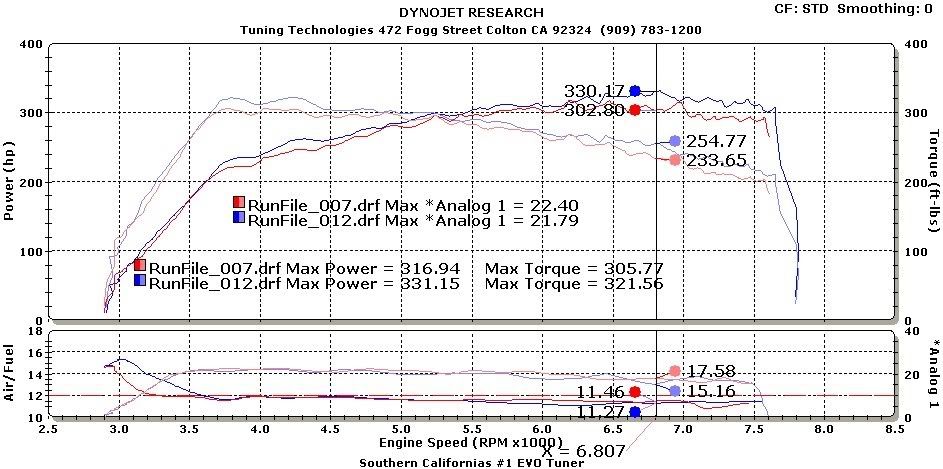


- tuned on 91 octane
- STOCK o2 Housing
- STOCK springs and ratainers
Items On During The Tune:
-TUNING TECHNOLOGIES tuned
-AMSOIL fluids
-Cosworth 272 M2 camshafts
-ETS 3inch front mount intercooler
-ETS 2.5inch lower IC pipe
-AEM short-ram intake
-Megan 3inch TBE
-Walbro 255lph fuel pump
-Precision Turbo Engine 780cc fuel injectors
-ARP head studs
-SUN Auto Hyper Grounding kit
-SUN Auto Hyper Voltage type MR


Thread Starter
Evolved Member
iTrader: (33)
Joined: Jul 2002
Posts: 5,313
Likes: 1
From: Raleigh, Transplanted from Toronto, Canada
Kelfords/Supertechs being installed as we speak, along with the 1200 PTE's I've had for a while. Tuning this weekend. Hopefully with my mods I'll hit 360+ on 93 pump and close to 400 on E85.
last things to upgrade are intercooler, stockframe turbo, either a modified stock turbo manifold or a Shearer/JM Fab tubular design. I have a friend that is really tight with Skunk2 and they have been trying to talk me into using their intake manifold and using my numbers as a way to promote their Intake manifolds.
Wish me luck....I'm going to let the car and the area under the curve dictate how high I spin the motor. I'm thinking it won't go much past 8k....but we'll see.
last things to upgrade are intercooler, stockframe turbo, either a modified stock turbo manifold or a Shearer/JM Fab tubular design. I have a friend that is really tight with Skunk2 and they have been trying to talk me into using their intake manifold and using my numbers as a way to promote their Intake manifolds.
Wish me luck....I'm going to let the car and the area under the curve dictate how high I spin the motor. I'm thinking it won't go much past 8k....but we'll see.

Evolving Member
Joined: Jun 2009
Posts: 117
Likes: 0
From: BoCoMo
stock turbo just do cams.. you can float a valve whether or not you have springs and retainers.. stock valvetrain with cams, cgears, springs, retainers still can't protect your valves from damage if you plan on revving it high. revving your motor that high on a stock frame turbo should be the least of your concerns  good luck though, and building everything isn't a bad idea -- might as well get it all done at once right?
i'm maxing out my stock turbo (maybe a bbk) and i'm just doing cams -- 272/272 kelfords.
good luck though, and building everything isn't a bad idea -- might as well get it all done at once right?i'm maxing out my stock turbo (maybe a bbk) and i'm just doing cams -- 272/272 kelfords.


Are any of these cams better than the HKS 272s.
I am currently running the HKS 272's so I am curious to know so ianyone has the answer greatly appreciated if you would PM...
Thanks evo buddies.
I am currently running the HKS 272's so I am curious to know so ianyone has the answer greatly appreciated if you would PM...
Thanks evo buddies.

To me the high performance spring thing is much like the head stud thing. when are they really needed? heres my take on them backed by extensive 4g63 experience.
First note. stock 4g63 springs are quite good. years ago when many dsm guys were running AFC for fuel control there were many many reports of accidental over revs on miss shifts. the AFC has peak hold RPM function so this data was readily available. there were countless over revs reported in the 9500-10,500 with out hurting the engine. most all of these reports had cams of some sort on stock springs
second note. EVO springs are awesome. they are behive design. an improvement over earlier designs DSM spring. so over rev is at least as good as DSM spring. then there is second great feature of evo spring. The retainer is made of aluminum and quite thick. at full lift the retainer almost touches the guide seal. I dont remember how close but really close. when I first saw this I thought wow thats brilliant. even if valve tries to fly off cam lobe it it limited to a few though travel and is stopped by the guide seal. much like that cushion at the top of your shock body. this nifty feature isnt gonna stop damage from nastly high over rev but it certainly extends over rev by another 500-1000 rpm over dsm springs.
last important note. turbo cams are not anything near as radical as N/A cams. the profiles are easy for valve to follow. high duration cams like 272, 280 have lobes that are smother and easier to follow than stock cams. cams with very fast ramp rates are the ones that need a spring rate increase. for turbo cars this is the upper end of scale only.
I have been running stock eight springs in my yellow car for years with crower 280 cams. there is no evidence of valve float. pulls hard to 8000 (2.3) and regularly blows past my 8300rpm rev limit. has hit 9000+ many many many times.
Those who say springs are needed with all upgraded cams must be coming from a N/A back round. there really isnt much knowledge or experience behind the statement.
last. what happens when you have more spring tension?
cams are harder to turn = less HP=higher oil temps= more failed oil pumps form the belt being harder to turn putting too much side load on oil pump gear=premature main bearing wear as belts pulls crank toward head.
First note. stock 4g63 springs are quite good. years ago when many dsm guys were running AFC for fuel control there were many many reports of accidental over revs on miss shifts. the AFC has peak hold RPM function so this data was readily available. there were countless over revs reported in the 9500-10,500 with out hurting the engine. most all of these reports had cams of some sort on stock springs
second note. EVO springs are awesome. they are behive design. an improvement over earlier designs DSM spring. so over rev is at least as good as DSM spring. then there is second great feature of evo spring. The retainer is made of aluminum and quite thick. at full lift the retainer almost touches the guide seal. I dont remember how close but really close. when I first saw this I thought wow thats brilliant. even if valve tries to fly off cam lobe it it limited to a few though travel and is stopped by the guide seal. much like that cushion at the top of your shock body. this nifty feature isnt gonna stop damage from nastly high over rev but it certainly extends over rev by another 500-1000 rpm over dsm springs.
last important note. turbo cams are not anything near as radical as N/A cams. the profiles are easy for valve to follow. high duration cams like 272, 280 have lobes that are smother and easier to follow than stock cams. cams with very fast ramp rates are the ones that need a spring rate increase. for turbo cars this is the upper end of scale only.
I have been running stock eight springs in my yellow car for years with crower 280 cams. there is no evidence of valve float. pulls hard to 8000 (2.3) and regularly blows past my 8300rpm rev limit. has hit 9000+ many many many times.
Those who say springs are needed with all upgraded cams must be coming from a N/A back round. there really isnt much knowledge or experience behind the statement.
last. what happens when you have more spring tension?
cams are harder to turn = less HP=higher oil temps= more failed oil pumps form the belt being harder to turn putting too much side load on oil pump gear=premature main bearing wear as belts pulls crank toward head.

Im still on stocks springs with HKS 280 revving 9K rpm.


Both of these cam sets deliver considerably greater power potential than the HKS grinds. The HKS cams are designed to work around the factory valvetrain (specifically valvesprings). The GSCs and Kelfords are not. The difference in power between HKS cams and these cams can be as much as an additional 5-10% (as per AMS' testing), depending upon the capability of the overall setup.
Last edited by Ted B; Oct 15, 2009 at 06:33 PM.
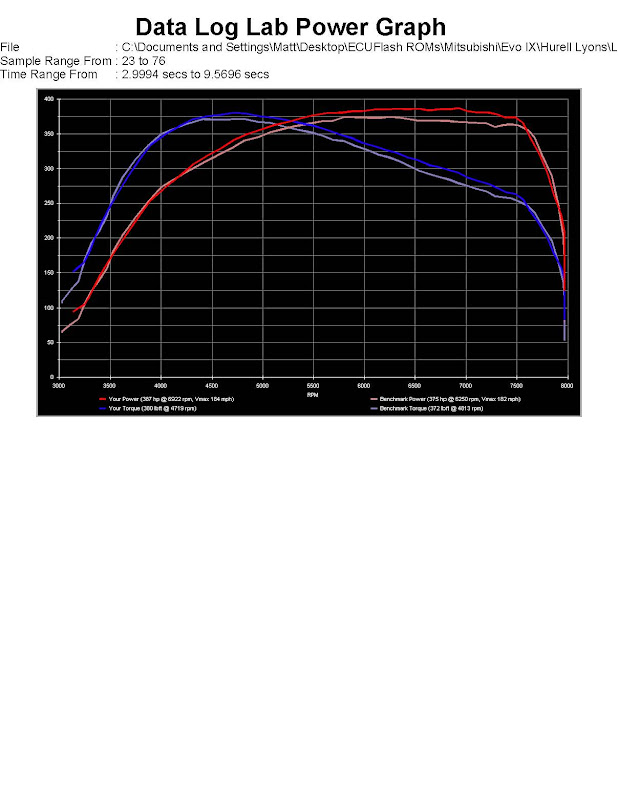

To me the high performance spring thing is much like the head stud thing. when are they really needed? heres my take on them backed by extensive 4g63 experience.
First note. stock 4g63 springs are quite good. years ago when many dsm guys were running AFC for fuel control there were many many reports of accidental over revs on miss shifts. the AFC has peak hold RPM function so this data was readily available. there were countless over revs reported in the 9500-10,500 with out hurting the engine. most all of these reports had cams of some sort on stock springs
second note. EVO springs are awesome. they are behive design. an improvement over earlier designs DSM spring. so over rev is at least as good as DSM spring. then there is second great feature of evo spring. The retainer is made of aluminum and quite thick. at full lift the retainer almost touches the guide seal. I dont remember how close but really close. when I first saw this I thought wow thats brilliant. even if valve tries to fly off cam lobe it it limited to a few though travel and is stopped by the guide seal. much like that cushion at the top of your shock body. this nifty feature isnt gonna stop damage from nastly high over rev but it certainly extends over rev by another 500-1000 rpm over dsm springs.
last important note. turbo cams are not anything near as radical as N/A cams. the profiles are easy for valve to follow. high duration cams like 272, 280 have lobes that are smother and easier to follow than stock cams. cams with very fast ramp rates are the ones that need a spring rate increase. for turbo cars this is the upper end of scale only.
I have been running stock eight springs in my yellow car for years with crower 280 cams. there is no evidence of valve float. pulls hard to 8000 (2.3) and regularly blows past my 8300rpm rev limit. has hit 9000+ many many many times.
Those who say springs are needed with all upgraded cams must be coming from a N/A back round. there really isnt much knowledge or experience behind the statement.
last. what happens when you have more spring tension?
cams are harder to turn = less HP=higher oil temps= more failed oil pumps form the belt being harder to turn putting too much side load on oil pump gear=premature main bearing wear as belts pulls crank toward head.
First note. stock 4g63 springs are quite good. years ago when many dsm guys were running AFC for fuel control there were many many reports of accidental over revs on miss shifts. the AFC has peak hold RPM function so this data was readily available. there were countless over revs reported in the 9500-10,500 with out hurting the engine. most all of these reports had cams of some sort on stock springs
second note. EVO springs are awesome. they are behive design. an improvement over earlier designs DSM spring. so over rev is at least as good as DSM spring. then there is second great feature of evo spring. The retainer is made of aluminum and quite thick. at full lift the retainer almost touches the guide seal. I dont remember how close but really close. when I first saw this I thought wow thats brilliant. even if valve tries to fly off cam lobe it it limited to a few though travel and is stopped by the guide seal. much like that cushion at the top of your shock body. this nifty feature isnt gonna stop damage from nastly high over rev but it certainly extends over rev by another 500-1000 rpm over dsm springs.
last important note. turbo cams are not anything near as radical as N/A cams. the profiles are easy for valve to follow. high duration cams like 272, 280 have lobes that are smother and easier to follow than stock cams. cams with very fast ramp rates are the ones that need a spring rate increase. for turbo cars this is the upper end of scale only.
I have been running stock eight springs in my yellow car for years with crower 280 cams. there is no evidence of valve float. pulls hard to 8000 (2.3) and regularly blows past my 8300rpm rev limit. has hit 9000+ many many many times.
Those who say springs are needed with all upgraded cams must be coming from a N/A back round. there really isnt much knowledge or experience behind the statement.
last. what happens when you have more spring tension?
cams are harder to turn = less HP=higher oil temps= more failed oil pumps form the belt being harder to turn putting too much side load on oil pump gear=premature main bearing wear as belts pulls crank toward head.
Too bad the EVO community doesn't have the support and knowledge without greed that the DSM crowd does.