


Fuel rail-e85?


Didn't John Shepherd make like 580whp on stock rail and lines? I can't remember the exact numbers, but I think he just had 1600's and a double pumper.


Erik, this one? This is the D Rail prototype. It is the largest internal volume fuel rail available for the Evo. It also has radiused inlets leading to the top of the injectors for better flow when the injector opens which has many benefits for improved fluid transfer and decreasing the fule pulse signature of the pumps. There are two versions one for AN lines and one for OEM lines. They are available as individual items.
Last edited by Indy Evo; Jan 31, 2009 at 08:36 AM.

That rail looks like pretty standard fuel rail stock, although it looks like it's been opened up quite a bit more; can you share the ID and length of the rail (which would let us get a ballpark on the internal volume)? I'm curious how you radiused the injector inlets, although I have a few ideas.  Do you plan on annodizing it internally (which would be very useful for those of us running ethanol or methanol; I can't tell from the picture, although it looks like it was machined after annodizing regardless)? Nice to see the mounts are pretty beefy; after seeing the after-effects of a rail separating from the mounting tabs, I'm pretty paranoid about that kind of thing now.
(For the DIYers, here's a few universal options I've seen; you can get it on eBay already annodized for pretty cheap, depending on the length you need. However, you'll need to drill the injector ports, tap the ends, and come up with a mounting arrangement, which is why this is really only directed at people who like to do their own fabrication.)
Do you plan on annodizing it internally (which would be very useful for those of us running ethanol or methanol; I can't tell from the picture, although it looks like it was machined after annodizing regardless)? Nice to see the mounts are pretty beefy; after seeing the after-effects of a rail separating from the mounting tabs, I'm pretty paranoid about that kind of thing now.(For the DIYers, here's a few universal options I've seen; you can get it on eBay already annodized for pretty cheap, depending on the length you need. However, you'll need to drill the injector ports, tap the ends, and come up with a mounting arrangement, which is why this is really only directed at people who like to do their own fabrication.)
The Wilson Manifolds fuel rails will be available two sizes, the standard size of 11/16 and the D Rail. They will be available with fittings to work with the stock lines and also AN lines. The D Rail holds 15% more volume than the 11/16 rail. It will be a direct bolt on kit with nothing else to buy. The production rail mounts will be made from billet aluminum. The radius entry design has been awarded a patent. These were built with the E85 guys in mind and have been run on E85 and pure methanol in V8 applications without any problems.
Hi guys,
I see I was quoted earlier in the thread. Some things have changed since whenever it was that I said what was quoted.
I have done a substantial amount of E85 tuning and as far as I know I think Keith M. was the first EVO owner to use the fuel in his EVO and I did the tuning on it. Doesn't matter really but the point I'm trying to make is the information I am going to give you guys is from quite a bit of experience. These are some examples of what I have seen and some general information.
First, we had a large HP EVO on our dyno. BIG external pump on the car and -10 lines on it. We used adapters on the stock fuel rail to use the -10 AN lines, it had an aftermarket regulator on it and 1600cc injectors. At just barely over 700 whp on our dyno the car started running lean. We were out of fuel. I then changed to the billet aluminum rail we sell, the car instantly went extremely rich, down to high 9's to low 10:1 range. Problem fixed.
At 500 whp on our dyno a single Walbro 255 pump will no longer flow enough to keep an engine in one piece. The fuel pressure drops off and the fueling has to be compensated for with running high IDC's or larger injectors.
John Shepherd's EVO ran 9.98 on E85 on our dyno. The car was running our double pumper, stock fuel rail, stock regulator, stock lines and 1600 cc injectors. We ran out of fuel at about 590 whp. I advised John to change the fuel rail and to modify the Walbro pumps so they would run more pressure. (Not going to discuss that because of the liability). John did those two mods and went from running lean to filthy rich again.
The fuel rail that Indy posted, the standard 11/16" inch rail. We use to build a billet rail just like that for the DSM's. The rails were not coated/anodized. This is the rail (2 of them actually) that was run on John Shepherd's 1G DSM, on pure methanol. No problems ever and no signs of corrosion.
E85 has a bad reputation from people who don't really know of being corrosive. This does not seem to be the case and from the internet research I have done also does not seem to be the case. Ethanol, pure, is also not corrosive like methanol is. We have left parts of our double pumper fuel system soaking in E98 for weeks at a time to see if there would be any effects and I have seen none.
Our double pumper uses a CNC's aluminum bulk head fuel fitting with a brass hose barb. We also use a Multi-fuel compatible fuel line from Gates in the systems. The fuel filter we supply with our double pumper is all stainless steel. The clamps we use inside the tank on the fuel lines and on the outside are all stainless steel too.
When building our double pumper we consulted with some experts in the fuel industry and gave them the dimensions of the fuel line. I was told that the fuel line, pushing fuel through it, would flow enough on gasoline to produce close to 1,000 hp at the flywheel.
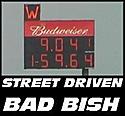
I will use my car as an example. I am running a single set of PTE 1200cc injectors, stock feed and return lines, our double pumper with modified high pressure pumps, stock regulator and our billet fuel rail. The car, in 3rd gear just made 705 whp and has run 9.04 at 159.64 mph, it weighs 2985 pounds. I am at about 90% duty cycle in my car now.
You do have to keep in mind that on true E85 (not E70 or some other mixture) you will need very close to 30% more fuel to make the same power as on gasoline. This means all the numbers I quoted above for HP will drop by almost the same 30%.
Keep in mind to that the amount of fuel you need will vary depending on your BSFC, I run most of the cars referred to above in the mid 11:1 range for AFR's. Running a car at 12.5:1 will have a smaller demand for the amount of fuel that needs to be delivered.
Hope this information is helpful.
I see I was quoted earlier in the thread. Some things have changed since whenever it was that I said what was quoted.
I have done a substantial amount of E85 tuning and as far as I know I think Keith M. was the first EVO owner to use the fuel in his EVO and I did the tuning on it. Doesn't matter really but the point I'm trying to make is the information I am going to give you guys is from quite a bit of experience. These are some examples of what I have seen and some general information.
First, we had a large HP EVO on our dyno. BIG external pump on the car and -10 lines on it. We used adapters on the stock fuel rail to use the -10 AN lines, it had an aftermarket regulator on it and 1600cc injectors. At just barely over 700 whp on our dyno the car started running lean. We were out of fuel. I then changed to the billet aluminum rail we sell, the car instantly went extremely rich, down to high 9's to low 10:1 range. Problem fixed.
At 500 whp on our dyno a single Walbro 255 pump will no longer flow enough to keep an engine in one piece. The fuel pressure drops off and the fueling has to be compensated for with running high IDC's or larger injectors.
John Shepherd's EVO ran 9.98 on E85 on our dyno. The car was running our double pumper, stock fuel rail, stock regulator, stock lines and 1600 cc injectors. We ran out of fuel at about 590 whp. I advised John to change the fuel rail and to modify the Walbro pumps so they would run more pressure. (Not going to discuss that because of the liability). John did those two mods and went from running lean to filthy rich again.
The fuel rail that Indy posted, the standard 11/16" inch rail. We use to build a billet rail just like that for the DSM's. The rails were not coated/anodized. This is the rail (2 of them actually) that was run on John Shepherd's 1G DSM, on pure methanol. No problems ever and no signs of corrosion.
E85 has a bad reputation from people who don't really know of being corrosive. This does not seem to be the case and from the internet research I have done also does not seem to be the case. Ethanol, pure, is also not corrosive like methanol is. We have left parts of our double pumper fuel system soaking in E98 for weeks at a time to see if there would be any effects and I have seen none.
Our double pumper uses a CNC's aluminum bulk head fuel fitting with a brass hose barb. We also use a Multi-fuel compatible fuel line from Gates in the systems. The fuel filter we supply with our double pumper is all stainless steel. The clamps we use inside the tank on the fuel lines and on the outside are all stainless steel too.
When building our double pumper we consulted with some experts in the fuel industry and gave them the dimensions of the fuel line. I was told that the fuel line, pushing fuel through it, would flow enough on gasoline to produce close to 1,000 hp at the flywheel.
I will use my car as an example. I am running a single set of PTE 1200cc injectors, stock feed and return lines, our double pumper with modified high pressure pumps, stock regulator and our billet fuel rail. The car, in 3rd gear just made 705 whp and has run 9.04 at 159.64 mph, it weighs 2985 pounds. I am at about 90% duty cycle in my car now.
You do have to keep in mind that on true E85 (not E70 or some other mixture) you will need very close to 30% more fuel to make the same power as on gasoline. This means all the numbers I quoted above for HP will drop by almost the same 30%.
Keep in mind to that the amount of fuel you need will vary depending on your BSFC, I run most of the cars referred to above in the mid 11:1 range for AFR's. Running a car at 12.5:1 will have a smaller demand for the amount of fuel that needs to be delivered.
Hope this information is helpful.

I have this done to the walbro that is in my car. Doing this supposedly makes them burn out faster. I am still waiting for mine to give out. I have had the same pump now for 2 years. On top of that, I am using the stock wiring, no rewire. So if there is a voltage drop as bad as some people say. It should get hot more often and burn out. STILL WAITING.
But now it is time for twin pumps. Car does not want to make anymore puwer on the single. Plus I am going to add a few more things(fuel rail, and FPR) to the system, in case e85 ever makes it to NY.
But now it is time for twin pumps. Car does not want to make anymore puwer on the single. Plus I am going to add a few more things(fuel rail, and FPR) to the system, in case e85 ever makes it to NY.
Last edited by Cyloc; Jan 31, 2009 at 06:37 PM.

Actually the voltage drop is due to OEM wiring to the pump that is insufficient. Think of the stock wiring as a 3 ohm resistor or so. With added resistance the current in the loop drops, thus the pump sees less voltage. on average it will be about 2 volts less at the pump than the battery. If anything the pump will last longer.
Not that it really matters anyways as the stock evo's sport a 2 speed fuel pump setup. During normal driving the voltage is split between the fuel pump resistor and fuel pump. When the ecu detects high load a relay jumpers across the fuel pump resistor essentially rendering it meaningless, and the pump sees full battery voltage (or as much of it that the stock wiring can provide).
Not that it really matters anyways as the stock evo's sport a 2 speed fuel pump setup. During normal driving the voltage is split between the fuel pump resistor and fuel pump. When the ecu detects high load a relay jumpers across the fuel pump resistor essentially rendering it meaningless, and the pump sees full battery voltage (or as much of it that the stock wiring can provide).

EvoM Guru
iTrader: (50)
Joined: Mar 2006
Posts: 9,675
Likes: 132
From: Tri-Cities, WA // Portland, OR
Interesting stuff, but for the examples you mentioned, it seems a little difficult to sort out whether it was a more fuel rail limitation or a fuel pump limitation. Do you have a recommendation on what E85 whp level to upgrade to an aftermarket rail? Are the 1/2" ID rails (90% of the rails out there) sufficient?
Sorry mrfred, I wasn't being specific to just the rail problem. I kind of hit on more than I needed to.
I am not familar with all the rails out there but I would say that a 1/2" rail is going to sufficient as the fuel line itself is only about 5/16". The biggest problem with the factory rail is the extremely small inlet. I haven't tried it but I'd guess if just that was opened up the stock rail would see some large improvements. I've also seen the end cap on the stock rail seperate, the end blew off, so I don't think keeping the stock rail is a great idea anyway.
On John's car at 580 whp the rail was a big improvement on E85. On Matt's car the rail was the restriction at 700'ish. The math doesn't exactly work out to the 30% BUT Matt's car also had -10 lines and a BIG external pump and fuel cell with an aftermarket Aeromotive regulator.
Based on that, the best answer I can give you is 580 whp with the stock rail, lines, regulator, double pumper and 1200's the rail needs to be replaced. That's the best answer I can give.
BTW, the EVO actually switches from 9 volts to the pump to 12 volts at the pump at 2500 rpm regardless of load. Atleast on the 2003-2004's.
If you have a voltage drop at the pump the best place to start is a check of the grounds. The EVO really needs an extra ground or two on it. Just doing that will help with the voltage, not only at the pump, but in the entire system. I run a heavy gauge ground from the intake to the firewall.
As everyone is aware you can install a relay for the primary pump too to get more voltage direct from the battery back there. What many don't know is there is a SUPER NICE, plug and play harness to do that too. I have them but have not run it yet. I think I've been sitting on a few for over a year. It is one of the next things to try on my car when I am finally out of fuel again.
I'd like to run E85 in my RS this year and now with some additional thinking on the matter I believe we can supply enough fuel with our double pumpers to allow the change.
Oh, one more thing about modifying the pumps since you brought it up cyloc. The amps that a modified pump draws is VERY high. I'm not very worried about a pump failing as I haven't really seen any but you may want to consider the wiring because the amperage is very high when the fuel pressure gets up around 70 psi or so if I remember. I have flow sheets and amp draw from a bunch of fuel pumps we sent out to have tested. One of which was the mystery HO pump. If you are interested hit me up on Monday while I'm at work and I can look up how much one draws.
E85 really is great fuel.
I am not familar with all the rails out there but I would say that a 1/2" rail is going to sufficient as the fuel line itself is only about 5/16". The biggest problem with the factory rail is the extremely small inlet. I haven't tried it but I'd guess if just that was opened up the stock rail would see some large improvements. I've also seen the end cap on the stock rail seperate, the end blew off, so I don't think keeping the stock rail is a great idea anyway.
On John's car at 580 whp the rail was a big improvement on E85. On Matt's car the rail was the restriction at 700'ish. The math doesn't exactly work out to the 30% BUT Matt's car also had -10 lines and a BIG external pump and fuel cell with an aftermarket Aeromotive regulator.
Based on that, the best answer I can give you is 580 whp with the stock rail, lines, regulator, double pumper and 1200's the rail needs to be replaced. That's the best answer I can give.
BTW, the EVO actually switches from 9 volts to the pump to 12 volts at the pump at 2500 rpm regardless of load. Atleast on the 2003-2004's.
If you have a voltage drop at the pump the best place to start is a check of the grounds. The EVO really needs an extra ground or two on it. Just doing that will help with the voltage, not only at the pump, but in the entire system. I run a heavy gauge ground from the intake to the firewall.
As everyone is aware you can install a relay for the primary pump too to get more voltage direct from the battery back there. What many don't know is there is a SUPER NICE, plug and play harness to do that too. I have them but have not run it yet. I think I've been sitting on a few for over a year. It is one of the next things to try on my car when I am finally out of fuel again.
I'd like to run E85 in my RS this year and now with some additional thinking on the matter I believe we can supply enough fuel with our double pumpers to allow the change.
Oh, one more thing about modifying the pumps since you brought it up cyloc. The amps that a modified pump draws is VERY high. I'm not very worried about a pump failing as I haven't really seen any but you may want to consider the wiring because the amperage is very high when the fuel pressure gets up around 70 psi or so if I remember. I have flow sheets and amp draw from a bunch of fuel pumps we sent out to have tested. One of which was the mystery HO pump. If you are interested hit me up on Monday while I'm at work and I can look up how much one draws.
E85 really is great fuel.
EvoM Guru
iTrader: (50)
Joined: Mar 2006
Posts: 9,675
Likes: 132
From: Tri-Cities, WA // Portland, OR
Sorry mrfred, I wasn't being specific to just the rail problem. I kind of hit on more than I needed to.
I am not familar with all the rails out there but I would say that a 1/2" rail is going to sufficient as the fuel line itself is only about 5/16". The biggest problem with the factory rail is the extremely small inlet. I haven't tried it but I'd guess if just that was opened up the stock rail would see some large improvements. I've also seen the end cap on the stock rail seperate, the end blew off, so I don't think keeping the stock rail is a great idea anyway.
On John's car at 580 whp the rail was a big improvement on E85. On Matt's car the rail was the restriction at 700'ish. The math doesn't exactly work out to the 30% BUT Matt's car also had -10 lines and a BIG external pump and fuel cell with an aftermarket Aeromotive regulator.
Based on that, the best answer I can give you is 580 whp with the stock rail, lines, regulator, double pumper and 1200's the rail needs to be replaced. That's the best answer I can give.
...
I am not familar with all the rails out there but I would say that a 1/2" rail is going to sufficient as the fuel line itself is only about 5/16". The biggest problem with the factory rail is the extremely small inlet. I haven't tried it but I'd guess if just that was opened up the stock rail would see some large improvements. I've also seen the end cap on the stock rail seperate, the end blew off, so I don't think keeping the stock rail is a great idea anyway.
On John's car at 580 whp the rail was a big improvement on E85. On Matt's car the rail was the restriction at 700'ish. The math doesn't exactly work out to the 30% BUT Matt's car also had -10 lines and a BIG external pump and fuel cell with an aftermarket Aeromotive regulator.
Based on that, the best answer I can give you is 580 whp with the stock rail, lines, regulator, double pumper and 1200's the rail needs to be replaced. That's the best answer I can give.
...
Cyloc, not that it matters much but by looking at the Factory Service Manual it is stated that the fuel pump speed is based on engine load not engine speed:
"While the engine operates with a heavy load, the ECM turns OFF the power transistor in the ECM, causing the fuel pump relay 3 to turn ON. Consequently, the fuel pump relay 3 (terminal No. 1) supplies power directly to the fuel pump (terminal No. 5)." page : 13A-791
Fuel pump relay 3 drops out and the normally closed contacts jumper around the fuel pump resistor giving the pump full speed.
"While the engine operates with a heavy load, the ECM turns OFF the power transistor in the ECM, causing the fuel pump relay 3 to turn ON. Consequently, the fuel pump relay 3 (terminal No. 1) supplies power directly to the fuel pump (terminal No. 5)." page : 13A-791
Fuel pump relay 3 drops out and the normally closed contacts jumper around the fuel pump resistor giving the pump full speed.