


how imprtant is torqe specs?


Start slowly. Definitely _stay_away_from_your_cams_ ... start with something simple, like your exhaust.
All bolts and fasteners have a torque spec associated with them. In a nutshell, if you overtighten it, it may have harmful side-effects (as already mentioned above), if not outright break. On the other hand, if you under-tighten it, then it will wiggle loose over time.
For some of the other guys on here ... is there a way to test your torque wrench for accuracy?
l8r)
All bolts and fasteners have a torque spec associated with them. In a nutshell, if you overtighten it, it may have harmful side-effects (as already mentioned above), if not outright break. On the other hand, if you under-tighten it, then it will wiggle loose over time.
For some of the other guys on here ... is there a way to test your torque wrench for accuracy?
l8r)

Evolving Member
Joined: Oct 2004
Posts: 212
Likes: 0
Nevertheless, as suggested by others in this thread, it would not be wise to start out by working on the engine unless directed by a partner with significant knowledge and experience. This is something that even the pros do at times to allow for double checking the procedure, therefore avoiding costly mistakes.
In regards to your interest in torque wrenches, there are many choices in the market, ranging from needle torque wrenches to digital ones. If we assume that the tool is calibrated from the factory, there should be no major problems when following Mitsu torque specs for the EVO. If anything you might need to convert the units of measurement and observe the recommendations for the use of extensions when working in tight spaces. Please find the following address for some good torque wrenches available at Harbor Freight.
http://www.harborfreight.com/cpi/cta...itemnumber=807
Good luck.

if your asking this question then you have no buisness judging torque, on the other hand if you build motors all day long and you tighten everything uniform then you can get away with it. i personally always use a torque wrench and proper torquing sequence especially on a cylinder head.


Thread Starter
Evolving Member
Joined: Nov 2005
Posts: 238
Likes: 0
From: columbus georgia
ok this was not made for people to tell me that i shouldnt work on my car....thanks guys for being smart. But im gonna work on my car. I refuse to pay someone 800 dollars to install cams when there are step by step instructions on evom on how to do it and hundreds of other places..I have gear head friends also..i just choose to here what u guys have to say as well. Why would i ask about cams and manifolds if i dont already have a exhaust and all the other primary mods such as boost controller and air filter. For you guys that are trying to help me find a good torqe wrence and explaining it to me...i Appreciate you guys...Thanks To the other guys that come on evom to criticize and make funny remarks on here you guys need to find something else to occupy your time. Thanks again

Yah you'll notice any question you ask or just anything you say in general someone always has to be a smarta$$ and think its cool to criticize people asking a simple question. Im with you I enjoy doing my own work and it being my own car I dont car if Im not ase certified i still enjoy doing the work myself and having money for more parts and other things.

buy a fsm buy a quality torque wrench (like a $300+ one) make sure you know the difference between ft/lbs and in/lbs
read the fsm a few times
pray
torque to specs
pray again
drive
read the fsm a few times
pray
torque to specs
pray again
drive

Other than sending it in to the manufacture to get checked and recallibrated, not really. I'm sure there are guessing ways to get it close, but this isn't a tool you want close.

you could make a test rig to test the accuracy of the torque wrench...
heres what i would do, get a digital scale and measure out say 25 pounds of weights. attach said weights to a dowel or some type of fulcrum that pivots. here is a MS paint diagram (ignore distance Y, i thought it was needed when i drew the diagram but its not):
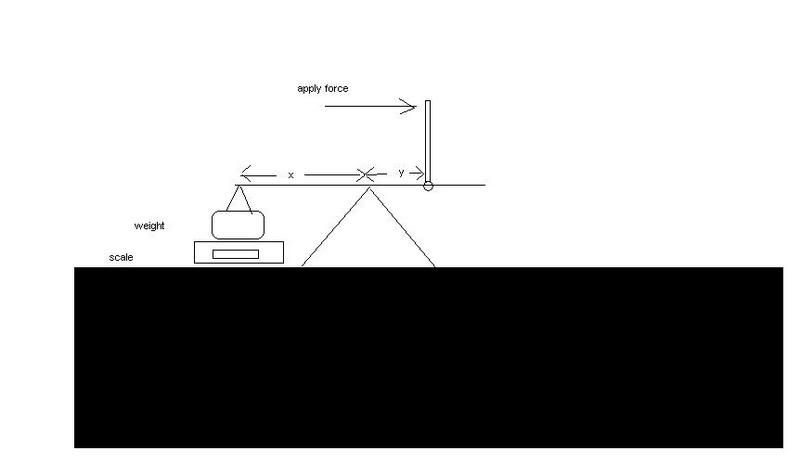
now measure the distance from the weight to the pivot point on the fulcrum (X in the diagram).
next, attached a bolt to the other side of the fulcrum ridgedly so it will not spin with a medium amount of force. put a socket attached to your torque wrench and put it over the bolt. apply pressure parallel to the dowel. now, the torque applied is the length of the dowel from the pivot to the point the mass is attached, multiplied by the weight of the mass. length(ft)*mass(lb) = ft*lb or torque.
because the weight is on a scale, you'll be able to accurately measure what the torque is when you hear the click.
(total weight of mass - reading of scale when torque is applied) * X distance (ft) = torque
you should not actually be moving the mass, you only want to reduce the load on the scale. therefor the distance X multiplied by the weight must always be larger then the torque you are testing for with the wrench.
heres what i would do, get a digital scale and measure out say 25 pounds of weights. attach said weights to a dowel or some type of fulcrum that pivots. here is a MS paint diagram (ignore distance Y, i thought it was needed when i drew the diagram but its not):
now measure the distance from the weight to the pivot point on the fulcrum (X in the diagram).
next, attached a bolt to the other side of the fulcrum ridgedly so it will not spin with a medium amount of force. put a socket attached to your torque wrench and put it over the bolt. apply pressure parallel to the dowel. now, the torque applied is the length of the dowel from the pivot to the point the mass is attached, multiplied by the weight of the mass. length(ft)*mass(lb) = ft*lb or torque.
because the weight is on a scale, you'll be able to accurately measure what the torque is when you hear the click.
(total weight of mass - reading of scale when torque is applied) * X distance (ft) = torque
you should not actually be moving the mass, you only want to reduce the load on the scale. therefor the distance X multiplied by the weight must always be larger then the torque you are testing for with the wrench.


ok this was not made for people to tell me that i shouldnt work on my car....thanks guys for being smart. But im gonna work on my car. I refuse to pay someone 800 dollars to install cams when there are step by step instructions on evom on how to do it and hundreds of other places..I have gear head friends also..i just choose to here what u guys have to say as well. Why would i ask about cams and manifolds if i dont already have a exhaust and all the other primary mods such as boost controller and air filter. For you guys that are trying to help me find a good torqe wrence and explaining it to me...i Appreciate you guys...Thanks To the other guys that come on evom to criticize and make funny remarks on here you guys need to find something else to occupy your time. Thanks again

-Paul
you could make a test rig to test the accuracy of the torque wrench...
heres what i would do, get a digital scale and measure out say 25 pounds of weights. attach said weights to a dowel or some type of fulcrum that pivots. here is a MS paint diagram (ignore distance Y, i thought it was needed when i drew the diagram but its not):
now measure the distance from the weight to the pivot point on the fulcrum (X in the diagram).
next, attached a bolt to the other side of the fulcrum ridgedly so it will not spin with a medium amount of force. put a socket attached to your torque wrench and put it over the bolt. apply pressure parallel to the dowel. now, the torque applied is the length of the dowel from the pivot to the point the mass is attached, multiplied by the weight of the mass. length(ft)*mass(lb) = ft*lb or torque.
because the weight is on a scale, you'll be able to accurately measure what the torque is when you hear the click.
(total weight of mass - reading of scale when torque is applied) * X distance (ft) = torque
you should not actually be moving the mass, you only want to reduce the load on the scale. therefor the distance X multiplied by the weight must always be larger then the torque you are testing for with the wrench.
heres what i would do, get a digital scale and measure out say 25 pounds of weights. attach said weights to a dowel or some type of fulcrum that pivots. here is a MS paint diagram (ignore distance Y, i thought it was needed when i drew the diagram but its not):
now measure the distance from the weight to the pivot point on the fulcrum (X in the diagram).
next, attached a bolt to the other side of the fulcrum ridgedly so it will not spin with a medium amount of force. put a socket attached to your torque wrench and put it over the bolt. apply pressure parallel to the dowel. now, the torque applied is the length of the dowel from the pivot to the point the mass is attached, multiplied by the weight of the mass. length(ft)*mass(lb) = ft*lb or torque.
because the weight is on a scale, you'll be able to accurately measure what the torque is when you hear the click.
(total weight of mass - reading of scale when torque is applied) * X distance (ft) = torque
you should not actually be moving the mass, you only want to reduce the load on the scale. therefor the distance X multiplied by the weight must always be larger then the torque you are testing for with the wrench.
-Paul

People weren't necessarily trying to bash you, but rather save you from making big mistakes. Honestly, if you aren't sure if torque specs are important when installing cams I wouldn't let you touch my car with a wrench. If you do your own cam install to save $800 (way too much for a cam install) and screw it up you'll end up spending a lot more than $800 to fix it. Just make sure you have one of your gear head friends with you the first couple of times you start tearing into things and you should be ok. Just make sure you recognize the limits of your knowledge and experience, and if you have any doubts ask someone that might know.
-Paul
-Paul
