


Vishnu Dyno Day - DC/Philly/NJ/NY


Originally posted by Mark French
hey guys ..
It is true BMT is moving by the dyno day. Its a 8500 square foot facility and the dyno will be up and running by the 25th. We welcome all to come down and watch. For those of you who dont know we are merging with Turbotrix. The new shop has plenty of parking and is all paved. As far as this thread .. we were called to just rent the dyno for the day. Shiv was here once before for a wrx dyno day. It doesnt matter to us who tunes. Hope to see you all at the shop on the 25th ..
Mark
Bmtranny/turbotrix
hey guys ..
It is true BMT is moving by the dyno day. Its a 8500 square foot facility and the dyno will be up and running by the 25th. We welcome all to come down and watch. For those of you who dont know we are merging with Turbotrix. The new shop has plenty of parking and is all paved. As far as this thread .. we were called to just rent the dyno for the day. Shiv was here once before for a wrx dyno day. It doesnt matter to us who tunes. Hope to see you all at the shop on the 25th ..
Mark
Bmtranny/turbotrix
Eric

Newbie
Joined: Mar 2003
Posts: 13
Likes: 0
Originally posted by Eric Lyublinsky
Can you explain why it's not a good solution? What system are you using?
Can you explain why it's not a good solution? What system are you using?
One of the most common things done to increase power at wide open throttle is to "lean out" the air fuel mixture.
This can be done two ways.
1) Reduce the injector pulsewidth
2) Decrease the airflow signal to the ECU, thus causing the ECU to reduce fuel injector pulsewidth
Option number 1 is preferred, but number 2 is usally how it works (AFC, PMS, etc).
If you use method number 2, it causes (possibly unwanted) side effects.
The ECU ignition timing tables are indexed (to a large degree) by air flow. The more air you flow, the less timing you get.
So, if we lie to the ECU about the actual airflow, we are in fact lying to it about the actual LOAD conditions. This can cause the ECU to supply more timing advance than we want it to.
This leads to higher levels of "knock" and other possibly unwanted side effects.
While you *can* use other controllers to adjust timing to minimize this, you wind up with a less than optimal solution because you are trying to get the ECU to do something you want by lying to it about the "real world" conditions.
Hal


Most people have neither the time, money, tuning knowledge or inclination to run standalones. Truth be told they're a huge headache, but the possibilities do speak for themselves. Piggybacks are the best solution of cost vs effectiveness for most people. Honestly though, this thread really needs to turn from the Vishnu argument back to who's actually attending. If you want to discuss Shiv's tuning methods, please do so in another thread and please keep it as civil as possible.

Evolved Member
Joined: Jan 2003
Posts: 1,121
Likes: 1
Originally posted by Eric Lyublinsky
Have you every used xede? I like it alot and it's perfect for my needs. Can you explain why it's not a good solution? What system are you using?
Have you every used xede? I like it alot and it's perfect for my needs. Can you explain why it's not a good solution? What system are you using?
The MAF frequency is used along with engine RPM to calculate the boost (or load) that the engine is seeing. This boost calculation is then used to select one of many fuel and timing tables. By altering the MAF frequency (usually you lower it), you not only affect the fuel, but also the timing that the engine sees. Since the ECU thinks that the boost is lower, you end up thrown into a table with higher timing advance.
The XEDE tries to account for this by having a timing and fuel altering map for each one of these timing and fuel tables in the ECU. So you lean the fuel out, then you have to find the corresponding timing table that you are now in (as a result of changing the MAF frequency), and you have to adjust the timing down so that you don't end up knocking from the extra advance. On top of this, altering the MAF frequency itself puts you in a different fuel map. So a change in MAF frequency CAN have a much larger affect on air to fuel ratio than what you would expect. Basically, you are trying to hit a moving target with the target itself, and you are always 10 feet away.
You see the air to fuel ratio you currently have. So you change the MAF frequency with the XEDE in that load cell (assuming that the load cells are set up correctly). But the change in MAF frequency that happens as a result shifts you into a different load cell! Is Shiv bald? I would be, after trying to tune something like that!
 It is no wonder that he has to do so many dyno runs.
You are piling crap on top of crap. The system is horribly complex. If you try tuning the thing yourself, good luck trying to find all the corresponding maps and their affects.
I don't particularly mind piggybacks. On the right car, they can work wonders. And when they are cheap ($300), they are a bargain basement tuning tool. For that price, I don't mind a little suffering to get where I want to be. I do have a problem with a piggyback that is 2/3 the cost of a very good standalone system, though.
Incidentally, there are piggybacks out there that take part of the pain away by driving the injectors themselves. The TurboXS UTEC is one of them.
Personally, I use DSMLink. It uses the stock DSM ECU, and an aftermarket EPROM. It allows fine control of the injector duty cycle without altering the MAF frequency. It also gives you control over the timing map. It also has fantastic datalogging (boost, knock, air to fuel ratio, etc...), nitrous control, optional speed density metering, no lift to shift clutch-cut, antilag (16psi standing still with my 16G), idle control, knock control, boost gauge display (I display knock on my stock boost gauge), control over ECU tests and check engine lights, fan and fuel pump control, etc... It is like a standalone without the huge learning curve.
All for $615. Of course, you guys don't have that option on the Evo, yet.
Last edited by ShapeGSX; Sep 23, 2003 at 06:55 AM.
Originally posted by ShapeGSX
The XEDE indirectly tries to affect the injector duty cycle by altering a major input to the ECU (the MAF frequency). That would be a fine way of altering the air to fuel ratio, IF the MAF signal were only used to create the injector duty cycle. However, it is not! It is also used for a ton of other things in the ECU. Altering the MAF frequency has unintended side-affects!
The MAF frequency is used along with engine RPM to calculate the boost (or load) that the engine is seeing. This boost calculation is then used to select one of many fuel and timing tables. By altering the MAF frequency (usually you lower it), you not only affect the fuel, but also the timing that the engine sees. Since the ECU thinks that the boost is lower, you end up thrown into a table with higher timing advance.
The XEDE tries to account for this by having a timing and fuel altering map for each one of these timing and fuel tables in the ECU. So you lean the fuel out, then you have to find the corresponding timing table that you are now in (as a result of changing the MAF frequency), and you have to adjust the timing down so that you don't end up knocking from the extra advance. On top of this, altering the MAF frequency itself puts you in a different fuel map. So a change in MAF frequency CAN have a much larger affect on air to fuel ratio than what you would expect. You are piling crap on top of crap. The system is horribly complex. If you try tuning the thing yourself, good luck trying to find all the corresponding maps and their affects.
I don't particularly mind piggybacks. On the right car, they can work wonders. And when they are cheap ($300), they are a bargain basement tuning tool. For that price, I don't mind a little suffering to get where I want to be. I do have a problem with a piggyback that is 2/3 the cost of a very good standalone system, though.
Incidentally, there are piggybacks out there that take part of the pain away by driving the injectors themselves. The TurboXS UTEC is one of them.
Personally, I use DSMLink. It uses the stock DSM ECU, and an aftermarket EPROM. It allows fine control of the injector duty cycle without altering the MAF frequency. It also gives you control over the timing map. It also has fantastic datalogging (boost, knock, air to fuel ratio, etc...), nitrous control, optional speed density metering, no lift to shift clutch-cut, antilag (16psi standing still with my 16G), idle control, knock control, boost gauge display (I display knock on my stock boost gauge), control over ECU tests and check engine lights, fan and fuel pump control, etc... It is like a standalone without the huge learning curve.
All for $615. Of course, you guys don't have that option on the Evo, yet.
The XEDE indirectly tries to affect the injector duty cycle by altering a major input to the ECU (the MAF frequency). That would be a fine way of altering the air to fuel ratio, IF the MAF signal were only used to create the injector duty cycle. However, it is not! It is also used for a ton of other things in the ECU. Altering the MAF frequency has unintended side-affects!
The MAF frequency is used along with engine RPM to calculate the boost (or load) that the engine is seeing. This boost calculation is then used to select one of many fuel and timing tables. By altering the MAF frequency (usually you lower it), you not only affect the fuel, but also the timing that the engine sees. Since the ECU thinks that the boost is lower, you end up thrown into a table with higher timing advance.
The XEDE tries to account for this by having a timing and fuel altering map for each one of these timing and fuel tables in the ECU. So you lean the fuel out, then you have to find the corresponding timing table that you are now in (as a result of changing the MAF frequency), and you have to adjust the timing down so that you don't end up knocking from the extra advance. On top of this, altering the MAF frequency itself puts you in a different fuel map. So a change in MAF frequency CAN have a much larger affect on air to fuel ratio than what you would expect. You are piling crap on top of crap. The system is horribly complex. If you try tuning the thing yourself, good luck trying to find all the corresponding maps and their affects.
I don't particularly mind piggybacks. On the right car, they can work wonders. And when they are cheap ($300), they are a bargain basement tuning tool. For that price, I don't mind a little suffering to get where I want to be. I do have a problem with a piggyback that is 2/3 the cost of a very good standalone system, though.
Incidentally, there are piggybacks out there that take part of the pain away by driving the injectors themselves. The TurboXS UTEC is one of them.
Personally, I use DSMLink. It uses the stock DSM ECU, and an aftermarket EPROM. It allows fine control of the injector duty cycle without altering the MAF frequency. It also gives you control over the timing map. It also has fantastic datalogging (boost, knock, air to fuel ratio, etc...), nitrous control, optional speed density metering, no lift to shift clutch-cut, antilag (16psi standing still with my 16G), idle control, knock control, boost gauge display (I display knock on my stock boost gauge), control over ECU tests and check engine lights, fan and fuel pump control, etc... It is like a standalone without the huge learning curve.
All for $615. Of course, you guys don't have that option on the Evo, yet.
You still have full factory knock safty control via inputs from knock senser. And you have have full timing control as well. I don't know enough about the injector scaling when altering the Maf readings so I can't comment. Plus the xede uses Map VS Rpm for load and the Maf to alter the fuel flow. So if your tuning on map why does the injector scaling matter if you alter the MAF for A/F.
Always Learning, DSMlink sounds great but not a option for us yet so out the door as of right now.
eric

Did anyone consider the www.dynoflash.com as an option?
Originally posted by Alfriedesq
Did anyone consider the www.dynoflash.com as an option?
Did anyone consider the www.dynoflash.com as an option?

Newbie
Joined: Sep 2003
Posts: 22
Likes: 0
Something for all you EVO guys to keep in mind:
The motor in the DSMs, and the motor in the EVO, is basically the same thing. There are differences between them, but the differences are like the variations in the various different small block Chevy motors - there are more simularities than differences.
The DSM guys have been tuning these motors for years and years now. DSMs have won NHRA championships, they've won SCCA World Challenge championships, and they've won SCCA ProSolo championships. There is a wealth of experience out there on how to make these cars work, and work well.
Along the way, we made LOTS of mistakes, but that is the nature of the beast. 5 years ago, tuning was all about monitoring the OEM O2 sensor voltage. 3 years ago, it was all about the ApexI Super AFC fuel piggyback controller, and the HKS VPC piggyback controller. These days, we tend to use standalones or systems like DSMLink that allow one to change ECU map values directly.
That's hard-won, and TRACK-PROVEN experience and knowledge there. We had to learn the hard way what worked, what did not, and why.
Now that doesn't mean that nobody new can join the club, and perhaps we're going to see vendors and tuners that start with the EVO as a clean slate. Some of them may even be reasonably clueful, in time. There are good DSM shops now that didn't exist 2, 3, 4, 5 years ago, and the same will be true with the "pure EVO" shops.
But when you see someone cop a "pull authority and start bull****ting" attitude, and especially when this shop has very little in the way of demonstrated racing success, and ESPECIALLY when this shop is debating the people who DO have the established track records.... well, caveat emptor.
DG
The motor in the DSMs, and the motor in the EVO, is basically the same thing. There are differences between them, but the differences are like the variations in the various different small block Chevy motors - there are more simularities than differences.
The DSM guys have been tuning these motors for years and years now. DSMs have won NHRA championships, they've won SCCA World Challenge championships, and they've won SCCA ProSolo championships. There is a wealth of experience out there on how to make these cars work, and work well.
Along the way, we made LOTS of mistakes, but that is the nature of the beast. 5 years ago, tuning was all about monitoring the OEM O2 sensor voltage. 3 years ago, it was all about the ApexI Super AFC fuel piggyback controller, and the HKS VPC piggyback controller. These days, we tend to use standalones or systems like DSMLink that allow one to change ECU map values directly.
That's hard-won, and TRACK-PROVEN experience and knowledge there. We had to learn the hard way what worked, what did not, and why.
Now that doesn't mean that nobody new can join the club, and perhaps we're going to see vendors and tuners that start with the EVO as a clean slate. Some of them may even be reasonably clueful, in time. There are good DSM shops now that didn't exist 2, 3, 4, 5 years ago, and the same will be true with the "pure EVO" shops.
But when you see someone cop a "pull authority and start bull****ting" attitude, and especially when this shop has very little in the way of demonstrated racing success, and ESPECIALLY when this shop is debating the people who DO have the established track records.... well, caveat emptor.
DG
Originally posted by FarNorthRacing
Something for all you EVO guys to keep in mind:
The motor in the DSMs, and the motor in the EVO, is basically the same thing. There are differences between them, but the differences are like the variations in the various different small block Chevy motors - there are more simularities than differences.
The DSM guys have been tuning these motors for years and years now. DSMs have won NHRA championships, they've won SCCA World Challenge championships, and they've won SCCA ProSolo championships. There is a wealth of experience out there on how to make these cars work, and work well.
Along the way, we made LOTS of mistakes, but that is the nature of the beast. 5 years ago, tuning was all about monitoring the OEM O2 sensor voltage. 3 years ago, it was all about the ApexI Super AFC fuel piggyback controller, and the HKS VPC piggyback controller. These days, we tend to use standalones or systems like DSMLink that allow one to change ECU map values directly.
That's hard-won, and TRACK-PROVEN experience and knowledge there. We had to learn the hard way what worked, what did not, and why.
Now that doesn't mean that nobody new can join the club, and perhaps we're going to see vendors and tuners that start with the EVO as a clean slate. Some of them may even be reasonably clueful, in time. There are good DSM shops now that didn't exist 2, 3, 4, 5 years ago, and the same will be true with the "pure EVO" shops.
But when you see someone cop a "pull authority and start bull****ting" attitude, and especially when this shop has very little in the way of demonstrated racing success, and ESPECIALLY when this shop is debating the people who DO have the established track records.... well, caveat emptor.
DG
Something for all you EVO guys to keep in mind:
The motor in the DSMs, and the motor in the EVO, is basically the same thing. There are differences between them, but the differences are like the variations in the various different small block Chevy motors - there are more simularities than differences.
The DSM guys have been tuning these motors for years and years now. DSMs have won NHRA championships, they've won SCCA World Challenge championships, and they've won SCCA ProSolo championships. There is a wealth of experience out there on how to make these cars work, and work well.
Along the way, we made LOTS of mistakes, but that is the nature of the beast. 5 years ago, tuning was all about monitoring the OEM O2 sensor voltage. 3 years ago, it was all about the ApexI Super AFC fuel piggyback controller, and the HKS VPC piggyback controller. These days, we tend to use standalones or systems like DSMLink that allow one to change ECU map values directly.
That's hard-won, and TRACK-PROVEN experience and knowledge there. We had to learn the hard way what worked, what did not, and why.
Now that doesn't mean that nobody new can join the club, and perhaps we're going to see vendors and tuners that start with the EVO as a clean slate. Some of them may even be reasonably clueful, in time. There are good DSM shops now that didn't exist 2, 3, 4, 5 years ago, and the same will be true with the "pure EVO" shops.
But when you see someone cop a "pull authority and start bull****ting" attitude, and especially when this shop has very little in the way of demonstrated racing success, and ESPECIALLY when this shop is debating the people who DO have the established track records.... well, caveat emptor.
DG
I have spoken with those people many times over the past coupld of years and I think they just come from a different planet
Anyway - there are these kind of users out there - and it seems like when you get articles written up about you in places like car and driver and auto week - THATS where these kind of users seem to look for ideas - - they don;t seem to really pay attention to what goes on in the internet forums that much
I think that crowd is really not interetsted in real speed and making crazy hp
Its like the emperors new clothes - they just want the "magic box" tuned by the "magic guy" so they can boast to thier buddies at ciocktail parties about the great special devise they had added to thier car and how fast it might go if they ever got the nerve to try and go that fast
I guess what is happening is that all the old internet salts who post signatures in the timeslips are smart enough or educated enough to know that a used SAFC will get them the same results at 15% of the cost so there is not that much of a market to sell these devices to that gang
The hard core users will throw a product in the trash can if it don't add up to a faster trap speed at the track then it dont work - no matter who's fancy name is on the box
I have noticed more and more hard core dsm guys buying evos - I think the future of the dsm shootout gang is prob headed to evos in the future - - all the hardcore dsm guys that get ahold of evos love them
With many of the major dsm shops having shop evos - it seems that more and more serious products will be comming out in the months ahead

Evolved Member
iTrader: (20)
Joined: Mar 2003
Posts: 4,941
Likes: 0
From: Danville/Blackhawk, California
Attenuating the MAF signal reduces the calculated load. This can add 0-1 degree of timing advance depending on the engine speed this enleanment occurs. This extra advance can be and is compensated for in the ignition timing maps which are accurate down to a fraction of a degree and load referenced by either MAF, MAP or TPS. MAF signal modification doesn't affect boost control at all since the XEDE has stand-alone control over the solenoid.
Cheers,
shiv
Cheers,
shiv
Last edited by LancerEvoMR; Sep 23, 2003 at 09:18 PM.
Newbie
Joined: Mar 2003
Posts: 13
Likes: 0
Originally posted by shiv@vishnu Attenuating the MAF signal reduces the calculated load. This can add 0-1 degree of timing advance depending on the engine speed this enleanment occurs
What happens if you bump up your injector size (say, to 550's) then pull 15% out to compensate during closed loop operation?
You get a MUCH larger increase in timing due to the reduction in calculated load. Especially at part throttle operation.
Hal
Evolved Member
iTrader: (20)
Joined: Mar 2003
Posts: 4,941
Likes: 0
From: Danville/Blackhawk, California
Originally posted by Hal
It adds AT LEAST 0-1 degree.
What happens if you bump up your injector size (say, to 550's) then pull 15% out to compensate during closed loop operation?
You get a MUCH larger increase in timing due to the reduction in calculated load. Especially at part throttle operation.
Hal
It adds AT LEAST 0-1 degree.
What happens if you bump up your injector size (say, to 550's) then pull 15% out to compensate during closed loop operation?
You get a MUCH larger increase in timing due to the reduction in calculated load. Especially at part throttle operation.
Hal
Peace out,
Shiv
Now that Shiv's had a chance to respond to some of the questions and points brought up in this thread I'm closing it. Of course the info will be there for anyone to read if they're so inclined. Please see the post in NE Regional for more followup and, for the love of Pete, please keep to the subject.

Evolved Member
Joined: Aug 2002
Posts: 2,088
Likes: 0
From: New Jersey, USA
Alright this thread has been cleaned, and hopefully it stays that way. Bashing, bickering, insulting etc... WILL NOT be tolerated here. If you want to do it, do it elsewhere other then these forums. If this thread continues it's past ways, then this thread WILL be closed again or trashed. Hopefully this thread won't succomb to that.
I haven't been back to this thread since it has been cleaned up and my question about the $1075 charge has been answered.
To me it is a joke. This has nothing to do with Shiv. Believe it or not I didn't know anthing about Shiv before our phone conversation a month or so ago. I have now gained some respect for him from that call. That aside..........
I cannot believe anyone is going to spend $1075 on their EVO and the only thing they are going to get in return is a piggyback computer.
Let me put this into perspective from what I am looking at. First off we are all at about the same point with our EVO's. Tuning once done on one car as long as you didn't tune it on the absolute ragged edge the tune will be close enough between our cars not to matter much.
To you guys this should mean buying a piggy back unit isn't going to require much tuning on your car if any at all if the base settings can be done or given to you.
The Super AFC 2 that we are using and selling sells for $340, we have done the dyno tuning and all the wide band work on it here. We haven't tuned the cars on the ragged edge and have had nothing but possitive comments on everyone that has left here.
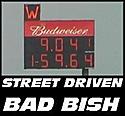
We recently ran a 12.21 at 113.64 mph on 94 octane tuning with nothing but the AFC. It must work. I do believe that is the fastest pump gas time of anyone so far.
Let's take a look at what $1075 could be spent on and how fast you could go.
Buschur Racing (BR) air filter kit, $80
Super AFC w/BR EVO specific afr tuning and installation instructions $340
BR manual boost controller, $75
BR boost gauge and cup, $85
BR axle back, $260
BR offroad pipe, $75
This comes to a total of $915. I would expect WHP to be in the 300 hp range like this on pump gas. 1/4 mile times would be in the 12.5 range at 110 mph. If you wanted to stay emmission legal and not have to swap the offroad pipe in and out you could go with our 3" cat back, this would bring the total to $1130. The same 1/4 mile times and dyno numbers would hold true.
I just don't get the other option.
David Buschur
www.buschurracing.com
To me it is a joke. This has nothing to do with Shiv. Believe it or not I didn't know anthing about Shiv before our phone conversation a month or so ago. I have now gained some respect for him from that call. That aside..........
I cannot believe anyone is going to spend $1075 on their EVO and the only thing they are going to get in return is a piggyback computer.
Let me put this into perspective from what I am looking at. First off we are all at about the same point with our EVO's. Tuning once done on one car as long as you didn't tune it on the absolute ragged edge the tune will be close enough between our cars not to matter much.
To you guys this should mean buying a piggy back unit isn't going to require much tuning on your car if any at all if the base settings can be done or given to you.
The Super AFC 2 that we are using and selling sells for $340, we have done the dyno tuning and all the wide band work on it here. We haven't tuned the cars on the ragged edge and have had nothing but possitive comments on everyone that has left here.
We recently ran a 12.21 at 113.64 mph on 94 octane tuning with nothing but the AFC. It must work. I do believe that is the fastest pump gas time of anyone so far.
Let's take a look at what $1075 could be spent on and how fast you could go.
Buschur Racing (BR) air filter kit, $80
Super AFC w/BR EVO specific afr tuning and installation instructions $340
BR manual boost controller, $75
BR boost gauge and cup, $85
BR axle back, $260
BR offroad pipe, $75
This comes to a total of $915. I would expect WHP to be in the 300 hp range like this on pump gas. 1/4 mile times would be in the 12.5 range at 110 mph. If you wanted to stay emmission legal and not have to swap the offroad pipe in and out you could go with our 3" cat back, this would bring the total to $1130. The same 1/4 mile times and dyno numbers would hold true.
I just don't get the other option.
David Buschur
www.buschurracing.com