


Inverted aftermarket struts?


Thread Starter
Evolved Member
iTrader: (3)
Joined: Feb 2003
Posts: 1,863
Likes: 0
From: Rockville, Maryland
Inverted aftermarket struts?
Im a bit confused..... when people are putting things in like Tein Flex coilovers, they are not inverted like the stock shocks?
If so ...why would you do that?
Lastly... what aftermarket struts/coilovers are designed to be inverted for the evo8?
-shahul
If so ...why would you do that?
Lastly... what aftermarket struts/coilovers are designed to be inverted for the evo8?
-shahul


Evolving Member
Joined: Jun 2003
Posts: 270
Likes: 0
From: MD, USA
Originally Posted by Shahul X
come with pillow mounts for camber adjust?
-shu
-shu


Originally Posted by FT@SELGP
...our preference is the JIC FLTA2 or the RS version... We also customize them for various street/autox/track purposes, and they perform very nicely.
 for a good suspension and a good supplier. FT took care of dealing with JIC USA and my custom suspension order. FT offered to hook me up with an installation, but I chose to install the FLTA2s myself in 5 hours with only minor problems, which were my fault -- like dropping a nut into the engine compartment and then spending over 30 minutes looking for it. Front camber is adjustable in minutes with just a floor jack and a hex wrench -- if you're strong enough, you may not even need the jack.
  Damper settings are easy to adjust, although you'll want to cut an access hole in the trunk trim to get at the rear damper adjustment knobs.
Trending Topics
A few pics:
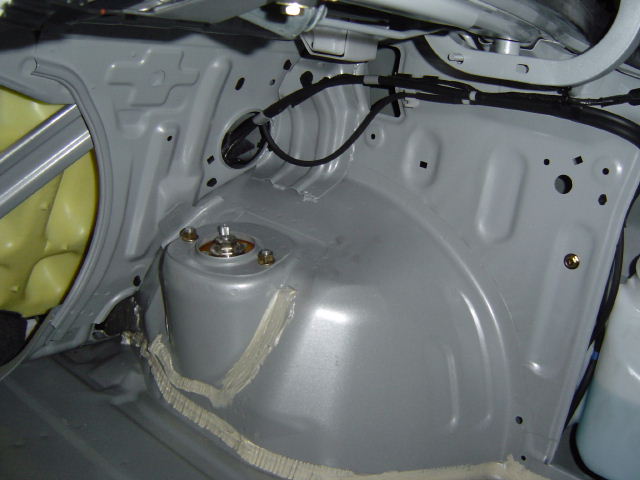
First, the strut top with all trunk trim removed; you can see the knob on top of the strut for adjusting the damper strength:
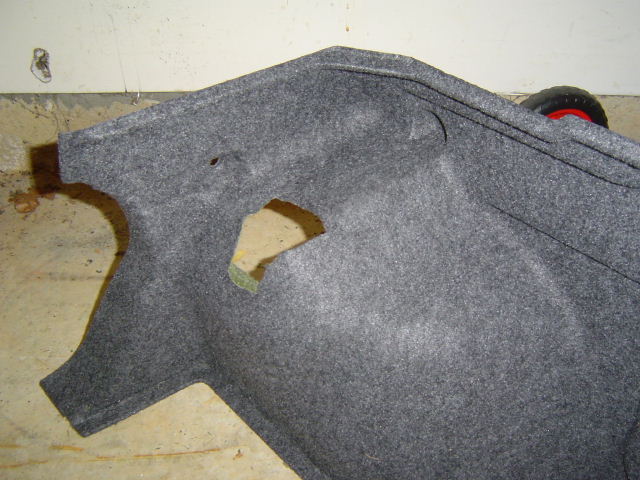
Next, the trunk trim removed from the car showing the hole which I cut for access to the damper adjustment:
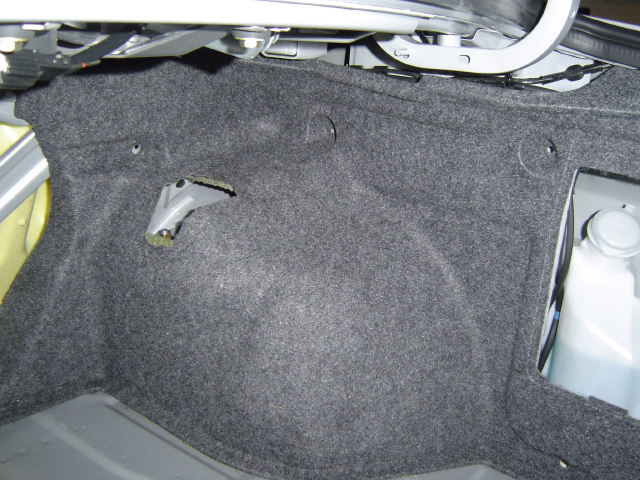
Finally, showing how the trunk trim looks when installed:
First, the strut top with all trunk trim removed; you can see the knob on top of the strut for adjusting the damper strength:
Next, the trunk trim removed from the car showing the hole which I cut for access to the damper adjustment:
Finally, showing how the trunk trim looks when installed:

the reality is most people would not notice the differece between inverted and non inverted - other things like valving and spring rates playa MUCh alrger role in how the car behaves (especially on sreet) than inverted vs traditional. That being said, inverted is said to be a bit faster to react, and is supposed to keep the shock fluid from getting too hot (though I have yet to see a car overheat this fluid on any car!)
Spec wise the FLTA2 is better than the RA if for no other reason that the FLTA2 is dual height adjustable. RA is monotube and inverted though.
Spec wise the FLTA2 is better than the RA if for no other reason that the FLTA2 is dual height adjustable. RA is monotube and inverted though.
Last edited by Z1 Performance; Jun 10, 2004 at 09:10 AM.
Evolving Member
Joined: Jun 2003
Posts: 270
Likes: 0
From: MD, USA
Originally Posted by Z1 Performance
the realisty is most people would not notice the differece between inverted and non inverted - other things like valving and spring rates playa MUCh alrger role in how the car behaves (especially on sreet) than inverted vs traditional. That being said, inverted is said to be a bit faster to react, and is supposed to keep the shock fluid from getting too hot (though I have yet to see a car overheat this fluid on any car!)
Spec wise the FLTA2 is better than the RA if for no other reason that the FLTA2 is dual height adjustable. RA is monotube and inverted though.
Spec wise the FLTA2 is better than the RA if for no other reason that the FLTA2 is dual height adjustable. RA is monotube and inverted though.
Also, I have had experience with viscocity of oil degrading in the shocks enough to notice it on the track. The fluid won't boil, but it can quickly degrade over a certain temp, very similar to brake fluid. Won't happen on a 20-min track session, but over 50-90 mins of tracking, it very well can
I can see it happening in a longer session like that - at most our races in ITS are like 30 minutes. In the WC car, where the races can be longer, we run external resevoir equipped JRZ, so no chance really of it happening.
Evolving Member
Joined: Jun 2003
Posts: 270
Likes: 0
From: MD, USA
Originally Posted by Z1 Performance
I can see it happening in a longer session like that - at most our races in ITS are like 30 minutes. In the WC car, where the races can be longer, we run external resevoir equipped JRZ, so no chance really of it happening.
Evolving Member
Joined: Jun 2003
Posts: 270
Likes: 0
From: MD, USA
Originally Posted by Shahul X
isnt it supposed to lower center of gravity....marginal? oh, thanks for the pics....thats not too bad.....
-shahul
-shahul


Aren't the inverted shocks supposed to reduce the percentage of the weight of the strut assembly that is unsprung? Maybe with a conventional setup (these stats are all hypothetical) the strut assembly is 50/50 sprung and unsprung weight but with inverted it may be 70/30 sprung/unsprung.
Also doesn't the inverted give a slightly different travel radius when compressed? I'm having a difficult time picturing this in my mind.
Also doesn't the inverted give a slightly different travel radius when compressed? I'm having a difficult time picturing this in my mind.