


Wide Track, widening front track


Also keep in mind that changing track width will impact the motion ratio of the front suspension. Using spacers will yield a lower MR than using longer a-arms that moves the hub (and therefore strut mounting location) out with the tire.


Yes, and I noted on Robi modified E9 with Evo X arms that using Camber / Caster plates he was seemingly moving the tops of the struts out to virtually compensate.
Given that we can change spring rates, or just drill stock sway bar with additional hole to add a little roll-stifness I think this won't be a deal breaker.
The proper geometry restoration, and therefore predictable and feel some steering, with smooth full-motion response, is my goal: pretty much stock-like, with little potential improvement in handling...but until I try I cannot even speculate how much difference will it make to handling and grip.
Thanks for the note
Given that we can change spring rates, or just drill stock sway bar with additional hole to add a little roll-stifness I think this won't be a deal breaker.
The proper geometry restoration, and therefore predictable and feel some steering, with smooth full-motion response, is my goal: pretty much stock-like, with little potential improvement in handling...but until I try I cannot even speculate how much difference will it make to handling and grip.
Thanks for the note
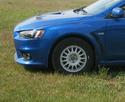
Or is my inserted bit not what you meant?

Travel in respect to the wheel vs shock . Spacers make this ratio worse effectively giving less control of the shock per mm of travel as now the extended track width gives more travel for same amount of shock compression. Everything on a McPherson strut that you adjust as far as camber at strut top lca length wheel offsets and spacers plays a roll there
Has the ability to soften effective sprig rate and overheat overwork dampers. We fiddled with this endlessly I designing mtn bikes. 1:3 was the target there.. Obviously the closer to 1:1 gives best control though the range. McPherson usually has a pretty good motion ratio, given the fact that the strut mounts very close to the centerline of the wheel
Evo x arms is something I'm gonna probably do if I can come up with the right combination of parts that improves roll center the best. Shorter more angled downward arms are best for anti roll geometry , but I think a trade off is worth if if you can split hairs with roll center and track width .
Has the ability to soften effective sprig rate and overheat overwork dampers. We fiddled with this endlessly I designing mtn bikes. 1:3 was the target there.. Obviously the closer to 1:1 gives best control though the range. McPherson usually has a pretty good motion ratio, given the fact that the strut mounts very close to the centerline of the wheel
Evo x arms is something I'm gonna probably do if I can come up with the right combination of parts that improves roll center the best. Shorter more angled downward arms are best for anti roll geometry , but I think a trade off is worth if if you can split hairs with roll center and track width .
Last edited by 211Ratsbud; Nov 22, 2013 at 08:33 PM.
I'm sorry, but that makes no sense to me. Regardless of offset or spacers, the wheel moves up and down with the hub. And it's the movement of the hub relative to the compression of the shock that defines motion ratio. At least, that's how it's defined in every text I've seen.
Yes, adjusting camber via an upper plate can alter the motion ratio, but it's not as much as most people seem to think. Not much action in cosine in the neighborhood of zero degrees.
Yes, adjusting camber via an upper plate can alter the motion ratio, but it's not as much as most people seem to think. Not much action in cosine in the neighborhood of zero degrees.
edit: NVM. I now see the way you're approaching this. Interesting. That's not how it's usually described, but probably more relevant. Thanks.
Last edited by Iowa999; Nov 22, 2013 at 09:04 PM.
To anyone who was in my situation (i.e., thinking that offset and camber have nothing to do with motion ratio, maybe because neither appears in discussions of motion ratio in texts), here's what's going on. When camber is consistently zero, the wheel is always directly out from the hub, so the wheel moves up and down in parallel with the hub. In this case, offset does not affect motion ratio. Likewise, when camber is consistently non-zero, the wheel is either above or below the hub (depending on offset and camber), but remains in the same location relative to the hub, so, again, offset doesn't affect motion ratio. But when camber changes as the suspension cycles, then offset determines how much extra or how much less the wheel moves up and down as the hub moves up and down, so, in this case, offset does matter.
OK. Fine. But does this really make a difference?
Imagine, for example, that you gain 1* of negative camber as the hub moves up 50 mm (which is roughly true of a 2G DSM with modified upper A-arms). Assume also, that the offset of the wheel is +25. In this case, when the hub moves up 50 mm, the increase in camber will cause the tread to move up only 49.56 mm, instead of the whole 50 mm, reducing the true motion ratio by about 1%. If the offset had been zero, there'd be no change to the motion ratio. If offset had been -25, the motion ratio would have been increased by a bit less than 1%.
Upshot, while it's technically true that motion ratio depends on offset when the bump-camber curve is not flat, the effect is minimal, which is probably why texts ignore it. Odds are, stuff like bushing-squish are having a larger effect than bump-camber.
But for math geeks, this is cool.
OK. Fine. But does this really make a difference?
Imagine, for example, that you gain 1* of negative camber as the hub moves up 50 mm (which is roughly true of a 2G DSM with modified upper A-arms). Assume also, that the offset of the wheel is +25. In this case, when the hub moves up 50 mm, the increase in camber will cause the tread to move up only 49.56 mm, instead of the whole 50 mm, reducing the true motion ratio by about 1%. If the offset had been zero, there'd be no change to the motion ratio. If offset had been -25, the motion ratio would have been increased by a bit less than 1%.
Upshot, while it's technically true that motion ratio depends on offset when the bump-camber curve is not flat, the effect is minimal, which is probably why texts ignore it. Odds are, stuff like bushing-squish are having a larger effect than bump-camber.
But for math geeks, this is cool.
Camber by strut top also effects the progressiveness of the damper and spring. So there's a lot going on ad a lack of control to parameters individually in struts. Effective spring rate is measured when the surface pushes perpendicular to strut compression. Start moving that strut top inward and you soften the initial stroke.
So Evo x arms vs spacers do accomplish the same thing as far as track width but on the whole there is some very key differences.
X arms would give a better camber curve from my perspective, and spacers would exaggerate camber changes through the stroke. Spacers would also have more torque on the hub during roll movements .
Thoughts ?
Obviously there is some minute details here but I'm sure everything is the way it is for a reason.
So Evo x arms vs spacers do accomplish the same thing as far as track width but on the whole there is some very key differences.
X arms would give a better camber curve from my perspective, and spacers would exaggerate camber changes through the stroke. Spacers would also have more torque on the hub during roll movements .
Thoughts ?
Obviously there is some minute details here but I'm sure everything is the way it is for a reason.
Last edited by 211Ratsbud; Nov 23, 2013 at 12:09 PM.
To anyone who was in my situation (i.e., thinking that offset and camber have nothing to do with motion ratio, maybe because neither appears in discussions of motion ratio in texts), here's what's going on. When camber is consistently zero, the wheel is always directly out from the hub, so the wheel moves up and down in parallel with the hub. In this case, offset does not affect motion ratio. Likewise, when camber is consistently non-zero, the wheel is either above or below the hub (depending on offset and camber), but remains in the same location relative to the hub, so, again, offset doesn't affect motion ratio. But when camber changes as the suspension cycles, then offset determines how much extra or how much less the wheel moves up and down as the hub moves up and down, so, in this case, offset does matter.
OK. Fine. But does this really make a difference?
Imagine, for example, that you gain 1* of negative camber as the hub moves up 50 mm (which is roughly true of a 2G DSM with modified upper A-arms). Assume also, that the offset of the wheel is +25. In this case, when the hub moves up 50 mm, the increase in camber will cause the tread to move up only 49.56 mm, instead of the whole 50 mm, reducing the true motion ratio by about 1%. If the offset had been zero, there'd be no change to the motion ratio. If offset had been -25, the motion ratio would have been increased by a bit less than 1%.
Upshot, while it's technically true that motion ratio depends on offset when the bump-camber curve is not flat, the effect is minimal, which is probably why texts ignore it. Odds are, stuff like bushing-squish are having a larger effect than bump-camber.
But for math geeks, this is cool.
OK. Fine. But does this really make a difference?
Imagine, for example, that you gain 1* of negative camber as the hub moves up 50 mm (which is roughly true of a 2G DSM with modified upper A-arms). Assume also, that the offset of the wheel is +25. In this case, when the hub moves up 50 mm, the increase in camber will cause the tread to move up only 49.56 mm, instead of the whole 50 mm, reducing the true motion ratio by about 1%. If the offset had been zero, there'd be no change to the motion ratio. If offset had been -25, the motion ratio would have been increased by a bit less than 1%.
Upshot, while it's technically true that motion ratio depends on offset when the bump-camber curve is not flat, the effect is minimal, which is probably why texts ignore it. Odds are, stuff like bushing-squish are having a larger effect than bump-camber.
But for math geeks, this is cool.

Oh, yeah, changes to offset will definitely affect handling, but I doubt that much of it is coming from changes to the motion ratio. Likewise, when you slap your upper plates over, you do alter the motion ratio (along with the camber), but if you do the trig, the effect is miniscule. In fact, if the way you estimate motion ratio for struts is simply by measuring what percent of the way out from the inboard pick-up the shock's axis intercepts the lower LCA, you'll be close enough and within the margin of error produced by all those squishy bushings.


OK, I'll bite.
There are three main ways (that I know of) to "measure" the motion ratio for a strut. You either measure where on the lower LCA the strut connects and assume that's the whole story. That's what I referred to as "estimating." Or you measure the compression and extension of the shock as you move the hub up and down. That's the emprical approach. Or you measure the pick-up points in three-space, along with the length of the lower LCA, and do the math. That's the modeling approach.
You'd be surprised how many people take the first route and how often they either come to exactly the same conclusion as those who spend hours on this or, at least, put down the same lap-times at the track.
With that said, I have always taken the third route, myself.
Or was your question rhetorical?
There are three main ways (that I know of) to "measure" the motion ratio for a strut. You either measure where on the lower LCA the strut connects and assume that's the whole story. That's what I referred to as "estimating." Or you measure the compression and extension of the shock as you move the hub up and down. That's the emprical approach. Or you measure the pick-up points in three-space, along with the length of the lower LCA, and do the math. That's the modeling approach.
You'd be surprised how many people take the first route and how often they either come to exactly the same conclusion as those who spend hours on this or, at least, put down the same lap-times at the track.
With that said, I have always taken the third route, myself.
Or was your question rhetorical?
