


Pulse Star Plugs


there is scientific backing to the claims being made, it's the claim itself that needs to be examined. we all know a better spark will produce more power. we know that a more efficient burn creates less emissions and lowers fuel consumption. what's not proven, as far as I'm concerned, is the fact that this technology will survive harsh driving conditions for anywhere near as long as a traditional plug.
what's also not covered is how deficient are normal spark plugs? if you are seeing such a dramatic increase over a normal spark plug why are they using the plug ignition as the comparison rather than entire ignition period itself They don't clearly explain if they expect the power gain to come from the near instantaneous ignition period or the extreme power produced in the spark compared to a normal plug. if the stock plug produces sufficient power to ignite the fuel properly, getting a stronger plug isn't going to change anything. to claim that all plugs are deficient in all engines is ludicrous; something would have been done about that long before alky injection for forced induction was developed
as far as I'm concerned near instantaneous ignition "could" have a positive effect, but you are talking about an advantage you couldn't take advantage of until a few other systems were improved upon such as your cam and crank position sensing equipment. it's impossible to take advantage of such an improvement without being able to measure it during normal operating conditions. since you couldn't possibly measure the difference between these two sparks in a real time daily driver you couldn't take advantage of the more accurate conditions it presents. even if you could measure it the cam and crank sensing equipment are nowhere near as accurate.
it's a good idea in science, and it may be beneficial on some cars. I doubt it would be worth the money over traditional plugs in ANY application, including racing. I would be easily convinced to hear that it would degrade your performance in strenuous conditions rather than improve it.
what's also not covered is how deficient are normal spark plugs? if you are seeing such a dramatic increase over a normal spark plug why are they using the plug ignition as the comparison rather than entire ignition period itself
They don't clearly explain if they expect the power gain to come from the near instantaneous ignition period or the extreme power produced in the spark compared to a normal plug. if the stock plug produces sufficient power to ignite the fuel properly, getting a stronger plug isn't going to change anything. to claim that all plugs are deficient in all engines is ludicrous; something would have been done about that long before alky injection for forced induction was developed as far as I'm concerned near instantaneous ignition "could" have a positive effect, but you are talking about an advantage you couldn't take advantage of until a few other systems were improved upon such as your cam and crank position sensing equipment. it's impossible to take advantage of such an improvement without being able to measure it during normal operating conditions. since you couldn't possibly measure the difference between these two sparks in a real time daily driver you couldn't take advantage of the more accurate conditions it presents. even if you could measure it the cam and crank sensing equipment are nowhere near as accurate.
it's a good idea in science, and it may be beneficial on some cars. I doubt it would be worth the money over traditional plugs in ANY application, including racing. I would be easily convinced to hear that it would degrade your performance in strenuous conditions rather than improve it.
Last edited by DangerousDan; Mar 3, 2008 at 01:01 PM.

I installed a set of these Pulsar plugs in my Evo IX last weekend. If you have a IX the cost for stock plugs vs the Pulsar's are comparable. I am running meth 50/50 and had them gapped at 0.22. I have had no issues and idle is much smoother since installing these plugs (would have idle'd better with stock plugs since the old one's needed changing). I have no idea if I am gaining any HP & TQ using these plugs. Recently Import tuner tested a set on a 4g63 and found like 6hp and torque. So I guess it really depends if you trust magazine reviews or not, right?
Last edited by churchja; Mar 3, 2008 at 02:47 PM.
there is scientific backing to the claims being made, it's the claim itself that needs to be examined. we all know a better spark will produce more power. we know that a more efficient burn creates less emissions and lowers fuel consumption. what's not proven, as far as I'm concerned, is the fact that this technology will survive harsh driving conditions for anywhere near as long as a traditional plug.
what's also not covered is how deficient are normal spark plugs? if you are seeing such a dramatic increase over a normal spark plug why are they using the plug ignition as the comparison rather than entire ignition period itself They don't clearly explain if they expect the power gain to come from the near instantaneous ignition period or the extreme power produced in the spark compared to a normal plug. if the stock plug produces sufficient power to ignite the fuel properly, getting a stronger plug isn't going to change anything. to claim that all plugs are deficient in all engines is ludicrous; something would have been done about that long before alky injection for forced induction was developed
as far as I'm concerned near instantaneous ignition "could" have a positive effect, but you are talking about an advantage you couldn't take advantage of until a few other systems were improved upon such as your cam and crank position sensing equipment. it's impossible to take advantage of such an improvement without being able to measure it during normal operating conditions. since you couldn't possibly measure the difference between these two sparks in a real time daily driver you couldn't take advantage of the more accurate conditions it presents. even if you could measure it the cam and crank sensing equipment are nowhere near as accurate.
it's a good idea in science, and it may be beneficial on some cars. I doubt it would be worth the money over traditional plugs in ANY application, including racing. I would be easily convinced to hear that it would degrade your performance in strenuous conditions rather than improve it.
what's also not covered is how deficient are normal spark plugs? if you are seeing such a dramatic increase over a normal spark plug why are they using the plug ignition as the comparison rather than entire ignition period itself
They don't clearly explain if they expect the power gain to come from the near instantaneous ignition period or the extreme power produced in the spark compared to a normal plug. if the stock plug produces sufficient power to ignite the fuel properly, getting a stronger plug isn't going to change anything. to claim that all plugs are deficient in all engines is ludicrous; something would have been done about that long before alky injection for forced induction was developed as far as I'm concerned near instantaneous ignition "could" have a positive effect, but you are talking about an advantage you couldn't take advantage of until a few other systems were improved upon such as your cam and crank position sensing equipment. it's impossible to take advantage of such an improvement without being able to measure it during normal operating conditions. since you couldn't possibly measure the difference between these two sparks in a real time daily driver you couldn't take advantage of the more accurate conditions it presents. even if you could measure it the cam and crank sensing equipment are nowhere near as accurate.
it's a good idea in science, and it may be beneficial on some cars. I doubt it would be worth the money over traditional plugs in ANY application, including racing. I would be easily convinced to hear that it would degrade your performance in strenuous conditions rather than improve it.


Thread Starter
Evolved Member
Joined: May 2005
Posts: 644
Likes: 0
From: naples,fl
well ill see whats going on with funds this week and ill get a set but ill have to set up a dyno time on my buddys dyno.
hell i dont even know what its putting out now and my clutch is slipping a bit soo maby after a new clutch ill try them if not done yet
hell i dont even know what its putting out now and my clutch is slipping a bit soo maby after a new clutch ill try them if not done yet

Former Sponsor
Joined: Jul 2007
Posts: 2,362
Likes: 1
From: the land between lancer and evo
I was tempted to play with the idea earlier and give it a go but the price tag was a bit discouraging. more recently I have been pushed by some to test it during the local dyno day next month. If I recieve enough donated funds by April first, we will be able to solve the mystery one way or the other. Currently $35 / $112
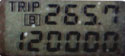
I'll be sticking with what's worked so well for the last 94,000 miles. In about 1000 miles, next time I'm changing my oil, I'll be dropping in a set of fresh NGK LZFR6AIs I picked up last week.



IMO, there's always some new gimmicky spark plug coming out, and it's a waste of money. The only things that matter are if it makes a spark like it's supposed to, and how durable the plug is. +1 to what Mysz, stick with the OEM plugs, they're great.

there is scientific backing to the claims being made, it's the claim itself that needs to be examined. we all know a better spark will produce more power. we know that a more efficient burn creates less emissions and lowers fuel consumption. what's not proven, as far as I'm concerned, is the fact that this technology will survive harsh driving conditions for anywhere near as long as a traditional plug.
what's also not covered is how deficient are normal spark plugs? if you are seeing such a dramatic increase over a normal spark plug why are they using the plug ignition as the comparison rather than entire ignition period itself They don't clearly explain if they expect the power gain to come from the near instantaneous ignition period or the extreme power produced in the spark compared to a normal plug. if the stock plug produces sufficient power to ignite the fuel properly, getting a stronger plug isn't going to change anything. to claim that all plugs are deficient in all engines is ludicrous; something would have been done about that long before alky injection for forced induction was developed
as far as I'm concerned near instantaneous ignition "could" have a positive effect, but you are talking about an advantage you couldn't take advantage of until a few other systems were improved upon such as your cam and crank position sensing equipment. it's impossible to take advantage of such an improvement without being able to measure it during normal operating conditions. since you couldn't possibly measure the difference between these two sparks in a real time daily driver you couldn't take advantage of the more accurate conditions it presents. even if you could measure it the cam and crank sensing equipment are nowhere near as accurate.
it's a good idea in science, and it may be beneficial on some cars. I doubt it would be worth the money over traditional plugs in ANY application, including racing. I would be easily convinced to hear that it would degrade your performance in strenuous conditions rather than improve it.
what's also not covered is how deficient are normal spark plugs? if you are seeing such a dramatic increase over a normal spark plug why are they using the plug ignition as the comparison rather than entire ignition period itself
They don't clearly explain if they expect the power gain to come from the near instantaneous ignition period or the extreme power produced in the spark compared to a normal plug. if the stock plug produces sufficient power to ignite the fuel properly, getting a stronger plug isn't going to change anything. to claim that all plugs are deficient in all engines is ludicrous; something would have been done about that long before alky injection for forced induction was developed as far as I'm concerned near instantaneous ignition "could" have a positive effect, but you are talking about an advantage you couldn't take advantage of until a few other systems were improved upon such as your cam and crank position sensing equipment. it's impossible to take advantage of such an improvement without being able to measure it during normal operating conditions. since you couldn't possibly measure the difference between these two sparks in a real time daily driver you couldn't take advantage of the more accurate conditions it presents. even if you could measure it the cam and crank sensing equipment are nowhere near as accurate.
it's a good idea in science, and it may be beneficial on some cars. I doubt it would be worth the money over traditional plugs in ANY application, including racing. I would be easily convinced to hear that it would degrade your performance in strenuous conditions rather than improve it.
Thread Starter
Evolved Member
Joined: May 2005
Posts: 644
Likes: 0
From: naples,fl
ok ok ok im not trying to ster things up here but i am just the kinda person that likes technolgy, stuff soo maby its not for everyone but ill get some numbers yahl and we'll go from there. then we can figure reliability after all i do believe they have a lifetime warrenty
ok ok ok im not trying to ster things up here but i am just the kinda person that likes technolgy, stuff soo maby its not for everyone but ill get some numbers yahl and we'll go from there. then we can figure reliability after all i do believe they have a lifetime warrenty

Evolved Member
Joined: Feb 2006
Posts: 1,137
Likes: 2
From: Oxnard Ca.
these plugs do not work.......I already took the plunge for everyone and im due to get a new head!!!! bushur hear i come Pulstar big NO-NO.. and no the shorter plugs i got before in a thread i started awhile ago did not ruin my head its the right length i got FROM the company them selves for free and i payed the price...oh well but PULSTAR= stick to stock or colder plugs and ill leave it at that!!!
Pulstar big NO-NO.. and no the shorter plugs i got before in a thread i started awhile ago did not ruin my head its the right length i got FROM the company them selves for free and i payed the price...oh well but PULSTAR= stick to stock or colder plugs and ill leave it at that!!!
these plugs do not work.......I already took the plunge for everyone and im due to get a new head!!!! bushur hear i come Pulstar big NO-NO.. and no the shorter plugs i got before in a thread i started awhile ago did not ruin my head its the right length i got FROM the company them selves for free and i payed the price...oh well but PULSTAR= stick to stock or colder plugs and ill leave it at that!!!
Pulstar big NO-NO.. and no the shorter plugs i got before in a thread i started awhile ago did not ruin my head its the right length i got FROM the company them selves for free and i payed the price...oh well but PULSTAR= stick to stock or colder plugs and ill leave it at that!!!