


Why be afraid of big turbos?


I don't want to derail this thread too much more but I will just say this, you know the fpred on the 4b11 has a totally different exhaust housing right? That is why it can't hit the same numbers. The stock exhaust housing on the X turbos are a lot smaller and just create back pressure when pushed. This helps spool/response but hurts top end which is a huge reason say an fpred on an X spools 5-600rpms faster but might make 40-50whp less. Not tough to figure out.
now go try to find numbers like that for same turbo on the 4b11. dont waste time.
typical results are 430whp at 26psi. with tq around 350-360tq. anemic in comparison.
Cam shape is irrelevant to duration-
evo X cams cant hold valve open long. they have no duration at peak lift. they cant do to the cam direct acting on the valve. ramps have to be far more gradual. therefore the valve cant be held open long at peak lift. it absolutely sucks by design.
your statement and your understanding at this point is completely off.
Last edited by 94AWDcoupe; Sep 3, 2014 at 09:22 AM.


i dont agree. the evo x housing is same as evo 8. just a mirror image. and just to solidfy what I am saying. my evo x hta green made 465whp at 21.5psi boost on my 4g63. with 420 tq at 3800rpm. and that was with fp2 cams (very small) , two mufflers, and on evo 8 maf.
now go try to find numbers like that for same turbo on the 4b11. dont waste time.
typical results are 430whp at 26psi. with tq around 350-360tq. anemic in comparison.
now go try to find numbers like that for same turbo on the 4b11. dont waste time.
typical results are 430whp at 26psi. with tq around 350-360tq. anemic in comparison.
This is actually back in 2009 i think, when the evo x tuning was still new and no one had all the right tables defined so it wasn't even a full tilt tune:
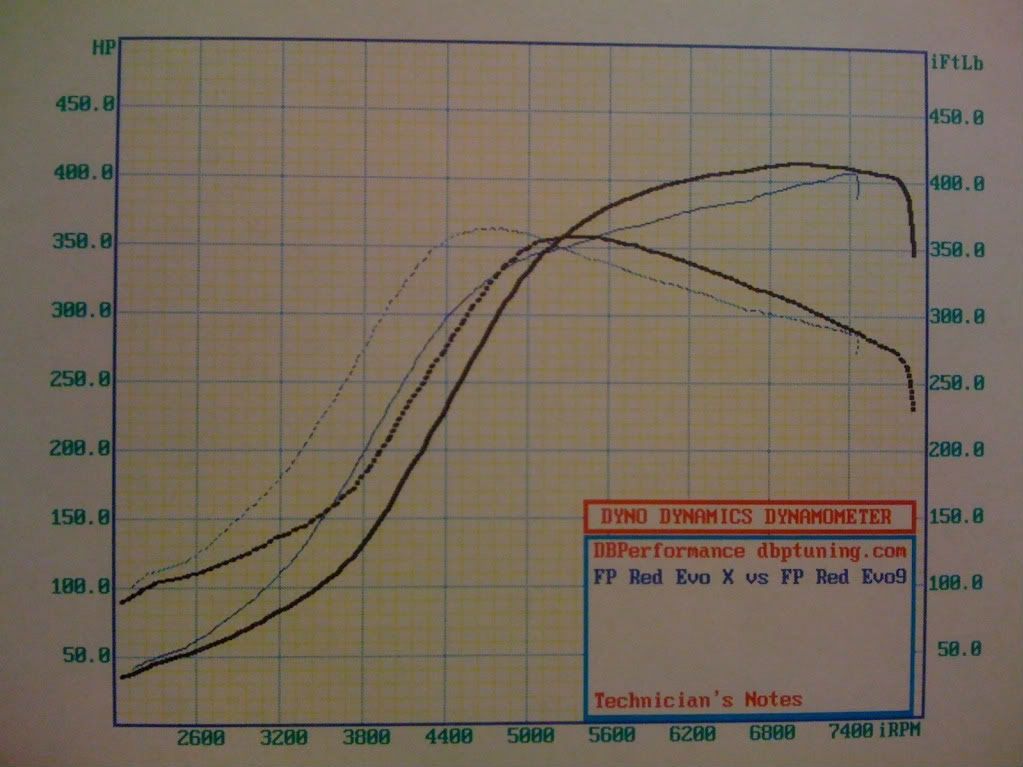
here is my fpred with more boost and new clutch (that blew up my motor, too much torque, 4g63 for sure better there).
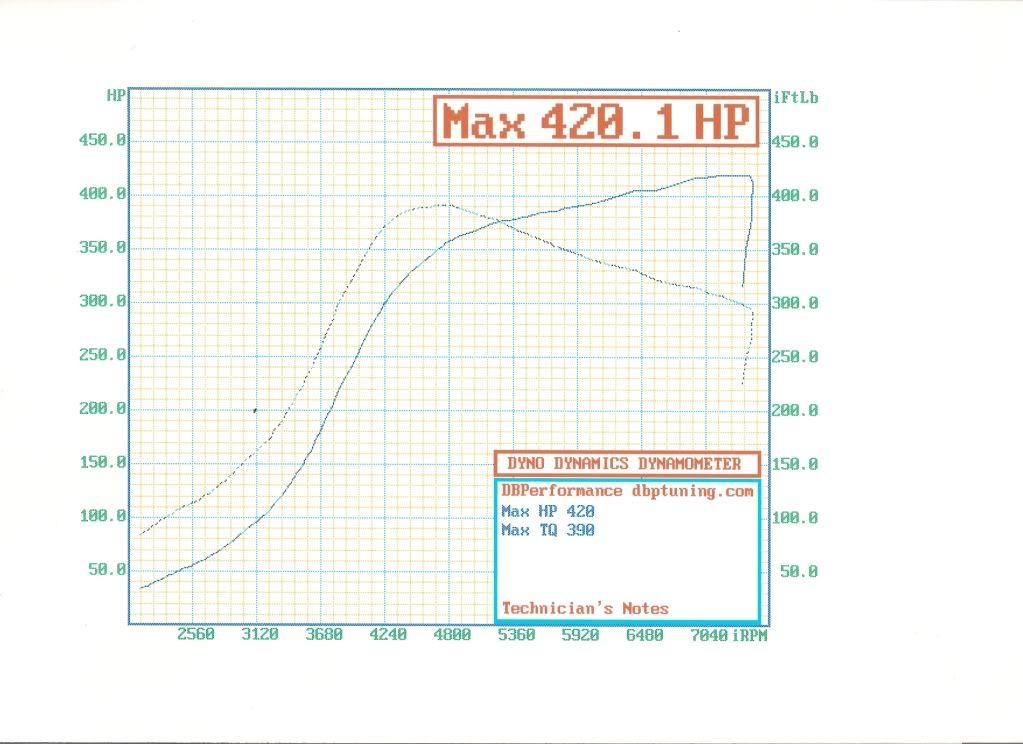
But i also have other comparisons vs other 4g63 setups and smaller turbos, same dyno most/all on e85 or meth.
This is a DD dyno, so remember, 13-15% higher for dynojet numbers. As you can see, the X outspools them big time and low end destroys the older stuff.
Just saying, same applies to all big turbos I have seen too, 4b11 spools and has better low end. The biggest issue of the X is gearing and weight as to why its not as good as the evo 8/9's, motor has nothing to do with it. It might have taken steps back in some areas like you said, but it took steps forward in some too.
I am sure.


thats a picture of cosworth mx1 vs m1 cams. picture is worth a thousand words. the evo X cam is doing all the lifting. the ramps are therefore longer. with ramps being so long there is very little time to hold it open at peak lift. the 4g63 lobes are much more aggressive. they can be because the cam follower is a roller with 1.7 lift multiplication. the cam doesnt do all the lifting. the ramps can therefore open the valve much quicker and hold it open longer.
IMHO the 4g63 head is ingenious by design. the 4b11 head was HUGE step backwards.
thats a picture of cosworth mx1 vs m1 cams. picture is worth a thousand words. the evo X cam is doing all the lifting. the ramps are therefore longer. with ramps being so long there is very little time to hold it open at peak lift. the 4g63 lobes are much more aggressive. they can be because the cam follower is a roller with 1.7 lift multiplication. the cam doesnt do all the lifting. the ramps can therefore open the valve much quicker and hold it open longer.
IMHO the 4g63 head is ingenious by design. the 4b11 head was HUGE step backwards.

Thread Starter
Joined: Jan 2004
Posts: 11,406
Likes: 78
From: Northwest
So by your reasoning, the VR38 in the Skyline, the 2JZ, F1 motors, all new gen Bike motors, are all a step back?
Watch that video I posted and picture that attached to a pivot point rather than having a book rolled across the top. As the cam rotates the hypotenuse increases as you move away from the minor radius (cam journal) toward the major (peak lift). It does the same work in a different shape.
The Evo X turbine housing is also not just a mirrored image. It is most certainly larger, it was what the VIII needs to be
Watch that video I posted and picture that attached to a pivot point rather than having a book rolled across the top. As the cam rotates the hypotenuse increases as you move away from the minor radius (cam journal) toward the major (peak lift). It does the same work in a different shape.
The Evo X turbine housing is also not just a mirrored image. It is most certainly larger, it was what the VIII needs to be
Last edited by JohnBradley; Sep 3, 2014 at 11:54 AM.
that video shows that cam shape has the same overall travel as long as the outside diameters are the same. nothing more nothing less. so you think all 272 cams perform the same because they the valves stay open the same 272 degrees of rotation? of course not. what that video also cant show is the 4g63 cam lobe has a 1.7 multiplier on top of it. so that video is completely irrelevant . cam lobe shape determines the performance of the cam. a pointy cam is spending very little time at full lift. a lobe that looks like a mountain or a squared off mountain is holding the valve open longer at full lift.
theoretically the mildest cam shape will look like a triangle. the most aggressive cam would be shaped like a square. every shape in between these two extremes gives cams there character and performance. you only need to look at cam lobes of evo x to see they are stuck near the triangle end, they cant approach a shape near square. the 4g63 cam can come much closer to a square cam lobe. roller cam followers allow not only lift multiplication , but a more aggressive cam shape because a roller is easier to follow aggressive shapes.
just because auto manufactures are getting away from cam followers and trending to cam on bucket does not mean its performance is superior. its simpler, cheaper and more compact to run cam on buckets. and very necessary for high rpm applications where cam followers are too heavy to control.
theoretically the mildest cam shape will look like a triangle. the most aggressive cam would be shaped like a square. every shape in between these two extremes gives cams there character and performance. you only need to look at cam lobes of evo x to see they are stuck near the triangle end, they cant approach a shape near square. the 4g63 cam can come much closer to a square cam lobe. roller cam followers allow not only lift multiplication , but a more aggressive cam shape because a roller is easier to follow aggressive shapes.
just because auto manufactures are getting away from cam followers and trending to cam on bucket does not mean its performance is superior. its simpler, cheaper and more compact to run cam on buckets. and very necessary for high rpm applications where cam followers are too heavy to control.
Thread Starter
Joined: Jan 2004
Posts: 11,406
Likes: 78
From: Northwest
You forget I do cam engineering among my many roles here. The flank is very important and is what separates a good cam from all others. I presume you dont read much of what I type but since I have done cam engineering for the last 20 years I fully understand what I am looking at. You think the R2 was an accident or the fact that I dont like Kelford flank design?


Thread Starter
Joined: Jan 2004
Posts: 11,406
Likes: 78
From: Northwest
No this was to show that a proper twin scroll housing will take a 42R sized turbo and make it the same or better than a conventional T3 or T3 V-band housing. In this case it is actually better spooling than the smaller turbo. At the same time it has the benefits of more power at less boost than the smaller turbo, less backpressure, less EGT, and in general adds some reliability to the large turbo setup.
Basically I would road race/time attack the 7175 at reasonable boost levels before the 6466. That is the point of this post
Basically I would road race/time attack the 7175 at reasonable boost levels before the 6466. That is the point of this post


I'm pretty sure this back and forth can be solved with actual data, like cam profile traces per 360 degree + rocker amplification if need be, or physical measurement of a turbine housing 
... and I'm pretty sure F1 engines use pneumatic vales

ok ok fire brigade is leaving
... and I'm pretty sure F1 engines use pneumatic vales
ok ok fire brigade is leaving
Thread Starter
Joined: Jan 2004
Posts: 11,406
Likes: 78
From: Northwest
F1 use COB (cam over bucket) profiled cams vs CORA (cam over rocker arm) but you are correct the valvesprings are pneumatic. They still have camshafts.
Miguel, its all about total combo but since these cars were the same other than the turbo kit it was a good comparison.
Time data doesnt correlate however as Akash was a std 5 speed and Austin has a dogbox.
Miguel, its all about total combo but since these cars were the same other than the turbo kit it was a good comparison.
Time data doesnt correlate however as Akash was a std 5 speed and Austin has a dogbox.
Last edited by JohnBradley; Sep 4, 2014 at 08:19 AM.
pretty sure this back and forth can be solved with actual data, like cam profile traces per 360 degree + rocker amplification if need be


a quick drawing of what cam graph would look like between evo 8 cams and evo 10 cams. evo 8 in blue. evo 10 black.

the following shows the simple advantage of roller on cam. this is not even close to what happens when a rocker adds lift multiplication. it just shows the advatage of a roller.
Sliding frictional forces are higher than rolling frictional forces. Therefore, a roller cam takes less horsepower to turn and generally does not wear out as quickly. An added benefit is that roller tappets do not require replacement when changing cams. And, if "pop-up" solid roller tappets are used (such as P/N 72400LUN), the camshaft can be swapped without removing the intake manifold.

Last edited by 94AWDcoupe; Sep 4, 2014 at 02:36 PM.
