


top mount vs equal length vs cast manifolds


One could thermally coat a cast manifold, and some persons do. But since a cast manifold doesn't radiate heat as rapidly as a thin-walled tubular type as it is, it doesn't benefit as much from the thermal coating.


Once the cast manifold has been heated, it will no longer be absorbing energy from the exhaust gases. All of the energy is going into spinning the turbine. With a tubular manifold a significant amount of thermal energy is radiating out to the air, reducing the energy of the air prior to reaching the turbine. While the cast manifold may absorb more energy shortly after startup, it will help the exhaust gas retain energy after it has warmed.
As for radiation, I'm not sure I understand what you're getting at. Radiation heat transfer is a function of the material's emissivity and surface area, neither of which care of cast vs tubular.
Where would you find and inconel manifold? That sounds like a it would cost a pretty penny. From what I understand about inconel (other than it being expensive since I work in a machine shop) doesn't it also resist build up and what not on it? I have heard that it doesn't let oils and other residue stick to it once it is heated.
On the flip side, inco is heinously expensive and a royal PITA to work with.


Evolving Member
Joined: Nov 2006
Posts: 271
Likes: 0
From: Utah
Can't you coat the inside of the material also? With a cast manifold I took a wire wheel and a dremel and ported it out. Well the stock one I should say. I liked the way it felt at low end. Maybe my butt dyno lies but my butt said it was faster lol.
With inconel I already knew how expensive it is. Lol I take 4 barrels of it to a recycling place and get 2 grand out of it just for scrap lol. But can it be coated will it not lose the thermal efficiency and also why is it a PITA?
With inconel I already knew how expensive it is. Lol I take 4 barrels of it to a recycling place and get 2 grand out of it just for scrap lol. But can it be coated will it not lose the thermal efficiency and also why is it a PITA?
Last edited by BerserkerX; Feb 27, 2009 at 07:43 PM.
Coating the inside is great in theory, but in practice it's very difficult to get anything worthwhile to adhere and and hold up over the long term. The good stuff (Swain or Zircotec) is a line-of-sight operation, meaning it is sprayed. This makes it impossible to do the inside of a manifold.
Slurry operations, where you dunk the part in a soup of the stuff and then it "sets up" afterwards, would be great but the types of coatings that use this process aren't really thermal barrier coatings.
Coating an inco manifold wouldn't really be worthwhile since inco has ridiculously low conductivity as it is. It just doesn't get as hot on the outside as, say, cast iron would.
Really, thermal barrier coatings on exhaust manifolds are less about performance and more about preventing exhaust heat from cooking other stuff in your engine bay. True TBCs that actually do something (many are just decorative) inherently make the wall temp of your manifold go sky high and compromise the manifold's longterm durability.
My advice is to forget about TBCs on manifolds and just place a heatshield on whatever you want to protect from the manifold's heat. It'll be cheaper and more durable in the end.
Slurry operations, where you dunk the part in a soup of the stuff and then it "sets up" afterwards, would be great but the types of coatings that use this process aren't really thermal barrier coatings.
Coating an inco manifold wouldn't really be worthwhile since inco has ridiculously low conductivity as it is. It just doesn't get as hot on the outside as, say, cast iron would.
Really, thermal barrier coatings on exhaust manifolds are less about performance and more about preventing exhaust heat from cooking other stuff in your engine bay. True TBCs that actually do something (many are just decorative) inherently make the wall temp of your manifold go sky high and compromise the manifold's longterm durability.
My advice is to forget about TBCs on manifolds and just place a heatshield on whatever you want to protect from the manifold's heat. It'll be cheaper and more durable in the end.
Oh, and inconel is a PITA to work with because it is hard as hell (lots of nickel), strong as hell, and requires a skilled welder to deal with its particular idiosyncracies--the weld puddle tends to look like it has oil and dirt floating on it and its just not as forgiving to weld as, say, stainless.

Evolving Member
Joined: Dec 2003
Posts: 305
Likes: 0
From: England
Inconel is probably the best commercially available material for a manifold. Very high strength at temp and very low CTE and thermal conductivity. Turbo manifolds at the highest form of motorsports use inconel almost exclusively.
On the flip side, inco is heinously expensive and a royal PITA to work with.
On the flip side, inco is heinously expensive and a royal PITA to work with.

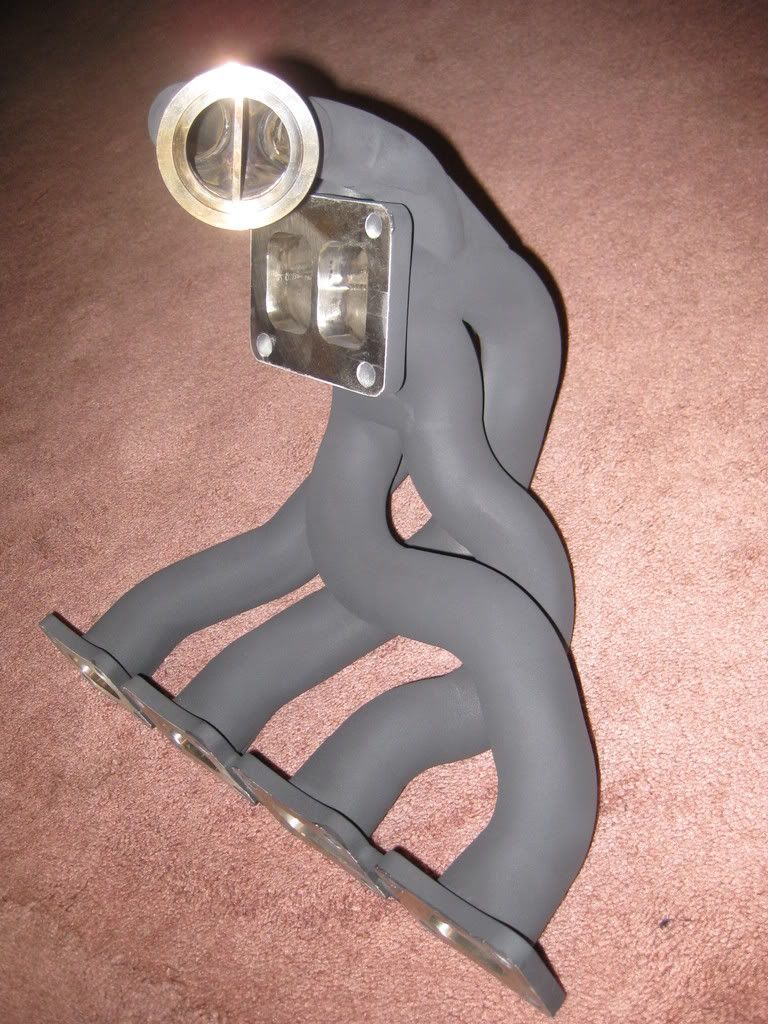
And boy does it cost $4500+ just for this manifold
 but its not for a Evo but it weighs just about nothing.
Mark
 , IMO they make the best manifolds in the UK.
Evolving Member
Joined: Dec 2003
Posts: 305
Likes: 0
From: England


