When you click on links to various merchants on this site and make a purchase, this can result in this site earning a commission. Affiliate programs and affiliations include, but are not limited to, the eBay Partner Network.
The simplest rule here is once you set your shock/strut on the workbench, if the main spring moves for desired height, add helpers to keep the main one in place. And, those are usually around 50 lb. And, use aluminum spacers to keep them in place.
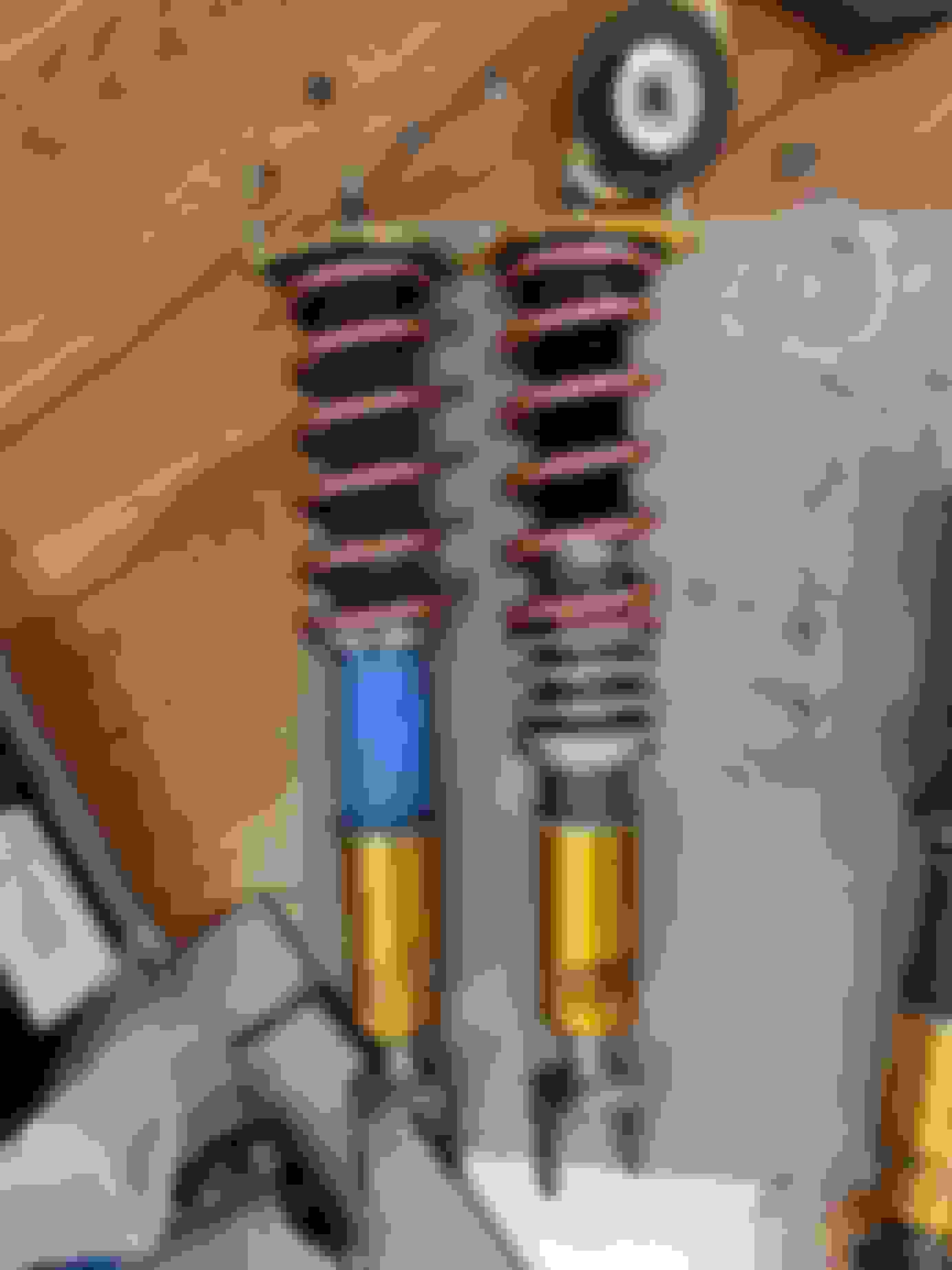
i'm trying assist/helpers in the rear as well. may not go well, not sure, but figured it's worth a shot. confused though - how would this lower ride height, unless you used to be putting a lot of preload on your main spring before adding an assist? I had a small amount of preload on my springs, and when i added the assist, i basically just added enough perch to cover the additional. below is a side-by-side. how is this dropping the car lower? if you initially had little-to-no preload, then you're not using any preload to raise the ride height anyway?
So up front I did some more adjusting. I'm at about 25.5" (on a 245/18 tire - will be running on 265mm tires for competition), so I'm getting close. However I'm running out of room to go much higher on my coilover. I'll probably have to go with a longer spring.
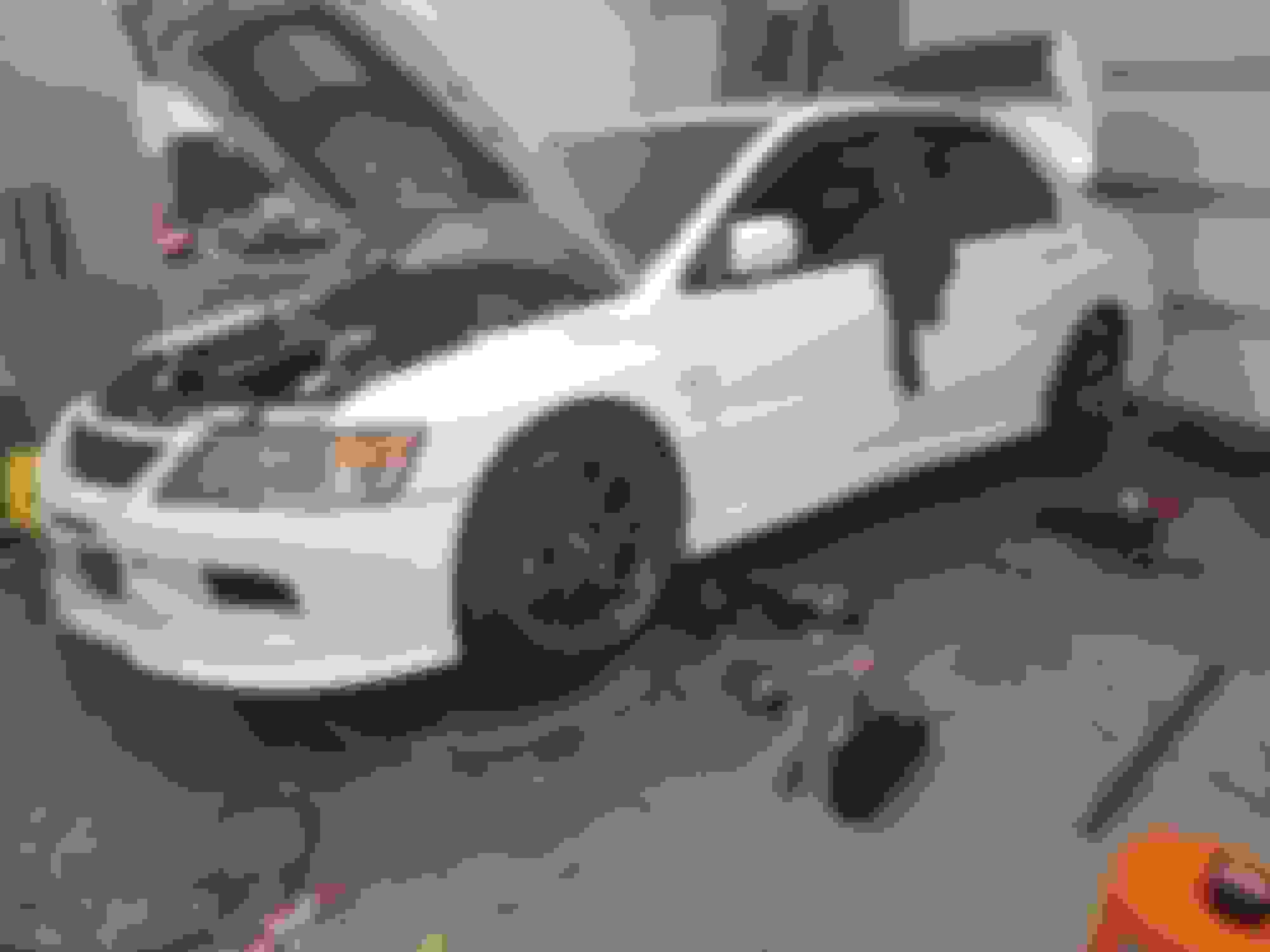
I will say, these coilovers don't seem to have much droop? What you see in the air, looks almost exactly the same as when it's on the ground....Is the reasoning because I'm having to crank this spring perch up to almost it's max height, which would limit droop or is this more because of the higher spring rates/valving? Or a combination of the both? I'm wanting to learn a bit more of the technicalities here. Thanks
i'm trying assist/helpers in the rear as well. may not go well, not sure, but figured it's worth a shot. confused though - how would this lower ride height, unless you used to be putting a lot of preload on your main spring before adding an assist? I had a small amount of preload on my springs, and when i added the assist, i basically just added enough perch to cover the additional. below is a side-by-side. how is this dropping the car lower? if you initially had little-to-no preload, then you're not using any preload to raise the ride height anyway?
I'm not sure who you are responding to, but my JRZ's DON'T have the separate preload and height adjustments like the Ohlins do.
I'm almost betting I have some sort of custom/shortened shafts on the JRZ's... That can be the only explanation here unless someone proves me wrong?
i'm trying assist/helpers in the rear as well. may not go well, not sure, but figured it's worth a shot. confused though - how would this lower ride height, unless you used to be putting a lot of preload on your main spring before adding an assist? I had a small amount of preload on my springs, and when i added the assist, i basically just added enough perch to cover the additional. below is a side-by-side. how is this dropping the car lower? if you initially had little-to-no preload, then you're not using any preload to raise the ride height anyway?
If your left shock already has a bit of preload while being fully extended, you don't need helper springs at all.
Now, your right shock has a ride height way lower than your left one, so they can not be compared like that. Think about it this way - your helper spring is 50 lb or so, while rear corner has about 600 - 700 of static load. When you start to load that weight on the sock, your helper will fully compress first, but your shock shaft will go down by couple of inches by doing so. By the time your main spring starts to see the load, your shaft will be those 2" lower than your left shock would have, which would affect the height on that corner.
I will say, these coilovers don't seem to have much droop? What you see in the air, looks almost exactly the same as when it's on the ground....Is the reasoning because I'm having to crank this spring perch up to almost it's max height, which would limit droop or is this more because of the higher spring rates/valving? Or a combination of the both? I'm wanting to learn a bit more of the technicalities here. Thanks
How much pre-load are you applying to the springs? The more preload you have, the more weight required before the spring even begins to compress. If you have excessive preload on the spring, it will barely compress under the weight of the car.
You shouldn't have to apply excessive preload. With my Ohlins setup, I currently have about 0.1"-0.2" of total preload. I basically tighten it up by hand until the spring can't rattle up and down, then I give it 2 turns extra with the wrench. That's it.
The high spring rates also mean that the springs won't be compressed much at static ride height. The front has a motion ratio close to 1:1 due to the strut setup. If you have 800lb front springs and ~800lb front unsprung corner weight (remember to subtract out the wheel/tires/uprights/hubs from the corner weight) then you should expect about 1" of static compression without any preload. The more preload you have, the less static compression you'll end up with.
How much pre-load are you applying to the springs? The more preload you have, the more weight required before the spring even begins to compress. If you have excessive preload on the spring, it will barely compress under the weight of the car.
You shouldn't have to apply excessive preload. With my Ohlins setup, I currently have about 0.1"-0.2" of total preload. I basically tighten it up by hand until the spring can't rattle up and down, then I give it 2 turns extra with the wrench. That's it.
The high spring rates also mean that the springs won't be compressed much at static ride height. The front has a motion ratio close to 1:1 due to the strut setup. If you have 800lb front springs and ~800lb front unsprung corner weight (remember to subtract out the wheel/tires/uprights/hubs from the corner weight) then you should expect about 1" of static compression without any preload. The more preload you have, the less static compression you'll end up with.
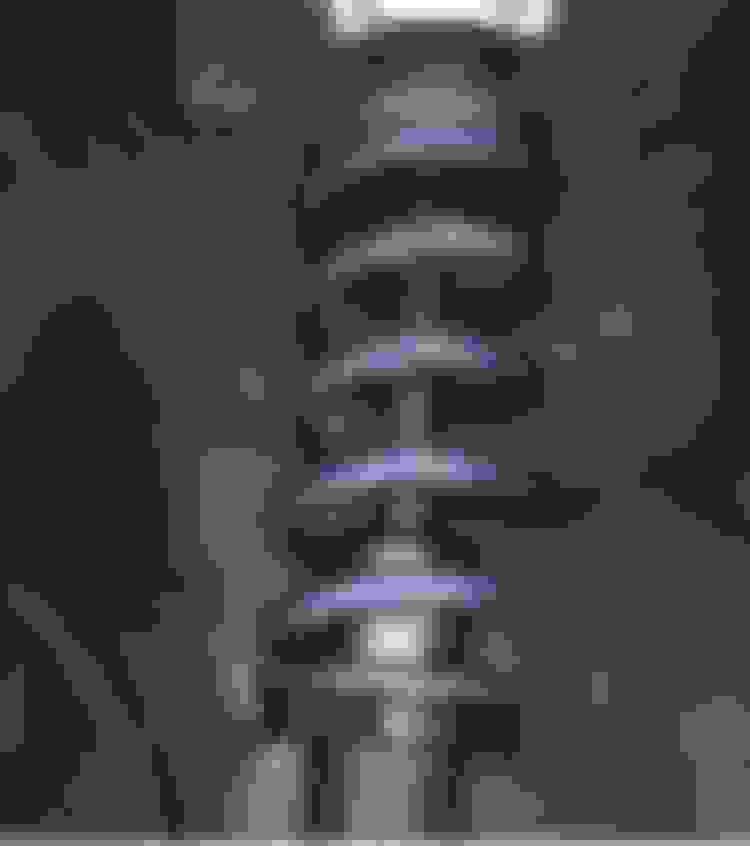
So just to make sure we're on the same page. I'm estimating I'm turning that collar in the picture I provided about 2-2.5" higher than it's starting position with no load on the spring at all. Meaning with the collar in a position where there is absolutely no load on it (in the super dropped/low first picture I posted initially) compared to this most recent picture I posted today. Again, these JRZ's do not have a separate pre-load and height adjustment. Ohlins have a completely separate ride height and preload adjustment. These are adjusted by moving the spring up or down only.
To me, this absolutely doesn't seem correct as if I'm not mistaken, I'm extending the shock to position where I'd assume, it's almost in a position where it's at full rebound. Am I off base here?
So up front I did some more adjusting. I'm at about 25.5" (on a 245/18 tire - will be running on 265mm tires for competition), so I'm getting close. However I'm running out of room to go much higher on my coilover. I'll probably have to go with a longer spring.
I will say, these coilovers don't seem to have much droop? What you see in the air, looks almost exactly the same as when it's on the ground....Is the reasoning because I'm having to crank this spring perch up to almost it's max height, which would limit droop or is this more because of the higher spring rates/valving? Or a combination of the both? I'm wanting to learn a bit more of the technicalities here. Thanks
Any shock/strut out there has full extended and compressed lengths and that is built in and can not be changed without rebuild. It is possible that you might have a set that is extremely short at full extension, so would test it to make sure what it is. But, from the bottom picture of yours, if that is full extension of the suspension, you will have problems once things are fully loaded.
In general, you have around 900 lb of weight on each of the front wheels, so with 800 lb spring in there, initial drop will be a bit over an inch. Now, you need to have extra space for an additional inch of travel to compensate for dynamic loads and weight transfer. Usually, good way to start with this is to allow about 1.5" of travel and go from there.
So, going back to the picture of the front wheel and how close it is to the fender in what looks like full extension, I would say tires would be having lots of contacts with the metal parts above. But, I might have been missing something there too, so...
What are your spring rates and spring lengths? I feel like it should 100% shouldn't need that much preload for proper ride height.
8 inch springs. 800lb fronts.
I spoke with Olsen Motorsports and they're going to take a look at them to see what they can do. He said putting that much preload on them would absolutely be detrimental to ride quality.
I spoke with Olsen Motorsports ABC's they're going to take a look at them to see what they can do. He said putting that much preload on them would absolutely be detrimental to ride quality.
What's your ride height with typical preload (like 0 to 1/8")?
I spoke with Olsen Motorsports ABC's they're going to take a look at them to see what they can do. He said putting that much preload on them would absolutely be detrimental to ride quality.
I see now...you have lots of preload on them so that is why they are so high up!
If so, 9 or 10" springs would bring your perch a bit lower and help with overal freedom with adjustments. But, if you still require that much preload just to keep things at decent height, you might need longer shaft to be installed to avoid all of that.
Going back to the first thing I mentioned above - measure your full extension and compression lengths and that would tell you where your set it. Once you know that, you can figure out what is the next step.