


The tale of three dyno sheets......BadBish style

The tale of three dyno sheets......BadBish style
More on my car. I guess I must really like it or something. I am obsessed.
I've been stuck on trying to go 8's with the car. I sound like a broken record actually and I know it.
I finally said I was going to give up and move on to other things. That lasted about 24 hours and then my mind started to go back again and think-think-think.
I started sorting through two years of dyno graphs, time slips, notebook notes of testing and such. Yesterday I took the dyno runs that were immediately before the car ran some type of personal best and brought them up on the screen. What I found did not surprise me and regretfully I can only put three runs on a sheet, I'd like to put about 5 of them on this sheet to show them overlaid. These three will have to do.
I have said a million times a wide power band gets you down the track and wins races. The dyno sheet below proves that beyond a doubt.
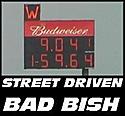
What we have is three runs going all the way back to 2008 when the car ran it's 9.04 pass at 159.64 mph. All three of these dyno sheets are with the same turbo, same A/R on the turbine side, same BF272 cams, same intercooler and intercooler pipes. The shortblock has changed and all three runs reflect a different shortblock. The intake manifold has changed, Run #1 is using a stock ported intake, runs #2 and 3 are with our fabricated intake.
Something else to keep in mind. Between the 1st run and runs #2 and 3, we had Mustang Dyno here to do a recalibration on our dyno, after they did this it moved the power bands to the RIGHT, making all the dyno work after the recalibration seem more laggy than before. So run #2 with the same calibration as run #1 would have smoked the curve the entire pull. Runs #2 and #3 are correct comparisons and with the same calibration.
So #1 run, 9.04, very good track conditions. Standard 2 liter with high compression, VP Import fuel. We had a 1.40/1.41 sixty foot and the car hooked that run. There was no pedaling it in 1st gear, clean power shifts through the run. Pretty much the perfect pass. We ran two other 9.0's that day.
Run #2 produced the best overall curve and the best average power across the run. The car was VERY responsive set up like that and was "fun" to drive and worked well autocrossing. The engine was a 10:1, 2.1 liter with our fabricated intake manifold. That set up ran three back to back 9.1's at 158.xx mph in the hottest most humid conditions I can ever remember running in and with sixty foot times in the high 1.40's. It was quite possibly the best combination I have had.
Run #3 is the car now. Long rod, 10:1 2 liter, our fabricated intake manifold. The loss in the low/mid range makes no sense to me, it is HORRIBLE. I will not/can not tolerate a power curve like that. Reviewing these dyno sheets it's easy for me to see that we had more than traction problems the last time out. Our 1/8th mile MPH stunk, this car has been over 125 mph in the 1/8th but was only running about 121 on the last trip. The power curve simply sucks under 6900 rpm. Reviewing the logs I can see even on the dyno before we left the car had some clutch slippage. This could be the loss of the mid range area. My other thought is I don't think I did any of the intake manifold development on a 2 liter engine in my car, it was the 2.1 and it has me wondering about the intake manifold. Also at the shootout we found a crack in my intake, so we swapped back to the stock ported unit..........the car was dyno'd again and we LOST 40+ whp from going to the stock ported intake. That loss was much more than I expected. Get this, there was NO gain in low or mid range going back to the stock intake manifold on the 2.1. THAT is 100% against every single thing I saw in any intake manifold testing I had done before that day. It made absolutely NO sense what-so-ever.
Here is the dyno sheet before I go on, so you guys can take a look at it:

I built one more of these engines for Shawna from STM. I was looking at her dyno sheet yesterday and the car makes peak torque at about 5600 rpm, WAY lower than my car is. She is using a standard GT35r and a stock ported intake manifold. So it appears to me the problem is not the engine design and is pointing me to the intake manifold making too much lag on the 2 liter.
This makes little to no sense too as the rod ratio/length and stroke are the same between the two engines..............
Just some interesting data, thought I'd share it.
I'm hoping to have the new trans/clutch in the car in the next few days and when it happens the car will be back on the dyno. First goal is to find the large low/mid range losses and once that's figured out I'm shooting for the highest torque at the lowest RPM I can make with the car in the low 30 psi range.
I have feeling we are going to need to revisit the drag strip.............
I've been stuck on trying to go 8's with the car. I sound like a broken record actually and I know it.
I finally said I was going to give up and move on to other things. That lasted about 24 hours and then my mind started to go back again and think-think-think.
I started sorting through two years of dyno graphs, time slips, notebook notes of testing and such. Yesterday I took the dyno runs that were immediately before the car ran some type of personal best and brought them up on the screen. What I found did not surprise me and regretfully I can only put three runs on a sheet, I'd like to put about 5 of them on this sheet to show them overlaid. These three will have to do.
I have said a million times a wide power band gets you down the track and wins races. The dyno sheet below proves that beyond a doubt.
What we have is three runs going all the way back to 2008 when the car ran it's 9.04 pass at 159.64 mph. All three of these dyno sheets are with the same turbo, same A/R on the turbine side, same BF272 cams, same intercooler and intercooler pipes. The shortblock has changed and all three runs reflect a different shortblock. The intake manifold has changed, Run #1 is using a stock ported intake, runs #2 and 3 are with our fabricated intake.
Something else to keep in mind. Between the 1st run and runs #2 and 3, we had Mustang Dyno here to do a recalibration on our dyno, after they did this it moved the power bands to the RIGHT, making all the dyno work after the recalibration seem more laggy than before. So run #2 with the same calibration as run #1 would have smoked the curve the entire pull. Runs #2 and #3 are correct comparisons and with the same calibration.
So #1 run, 9.04, very good track conditions. Standard 2 liter with high compression, VP Import fuel. We had a 1.40/1.41 sixty foot and the car hooked that run. There was no pedaling it in 1st gear, clean power shifts through the run. Pretty much the perfect pass. We ran two other 9.0's that day.
Run #2 produced the best overall curve and the best average power across the run. The car was VERY responsive set up like that and was "fun" to drive and worked well autocrossing. The engine was a 10:1, 2.1 liter with our fabricated intake manifold. That set up ran three back to back 9.1's at 158.xx mph in the hottest most humid conditions I can ever remember running in and with sixty foot times in the high 1.40's. It was quite possibly the best combination I have had.
Run #3 is the car now. Long rod, 10:1 2 liter, our fabricated intake manifold. The loss in the low/mid range makes no sense to me, it is HORRIBLE. I will not/can not tolerate a power curve like that. Reviewing these dyno sheets it's easy for me to see that we had more than traction problems the last time out. Our 1/8th mile MPH stunk, this car has been over 125 mph in the 1/8th but was only running about 121 on the last trip. The power curve simply sucks under 6900 rpm. Reviewing the logs I can see even on the dyno before we left the car had some clutch slippage. This could be the loss of the mid range area. My other thought is I don't think I did any of the intake manifold development on a 2 liter engine in my car, it was the 2.1 and it has me wondering about the intake manifold. Also at the shootout we found a crack in my intake, so we swapped back to the stock ported unit..........the car was dyno'd again and we LOST 40+ whp from going to the stock ported intake. That loss was much more than I expected. Get this, there was NO gain in low or mid range going back to the stock intake manifold on the 2.1. THAT is 100% against every single thing I saw in any intake manifold testing I had done before that day. It made absolutely NO sense what-so-ever.
Here is the dyno sheet before I go on, so you guys can take a look at it:
I built one more of these engines for Shawna from STM. I was looking at her dyno sheet yesterday and the car makes peak torque at about 5600 rpm, WAY lower than my car is. She is using a standard GT35r and a stock ported intake manifold. So it appears to me the problem is not the engine design and is pointing me to the intake manifold making too much lag on the 2 liter.
This makes little to no sense too as the rod ratio/length and stroke are the same between the two engines..............
Just some interesting data, thought I'd share it.
I'm hoping to have the new trans/clutch in the car in the next few days and when it happens the car will be back on the dyno. First goal is to find the large low/mid range losses and once that's figured out I'm shooting for the highest torque at the lowest RPM I can make with the car in the low 30 psi range.
I have feeling we are going to need to revisit the drag strip.............

Very interesting as I have your intake manifold and is being put on my car along with a couple other things. My car previously made high 600s on Cbrd md with 6765 e85 and 38psi @ 7500rpms 2.0l. I very interested to see what your intake manifold can do.
Well top end on the LR2 liter is exceptional, the best of the three graphs and it's with our intake pizzaman so you will be in good shape there. The question in my mind is why the 2.1 gained NOTHING going back to the stock ported intake when I'd have bet the car that it would have and that leads me to wondering why the low/mid on my current engine is so horrible. First thing I need to do is get that low/mid where it should be now and then I will start working on improving it even more.
The end goal I think is going to be 640'ish whp at low 30'ish psi and 540 or so torque. That will be a bad *** accomplishment if I can get there, especially on a 2 liter.
The end goal I think is going to be 640'ish whp at low 30'ish psi and 540 or so torque. That will be a bad *** accomplishment if I can get there, especially on a 2 liter.


Trending Topics
Definitely will be a bad *** power band. With the stock ported intake manifold back on torqu went up? I'm on my phone so it's hard to see! My torque was 499. I had issues with the trueboost so I couldn't rev it out but it's fixed now so with your manifold on I should be able to rev it out! The head I have going on is a Cosworth head that has been worked over by a Cosworth engine builder I know. Back on topic the no loss at low end shows good design in the intake manifold. I know the rmr velocity stacks are very efficient and have seen them used on modified bikes. Definately utilizing the high revving engine. I say good design and the proof is in the graphs.


glad to see the mad scientist back at it who needs a 2.3 if you can make tq numbers like that good luck and keep us posted you are running the tilton clutch right ?

Dave,
Since we know what is the same (stroke, rod ratio, piston speed), perhaps the increase in bore size is unshrouding the intake valves and allowing the entire intake side to be more efficient? I know from old school wedge heads on small block Chevrolet engines (which if I remember correctly you were a fan of before the 4g63) there was a limit to where larger valves would help because the intake flow was shrouded by the actual bore wall. At that point you had to change the geometry of the valvetrain to make effective use of the larger valves (old school 22deg heads).
Perhaps we are seeing a similar occurrence here on our 4g63, but by using the 4g64 block with the increase in bore we are unschrouding the valves.
And for those thinking this would have an effect on exhaust that is not the case. The exhaust valve is smaller than the intake and further away from the bore wall, so shrouding effects the intake first and almost exclusively.
Just a thought…I’m talkin out my butt
Since we know what is the same (stroke, rod ratio, piston speed), perhaps the increase in bore size is unshrouding the intake valves and allowing the entire intake side to be more efficient? I know from old school wedge heads on small block Chevrolet engines (which if I remember correctly you were a fan of before the 4g63) there was a limit to where larger valves would help because the intake flow was shrouded by the actual bore wall. At that point you had to change the geometry of the valvetrain to make effective use of the larger valves (old school 22deg heads).
Perhaps we are seeing a similar occurrence here on our 4g63, but by using the 4g64 block with the increase in bore we are unschrouding the valves.
And for those thinking this would have an effect on exhaust that is not the case. The exhaust valve is smaller than the intake and further away from the bore wall, so shrouding effects the intake first and almost exclusively.
Just a thought…I’m talkin out my butt

Evolved Member
iTrader: (33)
Joined: Jul 2002
Posts: 5,313
Likes: 1
From: Raleigh, Transplanted from Toronto, Canada
Or the ever popular 2.4 now.
I've always liked the idea of a 2.0 - 2.1 high compression high revving high boost motor. Even from my Honda days.
I've always liked the idea of a 2.0 - 2.1 high compression high revving high boost motor. Even from my Honda days.
I was running the Tilton carbon fiber on all three of those graphs. The car will be run now with the Exedy Triple CM HD in it.
I would consider the valve shrouding IF it weren't for the curve the first dyno sheet has, it was a 4g63 block too, so that isn't it. Good thought though.
pizzaman, switching from our fabricated intake manifold back to the stock ported intake on the 2.1 liter engine lost over 40 whp and torque AND there were NO gains going back to the stock ported intake in the low to mid range either, so it was a complete loss of power everywhere. Which, as I said, is not what I've found to make any sense at all.
I would consider the valve shrouding IF it weren't for the curve the first dyno sheet has, it was a 4g63 block too, so that isn't it. Good thought though.
pizzaman, switching from our fabricated intake manifold back to the stock ported intake on the 2.1 liter engine lost over 40 whp and torque AND there were NO gains going back to the stock ported intake in the low to mid range either, so it was a complete loss of power everywhere. Which, as I said, is not what I've found to make any sense at all.

Dave
Keep it fun and dont get too frustrated. I think we all get into racing for the thrill( atleast for me) and somewhere along the line we keep wanting to outdo ourselves. When we dont it gets stressful and we end up quiting or selling. The badbish is already sick for going 9.0 and nearly 160mph with interior and the appearance of a street car, I could live with that. But I think all us drag racers are rooting for that 8sec pass. GL!
Keep it fun and dont get too frustrated. I think we all get into racing for the thrill( atleast for me) and somewhere along the line we keep wanting to outdo ourselves. When we dont it gets stressful and we end up quiting or selling. The badbish is already sick for going 9.0 and nearly 160mph with interior and the appearance of a street car, I could live with that. But I think all us drag racers are rooting for that 8sec pass. GL!
Awe got ya now! That's crazy! So the design of the new intake manifold must be where it's at then! I'm gonna show my engine builder jay$ this thread and see if he has any thoughts. Cause I know about cars but dammit I'm pizzaman. So allot of things all beyond my knowing. I can't believe you lost torque also.