


BR double pumper video, facts and information

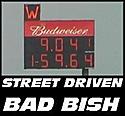
My car made 712 whp and 584 ft lbs of torque today using our double pumper, the single 3/8" line I spoke of, our rail and a stock regulator. The car was tuned at 11.8:1 (gasoline AFR's) on E98 and was at only 74% duty cycles on ID2000 cc injectors.
BR parts work
BR parts work


Did you happen to log the fuel pressure during that run? I'm curious to know if the dual pumps were able to hold the base pressure + boost pressure at the rail during that run.
I was not logging this time BUT I've already shown and posted logs (I think) that the car maintains fuel pressure at this power/boost level. If I didn't already post them I have the logs still in my laptop I think. On the twin small lines it did maintain pressure and that shouldn't change now on the single larger line.

No you do not have to pull the crossmember out, there's a good sized gap there to run the lines through. Keep in mind it's not something you need to do.
Yes, that is a new best for the RS and it's still on our 272 cams
Yes, that is a new best for the RS and it's still on our 272 cams
Here's a screen shot of the car, logging boost/rpm and fuel pressure. Fuel pressure is in volts and you'll need to convert it to PSI if you wish, it's a 100 psi sensor. You can follow the boost/fuel pressure and see that it maintains pressure.
No, I will not provide that data because you have to keep something in mind. The MAP sensor used for boost has a smoothing feature on it and if it were NOT turned on to 15 the boost line would indicate those same peaks/valleys. So you have one pressure signal with the smoothing maxed out and the other completely unfiltered.
Actually, I'll give the data but before the arguements start you have to consider what I just said.
The sensor is not a 100 psi like I said, it's a 125, I just had to go get the chart out of my car for it.
2.90 is 75 psi and is the low spot, 3.0 is 78.1 and is the high spot. You have to interpolate between for exact numbers. I think I have the math right, should be a difference of 4.3 psi, one of you college boys can figure it out and let me know
Actually, I'll give the data but before the arguements start you have to consider what I just said.
The sensor is not a 100 psi like I said, it's a 125, I just had to go get the chart out of my car for it.
2.90 is 75 psi and is the low spot, 3.0 is 78.1 and is the high spot. You have to interpolate between for exact numbers. I think I have the math right, should be a difference of 4.3 psi, one of you college boys can figure it out and let me know
0.1V *125 PSI/5V = 2.5 psi
Not looking for a fight anyway. Actually was just trying to help you out.
It's something that the OEM feels is important enough to design around, I'm interested if it actually is an issue when you change fuel rails.
Not looking for a fight anyway. Actually was just trying to help you out.
It's something that the OEM feels is important enough to design around, I'm interested if it actually is an issue when you change fuel rails.
Thanks, really, my math must really freaking suck!! That's twice you got me in the same thread! hahahaha
So it's only a 2.5 psi fluxuation?
I've got some calls in to three companies currently asking about these dampers. One to the link you sent me 03white and two others. It's suprising how little the people building/selling the products know about them, when they are needed, what's an exceptable variance etc.
The one common answer I am finding is sequential fuel injection isn't effected by the pulses as much. Batch fire it's more relavant.
So it's only a 2.5 psi fluxuation?
I've got some calls in to three companies currently asking about these dampers. One to the link you sent me 03white and two others. It's suprising how little the people building/selling the products know about them, when they are needed, what's an exceptable variance etc.
The one common answer I am finding is sequential fuel injection isn't effected by the pulses as much. Batch fire it's more relavant.
I just assumed it was linear from 0-5V and 5V = 125psi. This usually isn't the case though, as you typically have a little head room to go above the 125psi and then some over head to deal with "rail voltage" in the internal op amps and circuitry.
For example, the omni 4-bar puts out like 4.8V at 4bar. 5V is actually 4.16bar, provided the sensor can electrically go to 5V, which it probably can't. It probably maxes out at like 4.9V, or it may even just max out at 4.8V and 4bar.
But just to hopefully make the picture slightly more clear and get a rough idea on how this would affect you. If you put it all together the picture gets a little more interesting. There is the potential that you have several things happening. For one, signal aliasing, as mentioned. This has the tendency to knock the signal down a bit.
Let's say you are getting a little aliasing and the true signal swing is 0.15V and let's say that 5V =125psi. This would mean 3.75 psi pressure fluctuation. Now let's say you are running 43 psi base fuel pressure.
http://www.rceng.com/technical.aspx
Third set of equations.
Let's say that the oscillation is centered around 43.5 psi, giving a maximum and minimum pressure of 45.375 and 41.625 psi, respectively. Let's say your target AFR is 11:1 and that's what you read on the wideband. This corresponds to the AFR you would see at 43.5 psi.
Actual AFR @ fuel pressure
11:1 @ 43.5 psi
10.76:1 @ 41.625 psi
11.24:1 @ 45.375 psi
So your afr is really bouncing around from 10.76:1 to 11.24:1 while the AFR appears nearly constant because it inherently takes an average AFR (unless you are running a super high sample rate and measuring before the turbo).
Now, when you also account for the reaction speed of the sensor you are running there is the very likely possibility you are only seeing maybe 50% or less of the true pressure fluctuation amplitude. If that were the case, the AFR is potentially bouncing around from 10.5:1 to 11.5:1.
The important thing to realize is that the pressure pulses are likely to be out of phase with the injector timing due to the pulse resonant frequency in the fuel rail. Meaning, it's going to make the AFR inconsistent on every cylinder and won't be something you could tune around with individual cylinder trims or anything like that.
Of course, this is all from a theoretical standpoint. It may not be an issue at all. Or it might be something that with the right equipment, you could measure the pressure fluctuation, but maybe in the real world, it doesn’t have any impact. Maybe spark advance varies more and has a large effect on getting right to the edge of MBT. The point to all of this though is that the more consistent you can get the mixture in the chamber the smoother you make the “ragged edge” and it allows you to eak every last HP out of the tune without getting “random” detonation events.
Sorry for making it so long. Just wanted to explain the perspective where I and I beleive R/T Ernie are coming from.
For example, the omni 4-bar puts out like 4.8V at 4bar. 5V is actually 4.16bar, provided the sensor can electrically go to 5V, which it probably can't. It probably maxes out at like 4.9V, or it may even just max out at 4.8V and 4bar.
But just to hopefully make the picture slightly more clear and get a rough idea on how this would affect you. If you put it all together the picture gets a little more interesting. There is the potential that you have several things happening. For one, signal aliasing, as mentioned. This has the tendency to knock the signal down a bit.
Let's say you are getting a little aliasing and the true signal swing is 0.15V and let's say that 5V =125psi. This would mean 3.75 psi pressure fluctuation. Now let's say you are running 43 psi base fuel pressure.
http://www.rceng.com/technical.aspx
Third set of equations.
Let's say that the oscillation is centered around 43.5 psi, giving a maximum and minimum pressure of 45.375 and 41.625 psi, respectively. Let's say your target AFR is 11:1 and that's what you read on the wideband. This corresponds to the AFR you would see at 43.5 psi.
Actual AFR @ fuel pressure
11:1 @ 43.5 psi
10.76:1 @ 41.625 psi
11.24:1 @ 45.375 psi
So your afr is really bouncing around from 10.76:1 to 11.24:1 while the AFR appears nearly constant because it inherently takes an average AFR (unless you are running a super high sample rate and measuring before the turbo).
Now, when you also account for the reaction speed of the sensor you are running there is the very likely possibility you are only seeing maybe 50% or less of the true pressure fluctuation amplitude. If that were the case, the AFR is potentially bouncing around from 10.5:1 to 11.5:1.
The important thing to realize is that the pressure pulses are likely to be out of phase with the injector timing due to the pulse resonant frequency in the fuel rail. Meaning, it's going to make the AFR inconsistent on every cylinder and won't be something you could tune around with individual cylinder trims or anything like that.
Of course, this is all from a theoretical standpoint. It may not be an issue at all. Or it might be something that with the right equipment, you could measure the pressure fluctuation, but maybe in the real world, it doesn’t have any impact. Maybe spark advance varies more and has a large effect on getting right to the edge of MBT. The point to all of this though is that the more consistent you can get the mixture in the chamber the smoother you make the “ragged edge” and it allows you to eak every last HP out of the tune without getting “random” detonation events.
Sorry for making it so long. Just wanted to explain the perspective where I and I beleive R/T Ernie are coming from.
"Actual AFR @ fuel pressure
11:1 @ 43.5 psi
10.76:1 @ 41.625 psi
11.24:1 @ 45.375 psi"
I finally get to catch you on your calculations!!! ROFL! Lower pressure will equal leaner AFR's
I must have posted the information I just got in the other thread, sorry. I see where you guys are coming from.
11:1 @ 43.5 psi
10.76:1 @ 41.625 psi
11.24:1 @ 45.375 psi"
I finally get to catch you on your calculations!!! ROFL! Lower pressure will equal leaner AFR's
I must have posted the information I just got in the other thread, sorry. I see where you guys are coming from.
"Actual AFR @ fuel pressure
11:1 @ 43.5 psi
10.76:1 @ 41.625 psi
11.24:1 @ 45.375 psi"
I finally get to catch you on your calculations!!! ROFL! Lower pressure will equal leaner AFR's
I must have posted the information I just got in the other thread, sorry. I see where you guys are coming from.
11:1 @ 43.5 psi
10.76:1 @ 41.625 psi
11.24:1 @ 45.375 psi"
I finally get to catch you on your calculations!!! ROFL! Lower pressure will equal leaner AFR's
I must have posted the information I just got in the other thread, sorry. I see where you guys are coming from.
11:1 @ 43.5 psi
11.25:1 @ 41.625 psi
10.77:1 @ 45.375 psi

hey Dave have you tested the hobbs switch to know exactly what psi it should see before activating the 2nd pump. I installed one for my buddy this week and it took almost no pressure, like you could damn near blow in the switch and get the 2nd pump to run. just making sure thats normal. I ran the power wire for it along the door trim and actually made for a very clean and nice install. i can tell you made this kit cuz its as simplified as possible, not blingy at all, and most of all it works. i think we need a T bag smiley and a full blown smiley ROFLMAO