


Engine Warm-up???


Is it important to idle my vehicle for a few minutes to warm up the engine, especially in winter?
No. Although this is a common practice among motorists, it’s also wasteful and damages the environment. Tests show that you need no more than 30 seconds of idling to circulate the engine oil before you can drive away on cold days. Anything more just wastes money and produces needless greenhouse gas emissions. Remember, more than the engine needs to be warmed – so do the tires, transmission, wheel bearings and other moving parts. As well, the catalytic converter doesn’t function at its peak until it reaches between 400°C and 800°C. The best way to warm the engine and all other components is to drive your vehicle.
Can idling damage my car’s engine?
You bet it can! Because the engine isn’t working at its peak operating temperature when it’s idling, the fuel doesn’t undergo complete combustion. This leaves fuel residues that can contaminate engine oil and damage engine parts. For example, fuel residues tend to deposit on spark plugs. As the amount of engine idling increases, the plugs’ average temperature drops, and they get dirty more quickly. This, in turn, can increase fuel consumption by four to five percent. It’s a vicious circle of wasted fuel and needless greenhouse gas emissions. Excessive idling can also let water condense in the vehicle’s exhaust. This can lead to corrosion and reduce the life of the exhaust system.
No. Although this is a common practice among motorists, it’s also wasteful and damages the environment. Tests show that you need no more than 30 seconds of idling to circulate the engine oil before you can drive away on cold days. Anything more just wastes money and produces needless greenhouse gas emissions. Remember, more than the engine needs to be warmed – so do the tires, transmission, wheel bearings and other moving parts. As well, the catalytic converter doesn’t function at its peak until it reaches between 400°C and 800°C. The best way to warm the engine and all other components is to drive your vehicle.
Can idling damage my car’s engine?
You bet it can! Because the engine isn’t working at its peak operating temperature when it’s idling, the fuel doesn’t undergo complete combustion. This leaves fuel residues that can contaminate engine oil and damage engine parts. For example, fuel residues tend to deposit on spark plugs. As the amount of engine idling increases, the plugs’ average temperature drops, and they get dirty more quickly. This, in turn, can increase fuel consumption by four to five percent. It’s a vicious circle of wasted fuel and needless greenhouse gas emissions. Excessive idling can also let water condense in the vehicle’s exhaust. This can lead to corrosion and reduce the life of the exhaust system.

Negative.
Idling Myths:
Myth #1: "The engine should be warmed up for long periods prior to driving."
Reality: Idling is not an effective way to warm up your engine, even in cold weather. The best way to do this is to drive the vehicle. With today's modern engines, you need no more than 30 seconds of idling on winter days before starting to drive.
Myth #2: "Idling is good for the engine."
Reality: Excessive idling can actually damage engine components, including cylinders, spark plugs, and the exhaust system.
Myth #3: "Shutting off and restarting the vehicle when it's stopped is bad for the engine and uses more gasoline than if you leave it running."
Reality: Frequent restarting has little impact on engine components. Component wear caused by restarting the engine is estimated to add $10 per year to the cost of driving, money that will likely be recovered several times over in fuel savings from reduced idling.
Idling Facts:
Fact #1: Idling wastes fuel and money. Every 10 minutes of idling costs you at least 1/10 of a liter of wasted fuel. Keep in mind that every liter of gasoline produces 5.4 pounds of carbon dioxide.
Fact #2: Idling contributes to global warming. Vehicle idling can have a powerful effect on the outdoor air quality at the local and community level.
Fact #3: Diesel and gasoline exhausts contain more than 40 hazardous pollutants. Idling your vehicle with the air conditioner on can increase emissions by 13 percent.
Idling Myths:
Myth #1: "The engine should be warmed up for long periods prior to driving."
Reality: Idling is not an effective way to warm up your engine, even in cold weather. The best way to do this is to drive the vehicle. With today's modern engines, you need no more than 30 seconds of idling on winter days before starting to drive.
Myth #2: "Idling is good for the engine."
Reality: Excessive idling can actually damage engine components, including cylinders, spark plugs, and the exhaust system.
Myth #3: "Shutting off and restarting the vehicle when it's stopped is bad for the engine and uses more gasoline than if you leave it running."
Reality: Frequent restarting has little impact on engine components. Component wear caused by restarting the engine is estimated to add $10 per year to the cost of driving, money that will likely be recovered several times over in fuel savings from reduced idling.
Idling Facts:
Fact #1: Idling wastes fuel and money. Every 10 minutes of idling costs you at least 1/10 of a liter of wasted fuel. Keep in mind that every liter of gasoline produces 5.4 pounds of carbon dioxide.
Fact #2: Idling contributes to global warming. Vehicle idling can have a powerful effect on the outdoor air quality at the local and community level.
Fact #3: Diesel and gasoline exhausts contain more than 40 hazardous pollutants. Idling your vehicle with the air conditioner on can increase emissions by 13 percent.
Last edited by sonicnofadz; Jan 22, 2007 at 01:43 PM.
Wrong again, letting the engine warm up idling at a standstill WILL warm the transmission up a little. When the clutch is engaged, and the transmission is in neutral, there are many shafts that are rotating INSIDE the transmission, however there is no load on them, but the friction of this rotation causes HEAT. Go read how a transmission works. Better yet, go rebuild one and then think about why I said this.
Other than countless articles online, auto manufacturers putting it in their manuals, and Mitsu publishing it in their pamphlets, no I don't have "proof."
I suppose ALL of those sources could be wrong, and you could be right.
"News Flash! Idling Is Not Good for Your Engine
Perhaps the greatest myth about idling is that it's good for the engine. The truth is that excessive idling can actually damage a vehicle's engine. Contrary to popular belief, idling is not an effective way to warm up a vehicle, even in cold weather. The best way to do this is to drive the vehicle. Today's electronically controlled engines allow you to drive away after only 30 seconds of idling, even on the coldest winter days. Excessive idling can be a problem for a few reasons:
First, since an idling engine is not operating at its peak temperature, fuel combustion is incomplete. As a result, fuel residues can condense on cylinder walls, contaminate oil and damage engine components. For example, these residues tend to deposit on spark plugs. With more engine idling there is a drop in the average plug temperature and accelerated plug fouling. This can increase fuel consumption by 4 to 5 percent. Excessive idling can cause water to condense in the vehicle's exhaust. This can lead to corrosion and reduce the life of the exhaust system."
I suppose ALL of those sources could be wrong, and you could be right.
"News Flash! Idling Is Not Good for Your Engine
Perhaps the greatest myth about idling is that it's good for the engine. The truth is that excessive idling can actually damage a vehicle's engine. Contrary to popular belief, idling is not an effective way to warm up a vehicle, even in cold weather. The best way to do this is to drive the vehicle. Today's electronically controlled engines allow you to drive away after only 30 seconds of idling, even on the coldest winter days. Excessive idling can be a problem for a few reasons:
First, since an idling engine is not operating at its peak temperature, fuel combustion is incomplete. As a result, fuel residues can condense on cylinder walls, contaminate oil and damage engine components. For example, these residues tend to deposit on spark plugs. With more engine idling there is a drop in the average plug temperature and accelerated plug fouling. This can increase fuel consumption by 4 to 5 percent. Excessive idling can cause water to condense in the vehicle's exhaust. This can lead to corrosion and reduce the life of the exhaust system."
Other than countless articles online, auto manufacturers putting it in their manuals, and Mitsu publishing it in their pamphlets, no I don't have "proof."
I suppose ALL of those sources could be wrong, and you could be right.
News Flash! Idling Is Not Good for Your Engine
Perhaps the greatest myth about idling is that it's good for the engine. The truth is that excessive idling can actually damage a vehicle's engine.
Contrary to popular belief, idling is not an effective way to warm up a vehicle, even in cold weather. The best way to do this is to drive the vehicle. Today's electronically controlled engines allow you to drive away after only 30 seconds of idling, even on the coldest winter days.
Excessive idling can be a problem for a few reasons:
First, since an idling engine is not operating at its peak temperature, fuel combustion is incomplete.
As a result, fuel residues can condense on cylinder walls, contaminate oil and damage engine components. For example, these residues tend to deposit on spark plugs. With more engine idling there is a drop in the average plug temperature and accelerated plug fouling. This can increase fuel consumption by 4 to 5 percent.
Excessive idling can cause water to condense in the vehicle's exhaust. This can lead to corrosion and reduce the life of the exhaust system.
I suppose ALL of those sources could be wrong, and you could be right.
News Flash! Idling Is Not Good for Your Engine
Perhaps the greatest myth about idling is that it's good for the engine. The truth is that excessive idling can actually damage a vehicle's engine.
Contrary to popular belief, idling is not an effective way to warm up a vehicle, even in cold weather. The best way to do this is to drive the vehicle. Today's electronically controlled engines allow you to drive away after only 30 seconds of idling, even on the coldest winter days.
Excessive idling can be a problem for a few reasons:
First, since an idling engine is not operating at its peak temperature, fuel combustion is incomplete.
As a result, fuel residues can condense on cylinder walls, contaminate oil and damage engine components. For example, these residues tend to deposit on spark plugs. With more engine idling there is a drop in the average plug temperature and accelerated plug fouling. This can increase fuel consumption by 4 to 5 percent.
Excessive idling can cause water to condense in the vehicle's exhaust. This can lead to corrosion and reduce the life of the exhaust system.
Last edited by sonicnofadz; Jan 22, 2007 at 01:51 PM.
Ok, you're right and everyone else is wrong. I guess what I've done isn't considered research (strange!?!?). I suppose everything published online and by auto manufacturers is dead wrong and doesn't count as research. I could not find one resource stating a contrary belief or explanation. I also must have been very lucky to run 12.5s with 130k miles on my '91 FWD Eclipse on the stock motor, turbo, and drivetrain prescribing to this method of "warm up."
Ok, you're right and everyone else is wrong. I guess what I've done isn't considered research (strange!?!?). I suppose everything published online and by auto manufacturers is dead wrong and doesn't count as research. I could not find one resource stating a contrary belief or explanation. I also must have been very lucky to run 12.5s with 130k miles on my '91 FWD Eclipse on the stock motor, turbo, and drivetrain prescribing to this method of "warm up."

Let me help you out here Warr ...
"It's warmed up enough for normal driving when the coolant temperature gauge starts to move. However, never operate your vehicle under severe or hard driving conditions until the vehicle reaches its normal operating temperatures."
Apparently the VW/Audi manuals mention not letting the car idle for extended periods as well.
What Warr and many others are saying is that you should begin driving very shortly after you start the car and let it warm up to its normal temps while driving, not idling. He isn't saying the car shouldn't be warmed up.
You guys are arguing two different points. You both agree that the car needs to be warmed up throughly before hard driving, and Warr's recommended method has been seconded by manufacturers in several instances in this thread.
I'm going with the "no excessive idling" myself, even though Warr and I disagree at times.
"It's warmed up enough for normal driving when the coolant temperature gauge starts to move. However, never operate your vehicle under severe or hard driving conditions until the vehicle reaches its normal operating temperatures."
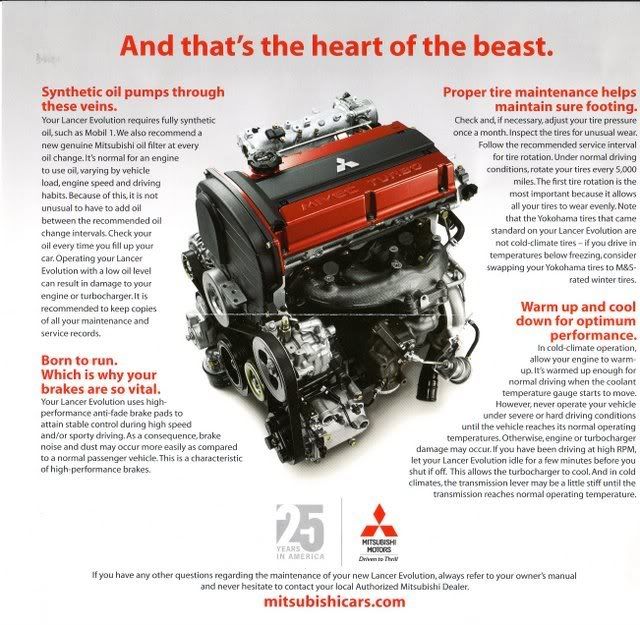
Apparently the VW/Audi manuals mention not letting the car idle for extended periods as well.
What Warr and many others are saying is that you should begin driving very shortly after you start the car and let it warm up to its normal temps while driving, not idling. He isn't saying the car shouldn't be warmed up.
You guys are arguing two different points. You both agree that the car needs to be warmed up throughly before hard driving, and Warr's recommended method has been seconded by manufacturers in several instances in this thread.
I'm going with the "no excessive idling" myself, even though Warr and I disagree at times.
I'll admit excessive idling is BAD for the environment, and maybe thats why you hear about it so much online. However, to state that idling is bad for your engine itself (when I say engine I don't mean exhaust, or spark plugs, or stupid BS like that, I mean the block, pistons, bearings, cam journals, etc.) is simply retarded. I think we can all agree that the engine needs to warm up at least somewhat before driven hard. Excessive idling will never damage major engine components, but may deteriorate replacable parts such as the exhaust or spark plugs.
Last edited by sonicnofadz; Jan 22, 2007 at 02:38 PM.

Newbie
Joined: Jan 2007
Posts: 41
Likes: 0
From: Atlanta, GA
This is somewhat on the same topic, but how about cool-down? I've read that you need to have your car idle for the cool down period for 2 - 3 minutes. Is this true? What if you weren't boosting excessively (maybe just 2 or 3 times on the trip to work which is about a 30 minute drive)? What if for the last few minutes before parking the car you stayed out of boost range (Around 3,000 RPMS before shifting)?
This is somewhat on the same topic, but how about cool-down? I've read that you need to have your car idle for the cool down period for 2 - 3 minutes. Is this true? What if you weren't boosting excessively (maybe just 2 or 3 times on the trip to work which is about a 30 minute drive)? What if for the last few minutes before parking the car you stayed out of boost range (Around 3,000 RPMS before shifting)?

This is somewhat on the same topic, but how about cool-down? I've read that you need to have your car idle for the cool down period for 2 - 3 minutes. Is this true? What if you weren't boosting excessively (maybe just 2 or 3 times on the trip to work which is about a 30 minute drive)? What if for the last few minutes before parking the car you stayed out of boost range (Around 3,000 RPMS before shifting)?

I agree with sonicnofadz that tranny warms up a little bit when idling. I can hardly shift when it's only been 30 sec since I started the car. But if it idled for about 10 min, shifts are way smoother.
Another question, what if your window are all frozen, etc. It will take way more than 30 sec, to break all the frost. Idling is bad, then what do you do before driving?
Scraping it off, abviously, wouldn't be an answer to this question
Another question, what if your window are all frozen, etc. It will take way more than 30 sec, to break all the frost. Idling is bad, then what do you do before driving?
Scraping it off, abviously, wouldn't be an answer to this question


well if you talking general about gas engines. Any powered aircrafts fix or rotary
needs to be sit on the ground and warm up. we have to wait untill all gauges go in to the green zone. those engines very simular to the car engines. Fact, some use Subaru engine./those are experemental/ But aviation engines are not watercooled/exept subaru/. so if its the idle demage the engine, why we MUST warm it up before we go?and if we not flying we don't have efficent cooling . Why, if you flying cold engine you loosing your warranty?
And remember the aviation engines are aircooled.
Physics is physics,period. The engine parts made from different material wich is lead you to different rate of expanding,either cooling or warming. if you put them in extra stress, they will crack or separate from each other.plane and simple. All liquid material have also different pressure at different tempeture.the gaskets have also they limit,and when they cool they more rigid so less tolerance for pressure.this kind of "domino effect"
if you not sitting too long, then actually you not using more gas also. when chokie is in operating stage + you driving, you use alot more fuel./also very hars for spark plug etc./ if you wait untill the rpm drops, chokie is not riching the mixture anymore, you and up, useing the about same amont of fuel. this also true for the enviroment.so when you driving cool engine: your cat. is cold ,not really doing anything/takes a while when is start workin efficent/,you running much richer= more damage for the enviroment. ETC.
i hope i helped a little bit.
Thanks Rob
needs to be sit on the ground and warm up. we have to wait untill all gauges go in to the green zone. those engines very simular to the car engines. Fact, some use Subaru engine./those are experemental/ But aviation engines are not watercooled/exept subaru/. so if its the idle demage the engine, why we MUST warm it up before we go?and if we not flying we don't have efficent cooling . Why, if you flying cold engine you loosing your warranty?
And remember the aviation engines are aircooled.
Physics is physics,period. The engine parts made from different material wich is lead you to different rate of expanding,either cooling or warming. if you put them in extra stress, they will crack or separate from each other.plane and simple. All liquid material have also different pressure at different tempeture.the gaskets have also they limit,and when they cool they more rigid so less tolerance for pressure.this kind of "domino effect"
if you not sitting too long, then actually you not using more gas also. when chokie is in operating stage + you driving, you use alot more fuel./also very hars for spark plug etc./ if you wait untill the rpm drops, chokie is not riching the mixture anymore, you and up, useing the about same amont of fuel. this also true for the enviroment.so when you driving cool engine: your cat. is cold ,not really doing anything/takes a while when is start workin efficent/,you running much richer= more damage for the enviroment. ETC.
i hope i helped a little bit.
Thanks Rob
Last edited by Robevo RS; Jan 22, 2007 at 03:35 PM.