


IS300 - 4g63 swap build


Newbie
Joined: Jul 2011
Posts: 6
Likes: 0
From: Toledo,Ohio USA
I will just take my chances then. Coming from the 2jz world, 90% of those guys use eagle rods, and they work out nicely.
You have to spin the head around for all the oiling and cooling holes to line up. So the cam gears and the crank pulley are together. The dsm head vs the evo head just has the intake and exhaust ports on opposite sides of the head.it is easier to think of it this way, when facing the front of the engine, dsm has the intake on the right side, and the evo has the intake on the left side. The blocks are nearly identical.
You have to spin the head around for all the oiling and cooling holes to line up. So the cam gears and the crank pulley are together. The dsm head vs the evo head just has the intake and exhaust ports on opposite sides of the head.it is easier to think of it this way, when facing the front of the engine, dsm has the intake on the right side, and the evo has the intake on the left side. The blocks are nearly identical.
If you wanted to build a cheap EVO engine, you would use a second gen block and place an EVO head on it after you drilled the return holes in the block, the first gen block was not casted at the factory to accept the extra drian holes
so what Justin is saying is correct, the trade off will be 2 fold, the inlet ports in the second gen are small and the crankcase will have to be properly ventilated , thus the dry sump oiling, that will help venting the crankcase tremendously
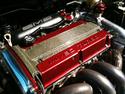
People put 2g heads on 6 bolt blocks all the time. I have, and didnt have to drill anything.
the first gen 4G63 engine block is 'stand alone' it will not support a second gen head, BUT the second gen 4G63 is the precursur of the EVO, with the 7 bolt crank, the second gen block will support the EVO cylinder head, the difference is the oil return holes in the block returning the oil back to the oil pan
If you wanted to build a cheap EVO engine, you would use a second gen block and place an EVO head on it after you drilled the return holes in the block, the first gen block was not casted at the factory to accept the extra drian holes
so what Justin is saying is correct, the trade off will be 2 fold, the inlet ports in the second gen are small and the crankcase will have to be properly ventilated , thus the dry sump oiling, that will help venting the crankcase tremendously
If you wanted to build a cheap EVO engine, you would use a second gen block and place an EVO head on it after you drilled the return holes in the block, the first gen block was not casted at the factory to accept the extra drian holes
so what Justin is saying is correct, the trade off will be 2 fold, the inlet ports in the second gen are small and the crankcase will have to be properly ventilated , thus the dry sump oiling, that will help venting the crankcase tremendously

Newbie
Joined: Jul 2011
Posts: 6
Likes: 0
From: Toledo,Ohio USA
we are not on the same page, you see the three large oil return holes in the front of the EVO9 block? they are casted into the second gen block but not drilled, in the first gen block there is no place to drill the three drains, its not in the casting pattern


this is a first or second gen headgasket placed on an EVO 9 block, it looks and works just the same on the second gen block but the holes aint drilled IN THE BLOCK so what I said was

if you wanted to build a Cheap EVO engine, you can mate the EVO head to the second gen block by drilling the return holes
this is a first or second gen headgasket placed on an EVO 9 block, it looks and works just the same on the second gen block but the holes aint drilled IN THE BLOCK so what I said was
if you wanted to build a Cheap EVO engine, you can mate the EVO head to the second gen block by drilling the return holes
Last edited by bill hincher; Jul 27, 2011 at 01:14 PM.
Newbie
Joined: Jul 2011
Posts: 6
Likes: 0
From: Toledo,Ohio USA
here are some tools I put together to build the dry sump

I built a portable resivour with a flow meter so I could test the OEM oil volume from the pump

once I know what the manufacturere numbers are , then I can work on the improvement

I bought out a speed shop with several sets of pumps in new condition to work with

I built a portable resivour with a flow meter so I could test the OEM oil volume from the pump
once I know what the manufacturere numbers are , then I can work on the improvement
I bought out a speed shop with several sets of pumps in new condition to work with
Last edited by bill hincher; Jul 27, 2011 at 03:26 PM.

That rig looks good bill. I have a few oem oil pumps if you want one to see how much flow they generate. I am interested in seeing your pan we were talking about.
On another note, after I am finished building the headers for that white ls1-is300, I will get back to work on my car again. I need to install the steering rack, then I can push the car back in the shop. I will get started on the engine mounts. My goal is to have the engine mounted, and a new firewall made by the end of august. Then it will be roll cage time
On another note, after I am finished building the headers for that white ls1-is300, I will get back to work on my car again. I need to install the steering rack, then I can push the car back in the shop. I will get started on the engine mounts. My goal is to have the engine mounted, and a new firewall made by the end of august. Then it will be roll cage time
Newbie
Joined: Jul 2011
Posts: 6
Likes: 0
From: Toledo,Ohio USA
I like to use my frame guages to position the engine before the mounts are built

that way I can get a good driveshaft angle and place the offcenter in the engine cradle


Trans adapt saves you a lot of time building engine mounts with thier kits, I get them out of Jegs


that way I can get a good driveshaft angle and place the offcenter in the engine cradle
Trans adapt saves you a lot of time building engine mounts with thier kits, I get them out of Jegs
Last edited by bill hincher; Jul 27, 2011 at 10:45 PM.

I will just take my chances then. Coming from the 2jz world, 90% of those guys use eagle rods, and they work out nicely.
You have to spin the head around for all the oiling and cooling holes to line up. So the cam gears and the crank pulley are together. The dsm head vs the evo head just has the intake and exhaust ports on opposite sides of the head.it is easier to think of it this way, when facing the front of the engine, dsm has the intake on the right side, and the evo has the intake on the left side. The blocks are nearly identical.
You have to spin the head around for all the oiling and cooling holes to line up. So the cam gears and the crank pulley are together. The dsm head vs the evo head just has the intake and exhaust ports on opposite sides of the head.it is easier to think of it this way, when facing the front of the engine, dsm has the intake on the right side, and the evo has the intake on the left side. The blocks are nearly identical.
oooohhh so you spin the head around, leaving the cams in their place? can you simply switch the intake cam with the exhaust cam after spinning the head around and call it a day?

I applaud the build however I don't agree with your reasoning for not using a 1g/2g 4g63 block with the 4g63 head. As many DSM Guys know, "ALL 1g/2g 4g63 blocks do NOT Like to CrankWalk".
There are better solution's to your build and I would suggest a 6bolt 4g63 block or a 4g64 block with 63 head, similar to MA Performance's Rx7/4g63/4g64 build.
Good luck otherwise on your build...
There are better solution's to your build and I would suggest a 6bolt 4g63 block or a 4g64 block with 63 head, similar to MA Performance's Rx7/4g63/4g64 build.
Good luck otherwise on your build...
I applaud the build however I don't agree with your reasoning for not using a 1g/2g 4g63 block with the 4g63 head. As many DSM Guys know, "ALL 1g/2g 4g63 blocks do NOT Like to CrankWalk".
There are better solution's to your build and I would suggest a 6bolt 4g63 block or a 4g64 block with 63 head, similar to MA Performance's Rx7/4g63/4g64 build.
Good luck otherwise on your build...
There are better solution's to your build and I would suggest a 6bolt 4g63 block or a 4g64 block with 63 head, similar to MA Performance's Rx7/4g63/4g64 build.
Good luck otherwise on your build...

the first gen 4G63 engine block is 'stand alone' it will not support a second gen head, BUT the second gen 4G63 is the precursur of the EVO, with the 7 bolt crank, the second gen block will support the EVO cylinder head, the difference is the oil return holes in the block returning the oil back to the oil pan
If you wanted to build a cheap EVO engine, you would use a second gen block and place an EVO head on it after you drilled the return holes in the block, the first gen block was not casted at the factory to accept the extra drian holes
so what Justin is saying is correct, the trade off will be 2 fold, the inlet ports in the second gen are small and the crankcase will have to be properly ventilated , thus the dry sump oiling, that will help venting the crankcase tremendously
If you wanted to build a cheap EVO engine, you would use a second gen block and place an EVO head on it after you drilled the return holes in the block, the first gen block was not casted at the factory to accept the extra drian holes
so what Justin is saying is correct, the trade off will be 2 fold, the inlet ports in the second gen are small and the crankcase will have to be properly ventilated , thus the dry sump oiling, that will help venting the crankcase tremendously
I figured I would post something since I am so excited. Yesterday, bill sent me a tracking number for a test fit bellhousing. This way I can get started making my mounts and manifolds. The next few weeks expect to see a lot of stuff getting done.
The mock up bellhousing came in, this will be replaced by a full one once it gets made. Now it is time to make the engine and transmission mounts. Expect more pics later this week.

