


Rear Diff Options - Power Oversteer Found Here



GEARS ''jon''
what up bud. i bought your TRE rear with HD side cover. not sure if you remember me. ''mergenthaler'' this weekend i blew a driver side rear axle at the drag strip. i got the axle out and had to drop the rear to pop out the rest of it as it was still inside the rear. i noticed the inside of the HD cover is chewed up now. is this a big problem? should i send the rear back to you for a look? also i am wondering what should i do being there was lots of little metal chunks in there and i am sure some got into the fluid. i dont know for a fact but im guessing it most likely happened. how do i flush this thing out or should i just send it back for a look.
what up bud. i bought your TRE rear with HD side cover. not sure if you remember me. ''mergenthaler'' this weekend i blew a driver side rear axle at the drag strip. i got the axle out and had to drop the rear to pop out the rest of it as it was still inside the rear. i noticed the inside of the HD cover is chewed up now. is this a big problem? should i send the rear back to you for a look? also i am wondering what should i do being there was lots of little metal chunks in there and i am sure some got into the fluid. i dont know for a fact but im guessing it most likely happened. how do i flush this thing out or should i just send it back for a look.



GEARS ''jon''
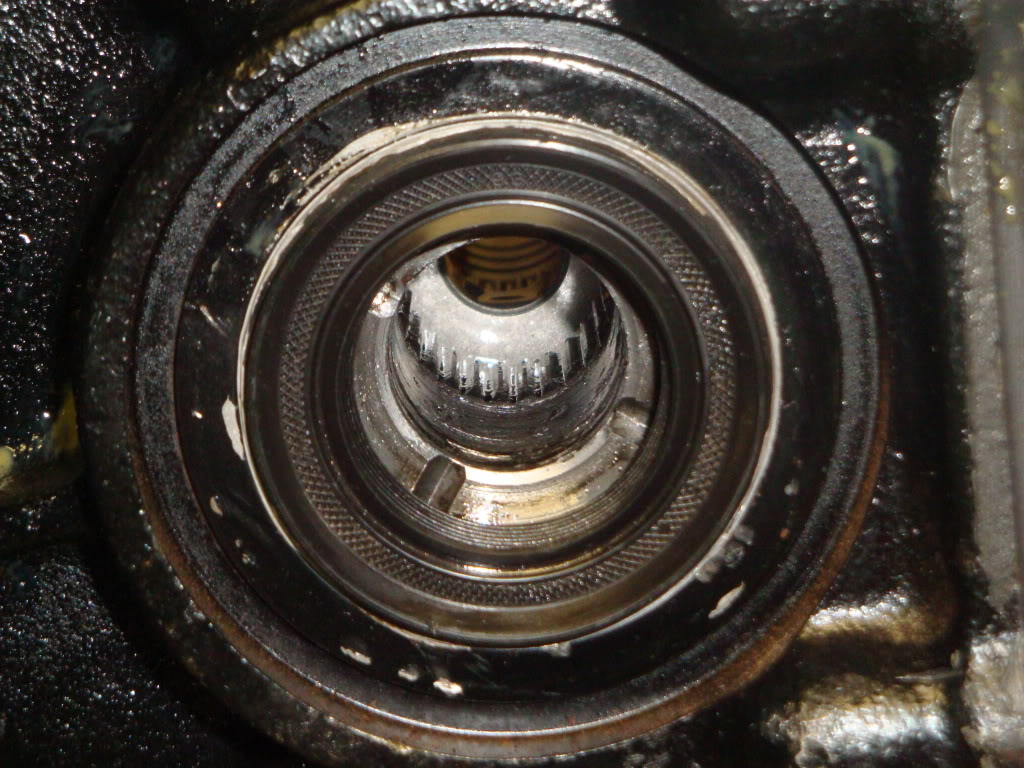
what up bud. i bought your TRE rear with HD side cover. not sure if you remember me. ''mergenthaler'' this weekend i blew a driver side rear axle at the drag strip. i got the axle out and had to drop the rear to pop out the rest of it as it was still inside the rear. i noticed the inside of the HD cover is chewed up now. is this a big problem? should i send the rear back to you for a look? also i am wondering what should i do being there was lots of little metal chunks in there and i am sure some got into the fluid. i dont know for a fact but im guessing it most likely happened. how do i flush this thing out or should i just send it back for a look.
what up bud. i bought your TRE rear with HD side cover. not sure if you remember me. ''mergenthaler'' this weekend i blew a driver side rear axle at the drag strip. i got the axle out and had to drop the rear to pop out the rest of it as it was still inside the rear. i noticed the inside of the HD cover is chewed up now. is this a big problem? should i send the rear back to you for a look? also i am wondering what should i do being there was lots of little metal chunks in there and i am sure some got into the fluid. i dont know for a fact but im guessing it most likely happened. how do i flush this thing out or should i just send it back for a look.

The Max Lock in my car is holding great at 850whp should see what it can do at the track soon after some final tuning/adjustments.
Jon please get hold of me concerning that refund for the rear you got from us.
Jon please get hold of me concerning that refund for the rear you got from us.


Can someone explain to me or point me to a thread that will help me understand the differences between the 12 Plate and the 8 Plate upgrades?
How do I know which one I need?
Why should I take one over another?
What are the pros/cons between them?

How do I know which one I need?
Why should I take one over another?
What are the pros/cons between them?
In terms of what you NEED, unless you're trying to stay in one of the lower scca classes, you might as well go the full max lock.
More plates, more lock up, more oversteer is my understanding.
https://www.evolutionm.net/forums/ev...nstration.html - thread has a video showing TRE's max lock in action.

Here are some pics of the TRE diff in action at the track..... before my engine blew that day.


A little rain action from the co driver that day.

So to compare my setup from the last event to this was night and day. My setup was robispec springs, gruppe-s race flash, tre max lock 1.5 way w/ redline NS fluid on star specs at 41 psi fr 40 psi rears. the car was nuetral for the most part but I would still get too much understeer going into the tight turns like turn 11 and 12 at Thunderhill. I would have to slow down in 3rd and take it easy through the S turn to transition down the back stretch smoothly. I wasnt getting max grip from the front as was evident with having a difficult time properly getting heat in the front tires quickly. Still was fun out there but I wanted to experiment on upgrading my setup for this last event.
I needed better braking for sure so with my power levels in mind I figured the specs on the carbotechs xp8's would be fine. Frustrated with motul I wanted to try another fluid, so Brembo LCF 600 plus sounded promising. Fast forward to last race event the carbotechs and brembo fluid performed flawlessly! No brake fade, extra firm pedal even at 126 mph, and excellent modulation. My calipers have now turned brown-er but the fluid and pads were liked a champ. Stopping was like throwing an anchor behind you all day even when I was forced to ride the brakes a bit due to traffic ahead. But, back to the suspension.
This time out the only upgrades I done were a tanabe front swaybar and a WORKS croxx plate for underneath. I attribute the drastic feeling to the fsb imo, the plate would have a minimal effect compared to the bar.
Going into turns 11 and 12 was the true test of what kind of difference the fsb would make, and oh boy was it better. I was using more grip rom the front tires and was actually able to take those turns on the throttle. Going through those turns I felt like I was on R comps. I also noticed the front tires were actually getting up to temp better and faster. I was able to push the car harder through the turns and found that my acd settings now were making a much more noticeable difference. I didnt get any timed laps to prove my testing due to I never really was able to get a clean lap due to traffic or working on my lines and constincey (sp?). Honestly before on turns 11 and 12 I would really have to slow down and scrub a lot of speed, this time I was able to literally gun through it like I was in a go kart,haha. Too bad now I am tearing apart my engine to find the cause of my track meltdown.
A little rain action from the co driver that day.
So to compare my setup from the last event to this was night and day. My setup was robispec springs, gruppe-s race flash, tre max lock 1.5 way w/ redline NS fluid on star specs at 41 psi fr 40 psi rears. the car was nuetral for the most part but I would still get too much understeer going into the tight turns like turn 11 and 12 at Thunderhill. I would have to slow down in 3rd and take it easy through the S turn to transition down the back stretch smoothly. I wasnt getting max grip from the front as was evident with having a difficult time properly getting heat in the front tires quickly. Still was fun out there but I wanted to experiment on upgrading my setup for this last event.
I needed better braking for sure so with my power levels in mind I figured the specs on the carbotechs xp8's would be fine. Frustrated with motul I wanted to try another fluid, so Brembo LCF 600 plus sounded promising. Fast forward to last race event the carbotechs and brembo fluid performed flawlessly! No brake fade, extra firm pedal even at 126 mph, and excellent modulation. My calipers have now turned brown-er but the fluid and pads were liked a champ. Stopping was like throwing an anchor behind you all day even when I was forced to ride the brakes a bit due to traffic ahead. But, back to the suspension.
This time out the only upgrades I done were a tanabe front swaybar and a WORKS croxx plate for underneath. I attribute the drastic feeling to the fsb imo, the plate would have a minimal effect compared to the bar.
Going into turns 11 and 12 was the true test of what kind of difference the fsb would make, and oh boy was it better. I was using more grip rom the front tires and was actually able to take those turns on the throttle. Going through those turns I felt like I was on R comps. I also noticed the front tires were actually getting up to temp better and faster. I was able to push the car harder through the turns and found that my acd settings now were making a much more noticeable difference. I didnt get any timed laps to prove my testing due to I never really was able to get a clean lap due to traffic or working on my lines and constincey (sp?). Honestly before on turns 11 and 12 I would really have to slow down and scrub a lot of speed, this time I was able to literally gun through it like I was in a go kart,haha. Too bad now I am tearing apart my engine to find the cause of my track meltdown.
- thanks for that input -
definitely worth noting that the rear diff mod should not have much impact on turn in (except maybe for the worse depending on set up), and same even goes for the ACD reflash. Actually improving turn-in was the next "project" i was looking into for the car, as well as chassis stiffening.
From what I've looked into so far, aside from more common suspension mods like coilovers sway bars, etc., one of the best ways to improve turn in is to add caster. basically the more caster the better, via either an ALK or PSRS, or camber plates turned sideways. But again rear diff mod and ACD reflash in our setups aren't really designed to improve corner entrance - mainly corner exit
definitely worth noting that the rear diff mod should not have much impact on turn in (except maybe for the worse depending on set up), and same even goes for the ACD reflash. Actually improving turn-in was the next "project" i was looking into for the car, as well as chassis stiffening.
From what I've looked into so far, aside from more common suspension mods like coilovers sway bars, etc., one of the best ways to improve turn in is to add caster. basically the more caster the better, via either an ALK or PSRS, or camber plates turned sideways. But again rear diff mod and ACD reflash in our setups aren't really designed to improve corner entrance - mainly corner exit

It's cool the TRE, Cusco, etc. offer this service for our rear diffs. However, does anyone have information on where to get the parts for the 12 plate max-lock rear diff, if someone wanted to perform a diy?
prob need to talk to jon@tre if you wanted to do that and he could tell u about parts or w/e
So, I just got off the phone with Jon @ TRE. 
He has A LOT of information (way more than I ever needed to know about his services and what the differences are between them) and will share all of his info if you bend an ear.
You should consider the side cover upgrade if you're running very high power applications or if you have a twin disc (or greater) clutch and plan to seriously beat on your drive train. (i.e. launching)
You may want to think about the sight glass upgrade if you want to run more fluid in your rear diff. The amount of fluid Mitsubishi recommends is lower than what is ideal, due to emissions and federal MPG regulations. (More fluid creates drag, which means you have to burn more fuel to compensate) Running the sight glass upgrade from TRE will allow you to see and fill more fluid in the rear diff which will provide more lubrication.
Since I didn't see this anywhere, I wanted to post in here the differences between the 1, 1.5 and 2 way rear diff since I had no idea what that meant:

He has A LOT of information (way more than I ever needed to know about his services and what the differences are between them) and will share all of his info if you bend an ear.
You should consider the side cover upgrade if you're running very high power applications or if you have a twin disc (or greater) clutch and plan to seriously beat on your drive train. (i.e. launching)
You may want to think about the sight glass upgrade if you want to run more fluid in your rear diff. The amount of fluid Mitsubishi recommends is lower than what is ideal, due to emissions and federal MPG regulations. (More fluid creates drag, which means you have to burn more fuel to compensate) Running the sight glass upgrade from TRE will allow you to see and fill more fluid in the rear diff which will provide more lubrication.
Since I didn't see this anywhere, I wanted to post in here the differences between the 1, 1.5 and 2 way rear diff since I had no idea what that meant:
General LSDs respond to driveshaft torque, so that the more driveshaft input torque present, the harder the clutches or cones or gears are pressed together, and thus the more closely the drive wheels are coupled to each other. Some include spring-loading to provide some small torque so that with no / little input torque (trailing throttle/gearbox in neutral/main clutch depressed) the drive wheels are minimally coupled. The amount of preload (hence static coupling) on the clutches or cones are affected by the general condition (wear) and by how tightly they are loaded.
Broadly speaking, there are three input torque states: load, no load, and over run. During load conditions, as previously stated, the coupling is proportional to the input torque. With no load, the coupling is reduced to the static coupling. The behaviour on over run (particularly sudden throttle release) determines whether the LSD is 1 way, 1.5 way, or 2 way.
If there is no additional coupling on over run, the LSD is 1 way. This is a safer LSD: as soon as the driver lifts the throttle, the LSD unlocks and behaves somewhat like a conventional open differential. This is also the best for FWD cars, as it allows the car to turn in on throttle release, instead of plowing forward.
If the LSD increases coupling in the same way regardless of whether the input torque is forward or reverse, it is a 2 way differential. Some drifters prefer this type as the LSD behaves the same regardless of their erratic throttle input, and lets them keep the wheels spinning all the way through a corner. An inexperienced driver can easily spin the car when using a 2 way LSD if they lift the throttle suddenly, expecting the car to settle like a conventional open differential.
If the LSD behaves somewhere in between these two extremes, it is a 1.5 way differential, which is a compromise between sportiness and safety.
Broadly speaking, there are three input torque states: load, no load, and over run. During load conditions, as previously stated, the coupling is proportional to the input torque. With no load, the coupling is reduced to the static coupling. The behaviour on over run (particularly sudden throttle release) determines whether the LSD is 1 way, 1.5 way, or 2 way.
If there is no additional coupling on over run, the LSD is 1 way. This is a safer LSD: as soon as the driver lifts the throttle, the LSD unlocks and behaves somewhat like a conventional open differential. This is also the best for FWD cars, as it allows the car to turn in on throttle release, instead of plowing forward.
If the LSD increases coupling in the same way regardless of whether the input torque is forward or reverse, it is a 2 way differential. Some drifters prefer this type as the LSD behaves the same regardless of their erratic throttle input, and lets them keep the wheels spinning all the way through a corner. An inexperienced driver can easily spin the car when using a 2 way LSD if they lift the throttle suddenly, expecting the car to settle like a conventional open differential.
If the LSD behaves somewhere in between these two extremes, it is a 1.5 way differential, which is a compromise between sportiness and safety.
Last edited by golgo13; Jun 1, 2011 at 01:24 PM.
