When you click on links to various merchants on this site and make a purchase, this can result in this site earning a commission. Affiliate programs and affiliations include, but are not limited to, the eBay Partner Network.
I'd still put it in the trunk. Get all the weight off the nose that you can in my opinion. Even the thick cable I run from back to front is 95% aft of the front axel and along the passenger side as opposed to being on the driver side where the OE battery is located. I dont think there is such thing as removing too much weight from the front on these platforms. Take all you can get.
I dont follow this logic unless the car in question has horrible factory grounds. But for any unibody steel car, what's the point?
To each their own. Weight is weight. Doesn't matter where it is, you still have to drag it around with you regardless of where it is. Uneven weight distribution is something you account for when you setup the suspension of a car.
Good weight distribution is nice but if it was super critical you wouldn't see FWD cars with 65/35 weight splits holding most of the door slammer lap records at North American tracks.
To each their own. Weight is weight. Doesn't matter where it is, you still have to drag it around with you regardless of where it is. Uneven weight distribution is something you account for when you setup the suspension of a car.
Good weight distribution is nice but if it was super critical you wouldn't see FWD cars with 65/35 weight splits holding most of the door slammer lap records at North American tracks.
FWD weight distribution is a balance of forward vs turning traction. That's not even comparable to our situation.
That makes sense but I haven't heard any of the FWD guys complaining about straight line traction issues.
In autox where there's a massive demand on the front wheels to put down lots of power while also having to handle lots of back to back continuous transitions it is a hinderance but FWD isn't as much of a handicap on track.
To each their own. Weight is weight. Doesn't matter where it is, you still have to drag it around with you regardless of where it is. Uneven weight distribution is something you account for when you setup the suspension of a car.
Good weight distribution is nice but if it was super critical you wouldn't see FWD cars with 65/35 weight splits holding most of the door slammer lap records at North American tracks.
Say what? Weight fraction over drive wheels is a major factor to making a car go fast. I'll leave it to you to figure out why FWD, RWD, and AWD have different optimum weight distribution targets.
Audi R8s and nearly every AWD Lambo made in the past 10 years have a 40/60 weight distribution, even their GT3 counterpart racecars show similar distributions. I don't know about you guys, but I don't foresee myself running sub 2:03 at Road America because that's where GT3 class Lambos sit...
Audi R8s and nearly every AWD Lambo made in the past 10 years have a 40/60 weight distribution, even their GT3 counterpart racecars show similar distributions. I don't know about you guys, but I don't foresee myself running sub 2:03 at Road America because that's where GT3 class Lambos sit...
You seemed to have missed the point. Having 100% of the weight over drive wheels in an AWD car means the optimum f/r weight distribution is closer to 50/50 (or even more rear biased) to improve lateral grip because there is minimal longitudinal grip sensitivity to f/r weight distribution. There are significant lap time reductions possible by 'correcting' the crappy f/r weight distribution of an evo.
If you want a more specific case that relates better to us, look at the V2 Tilton evo. They removed almost 300lbs from the rear of the car. When Garth Walden (the driver) was interviewed after the car was built, one of the first things he said is how much easier the car was to drive because they had removed so much weight from it. There's literally nothing for weight in the rear of the car. This is the fastest evo in Australia, possibly even the world. I'm going to look at what they're doing because they're setting records.
I think total gross downforce and aero balance negates a lot of what we're describing. And that car is at the pointy end of unlimited aero packages. But even still there is no doubt they have done everything they can to remove weight from the nose. Probably also moved the drivetrain as far back as possible if I had to guess.
I found it interesting the extent the later CT9A WRC teams went to move bias back...
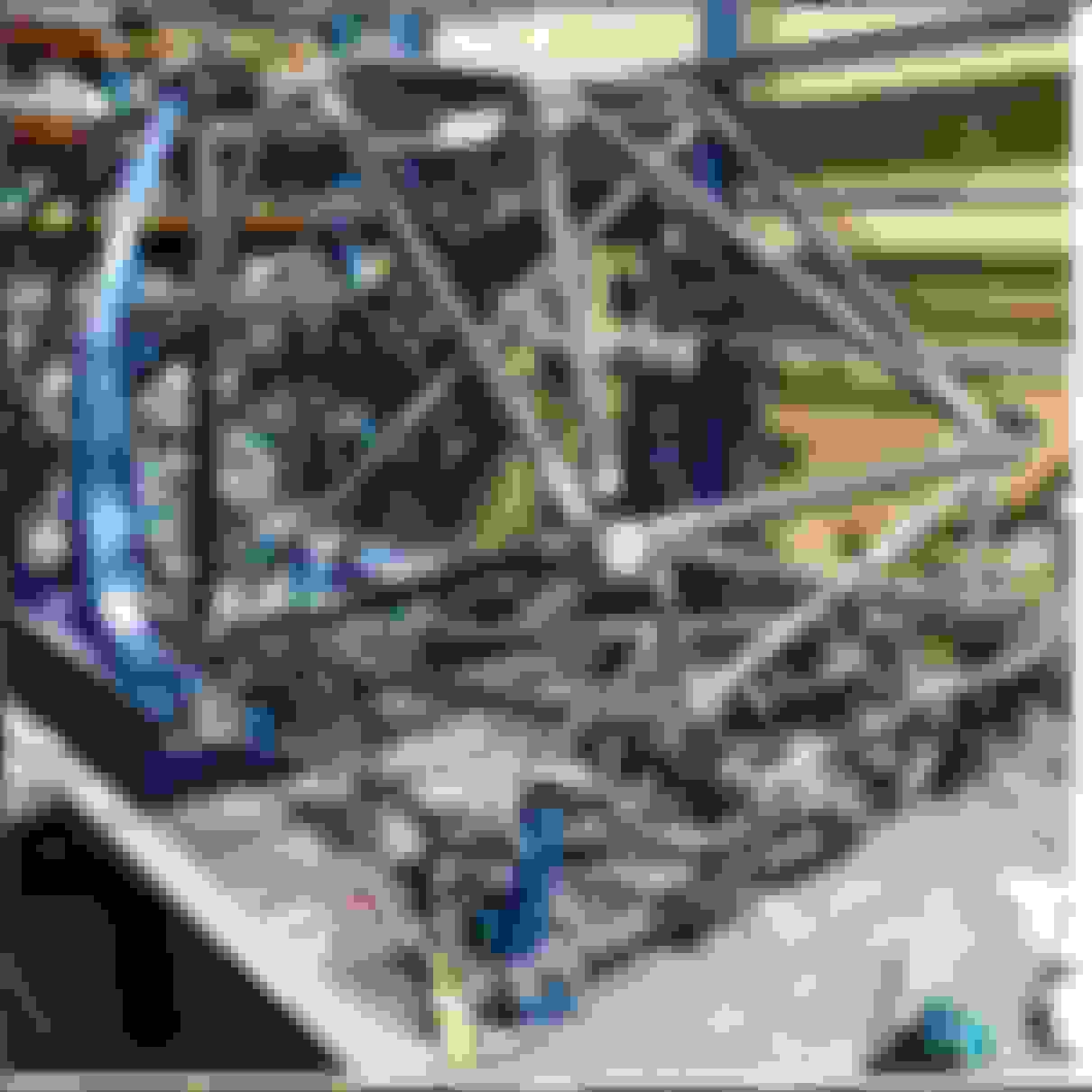
I've been searching for a good photo of this engine orientation but have only ever seen it on some youtube videos. So this is a screen shot, sorry for the crap quality.
I think total gross downforce and aero balance negates a lot of what we're describing. And that car is at the pointy end of unlimited aero packages. But even still there is no doubt they have done everything they can to remove weight from the nose. Probably also moved the drivetrain as far back as possible if I had to guess.
Yes the aero certainly is far beyond most but making more rear downforce is easy in most scenarios.
As far as moving weight around, the Tilton car doesn't have much moved to the rear, mostly just the fuel cell and alternator. The entire cooling package is still up front, the turbo kit still hangs far off the front of the engine, and they still run factory iron block. This car was put together last year and has already set lap times faster than some open wheel cars.
I found it interesting the extent the later CT9A WRC teams went to move bias back...
I've been searching for a good photo of this engine orientation but have only ever seen it on some youtube videos. So this is a screen shot, sorry for the crap quality.
this is a really cool shot.. and there are many reasons for running it like that.. First, exhaust routing is better, doesnt split the wet sump into two, so can run central oil pickup (less issues with oiling), more space for the radiators (rally cars tend to run radiators in the V formation), better weight distribution...
It's worse, the current trend is to run 2 massive wires. Adding in a ground straight to the block. Chassis ground isn't very reliable, especially with modern assemblies and ever increasing electrical load. I don't know if that's necessary for an evo, but I would probably do it if I was relocating.
I converted a couple of evo 8's and 9' to rear battery, using single cable and grounding trough the chassis, and never had any issues..
X block is nice, but I have seen issues with corrosion and weird loss of contact on a friends X.... we were chasing our tails untill I checked the distribution block..