When you click on links to various merchants on this site and make a purchase, this can result in this site earning a commission. Affiliate programs and affiliations include, but are not limited to, the eBay Partner Network.
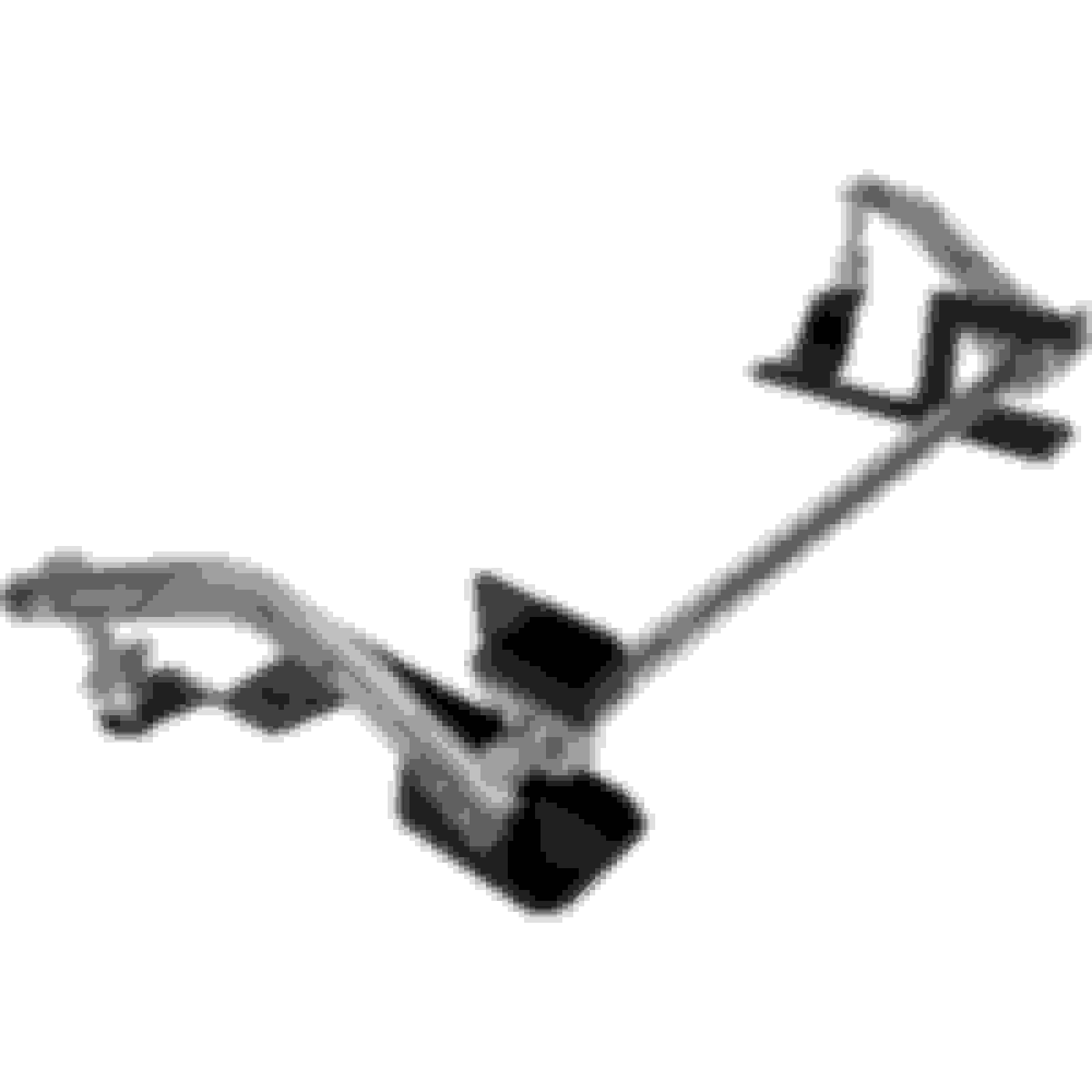
While on the topic, for anyone interested, I'll be finishing my design soon for a splined rear swaybar. Mounts up to factory subframe points, uses either solid brass or delrin bushings for no force lost to motion. Arms will have 5-8 length positions and there will be 2-3 different wall thicknesses for the bar. Will be able to be considerably stiffer than all the current off the shelf options. Will probably be looking for 2-3 testers for it.
Generic picture of what I'm talking about for those not familiar with splined bars.
Somebody suggested that front LCA ball joints also fit rear upper arms.
And that extended ball joints will "accelerate" camber curve in the rear.
So I wonder if indeed front LCA ball joints fit rear upper arms? And what influence on rear suspension dynamics, and overall chassis dynamics, would extended rear upper arm ball joints have?
I figured more than just myself would be curious, so posting.
Somebody suggested that front LCA ball joints also fit rear upper arms.
And that extended ball joints will "accelerate" camber curve in the rear.
So I wonder if indeed front LCA ball joints fit rear upper arms? And what influence on rear suspension dynamics, and overall chassis dynamics, would extended rear upper arm ball joints have?
I figured more than just myself would be curious, so posting.
Cheers
While yes that does move the upper arm deeper in to camber gain, its essentially the opposite of what you want. Camber gain is good, but camber gain rate is bad and causes snappy handling.
While on the topic, for anyone interested, I'll be finishing my design soon for a splined rear swaybar. Mounts up to factory subframe points, uses either solid brass or delrin bushings for no force lost to motion. Arms will have 5-8 length positions and there will be 2-3 different wall thicknesses for the bar. Will be able to be considerably stiffer than all the current off the shelf options. Will probably be looking for 2-3 testers for it.
Certainly not a super common design but have been around since the dawn of time in stock car racing. There's a couple companies who make similar kits for vettes, S2000, FRZ, and a couple other chassis I think.
The nice thing about these style bars is the wide range of adjustment. Between the different bar wall thicknesses (or solid if you want mega stiff) and a variety of attachment points you can really dial in the bar rate to be exactly where you want it. Being able to mount it solid to the chassis means smooth and predictable bar translation and none of the force gets absorbed in flexing bushings.
interesting. what's the benefit? massive adjustability i assume?
edit: you already answered before i posted
IMO, the best benefit is in the bar mounting. Can use bearings for low friction and low deflection. The bar rates and selection we have now OTS are good and they're cheap. But bushings as standard installed bind up the bar quite a bit. I have to put washers under the clamps to space them up and reduce it but that also creates slop that has to be overcome before a bar can develop a torque.
I would leave my front bar as is even if there was an option but would certainly consider the rear just for the above reason.
IMO, the best benefit is in the bar mounting. Can use bearings for low friction and low deflection. The bar rates and selection we have now OTS are good and they're cheap. But bushings as standard installed bind up the bar quite a bit. I have to put washers under the clamps to space them up and reduce it but that also creates slop that has to be overcome before a bar can develop a torque.
I would leave my front bar as is even if there was an option but would certainly consider the rear just for the above reason.
I was in between ball bearings and something solid that self lubricates likes brass or acetal. My concern with ball bearings is replacing them would be a huge pain for the end user and they'd have to be sealed units which would drive cost up a good bit. Also, getting a bearing that fits just right on the bar would be slim chances.
I have an idea for mounting the front bar pretty solid too but I'm not sure how tightly the tolerances will have to be held for what I have in mind. Either way, my primary focus is to get the rear bar done first.
I do have an idea of how to use regular bars and create a bearing mount but I don't think they would have enough consistency in the bars to make something in a production sense. I would have to make my idea specific to each bar measured. I may make my own though, I want the bars mounted in a spherical bearing at each chassis point. With the speedway style bar you can be pretty much guaranteed its consistent.
FYI, almost every mitsu warehouse in the US has evo 9 shortblocks still. Called 6 different random dealers. Getting them from Japan is ~ 2-3 months. They also mention evo 8 shortblocks are in stock in some states. Both the Evo 9 and X longblocks are officially out of production but several guys have them. So, it would seem, STM and some others can't stay on the phone long enough and simply don't want to bother. Same goes for bare blocks.
9 retails for 3400, but you can get them for 2850 your cost + 250 to ship anywhere in the US without a liftgate to a comm address. 350 otherwise.
Helps if you spend another few minutes on the phone and don't take someone's word for it that they "nobody has them" *rolls eyes*
The stiction always annoyed me. I used some tefllon tape, no not the plumbing kind but a sheet I grabbed from McMaster Carr that is sticky on one side. That helped a good bit but it still has some stiction to it so I ended up making some thin shims to space it out some more. It doesnt have slop at this point but still has some stiction. Interested to see what you come up with!
Yea a few months back I designed brackets to use a solid mount with OTS bars but my concern was the same, thickness variations in aftermarket bars. For the front I think I'd make them to only work with the stock bar since that seems what most guys are running and I'm sure the tolerances are much tighter than an aftermarket bar.
I don't see any way to mount an OTS bar in sphericals. Mainly because the bars are bent so even the slightest variation in cross section would keep the bearing from getting slid over far enough to the mounting point. Unless you used an oversized bearing and then fit some sort of radial shim in between the bearing and the bar but that sounds overly complicated just to use an OTS bar.
For mounting with a sphericals I'd still be concerned with fit. Right now I'm planning on the rear bar being 1.25" but my concern is the tolerance on the ID is still a bit under .002". The fit on the bar would be what I consider a class 4 fit (https://www.engineersedge.com/class_iv.htm) and it would be teetering right on the edge of that. Might be worth exploring but until I have parts in hand I'd be hesistant. Also the 1.25" ID sphericals are pricey so I'd need to find a good source for them.
Hmm, I could go down to a 1" bar as that'd make the sphericals more economical but is a 1" bar big enough?
Last edited by Ayoustin; Dec 22, 2020 at 10:11 AM.
The stiction always annoyed me. I used some tefllon tape, no not the plumbing kind but a sheet I grabbed from McMaster Carr that is sticky on one side. That helped a good bit but it still has some stiction to it so I ended up making some thin shims to space it out some more. It doesnt have slop at this point but still has some stiction. Interested to see what you come up with!
i used that same tape, but the bushing was so tight it somehow undid the tape and worked its way off.
i just use bushing grease though, the stiction doesn't bother me that much. once it's moving it's moving and i think the forces the car sees are greater than me trying to wiggle it around by pulling on the arm
I find the grease to dry up pretty quickly. It also attracts dirt and grit which makes it even worse. What I was after was a more linear feeling. It seemed like prior the car would have a sorta delay to take a set. But it was almost inconsistent as if the stiction was causing it to delay prior. After the tape it seemed to no longer do that. Not sure how much is placebo but its easy and cheap enough to try.
i used that same tape, but the bushing was so tight it somehow undid the tape and worked its way off.
i just use bushing grease though, the stiction doesn't bother me that much. once it's moving it's moving and i think the forces the car sees are greater than me trying to wiggle it around by pulling on the arm
It's all about make the system more predictable. It's the same reason we use sphericals for suspension joints. If you have poly or rubber joints, depending on the angle that the joint is torqued at will change the spring force on the bushing at a given ride height. If you remove one degree of freedom (rotation) then that no longer becomes a concern. It's for this same reason that when you move to sphericals you should also increase your spring rates, because you no longer have a bushing spring rate to contribute to your overall wheel spring rate.
By removing stiction from a bar you're able to better predict what the bar is actually doing and how much it's contributing.
Also, if anyone has ever looked at calculating spring rate of a swaybar it's not simple stuff for OE bars. The complex bends that they use alters the rate and makes calculating that much harder. By using a straight bar it's super easy to know what rate you're actually running on the bar.