


Focus RS


http://jalopnik.com/heres-how-the-20...tur-1736102956
The new Ford Focus RS Comes with a Stall Recovery feature that will help you look like less of a jackass after you cut the engine out with the clutch pedal, but it won’t stop you from stalling. Here’s how it works.
We’ve all been there; hooning our sweet five-speed Civics and impressing the ladies and/or gents with our sweet lunch tray-assisted donuts, only to forget to depress the clutch when the car comes to a stop. We stall. Aforementioned girls and/or boys laugh. Friends and/or enemies and/or people who aren’t really friends, they’re just like, you know, “there,” make fun of us.
It’s bad news.
So Ford is here to save the day. They’ve fitted their new 2016 Focus RS with a feature called Stall Recovery. Note that although the system was originally characterized as self-actuating—which Ford has since corrected—the feature is not “stall prevention,” in the strictest sense of the word.
Instead, think of it as stall redemption. Meaning you’ve already goofed up and embarrassed yourself.
The good news is that the huge line of cars behind you doesn’t have to wait an eternity while you fumble with your keys to start the thing back up. Ford’s not the first to do this—Porsche and Mini have similar systems—but it’s still a useful feature that seems to be increasingly widespread. Let’s walk through how it works.
Today’s Engine Stop-Start Technology
The system uses Engine Stop-Start, a technology that utilizes an oversized starter motor to let your engine take a breather at stop lights and stop signs.
The way the system works on most of today’s Fords is thus:
You get to a stop sign, depress the clutch and hit the brakes until you come to a halt.
You take the shifter and toss it into neutral
You let off the clutch. The engine stops.
The light turns green. You depress the clutch. The engine fires up.
You shift into gear and get moving.
With Ford’s Stall Recovery Feature
Ford’s Stall Recovery feature uses all the same hardware found in the standard run-of-the-mill Stop-Start system described above, but adds a few lines of code.
These lines of code allow you to stay in gear and simply depress the clutch after stalling. The overweight starter motor then cranks your engine over, and you can get on your way.
If you stalled a vehicle with Stop-Start that did not have Stall Recovery (like the one mentioned in the last section) and you didn’t want to start the car with the push-button, you’d have to put the car in neutral, then depress the clutch, at which point the engine would fire by itself and you could go back into gear and be on your merry way.
So basically, Ford’s feature saves you a couple steps, and maybe spares you from a few choice words from the drivers in traffic behind you.
Since the Focus RS is all-wheel drive and has some decently wide tires, stalling is probably something that will happen at least a few times as drivers get to know their vehicles, so we can see how this feature might be useful.
Now we just need to see it featured on the Ariel Atom.
The new Ford Focus RS Comes with a Stall Recovery feature that will help you look like less of a jackass after you cut the engine out with the clutch pedal, but it won’t stop you from stalling. Here’s how it works.
We’ve all been there; hooning our sweet five-speed Civics and impressing the ladies and/or gents with our sweet lunch tray-assisted donuts, only to forget to depress the clutch when the car comes to a stop. We stall. Aforementioned girls and/or boys laugh. Friends and/or enemies and/or people who aren’t really friends, they’re just like, you know, “there,” make fun of us.
It’s bad news.
So Ford is here to save the day. They’ve fitted their new 2016 Focus RS with a feature called Stall Recovery. Note that although the system was originally characterized as self-actuating—which Ford has since corrected—the feature is not “stall prevention,” in the strictest sense of the word.
Instead, think of it as stall redemption. Meaning you’ve already goofed up and embarrassed yourself.
The good news is that the huge line of cars behind you doesn’t have to wait an eternity while you fumble with your keys to start the thing back up. Ford’s not the first to do this—Porsche and Mini have similar systems—but it’s still a useful feature that seems to be increasingly widespread. Let’s walk through how it works.
Today’s Engine Stop-Start Technology
The system uses Engine Stop-Start, a technology that utilizes an oversized starter motor to let your engine take a breather at stop lights and stop signs.
The way the system works on most of today’s Fords is thus:
You get to a stop sign, depress the clutch and hit the brakes until you come to a halt.
You take the shifter and toss it into neutral
You let off the clutch. The engine stops.
The light turns green. You depress the clutch. The engine fires up.
You shift into gear and get moving.
With Ford’s Stall Recovery Feature
Ford’s Stall Recovery feature uses all the same hardware found in the standard run-of-the-mill Stop-Start system described above, but adds a few lines of code.
These lines of code allow you to stay in gear and simply depress the clutch after stalling. The overweight starter motor then cranks your engine over, and you can get on your way.
If you stalled a vehicle with Stop-Start that did not have Stall Recovery (like the one mentioned in the last section) and you didn’t want to start the car with the push-button, you’d have to put the car in neutral, then depress the clutch, at which point the engine would fire by itself and you could go back into gear and be on your merry way.
So basically, Ford’s feature saves you a couple steps, and maybe spares you from a few choice words from the drivers in traffic behind you.
Since the Focus RS is all-wheel drive and has some decently wide tires, stalling is probably something that will happen at least a few times as drivers get to know their vehicles, so we can see how this feature might be useful.
Now we just need to see it featured on the Ariel Atom.
so when you come off the track make sure you dont forget to turn of the Enigne stop -start feature.
You might will cook your Turbo.

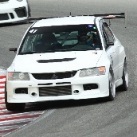


Its kinda sad this poor thing looks less and less appealing to the purist buyer...
- Well maybe a RS2 or RS Superleggera or RS(L) will be a little more raw and lends itself to actual motorsports use.
- Its sad that people cant even drive a stick anymore a stall is a stall why take the learning curve away and make it flat so you think your actually better than what you think you are... from an instructors POV that's dangerous as 'F
- Well maybe a RS2 or RS Superleggera or RS(L) will be a little more raw and lends itself to actual motorsports use.
- Its sad that people cant even drive a stick anymore a stall is a stall why take the learning curve away and make it flat so you think your actually better than what you think you are... from an instructors POV that's dangerous as 'F



Its kinda sad this poor thing looks less and less appealing to the purist buyer...
- Well maybe a RS2 or RS Superleggera or RS(L) will be a little more raw and lends itself to actual motorsports use.
- Its sad that people cant even drive a stick anymore a stall is a stall why take the learning curve away and make it flat so you think your actually better than what you think you are... from an instructors POV that's dangerous as 'F
- Well maybe a RS2 or RS Superleggera or RS(L) will be a little more raw and lends itself to actual motorsports use.
- Its sad that people cant even drive a stick anymore a stall is a stall why take the learning curve away and make it flat so you think your actually better than what you think you are... from an instructors POV that's dangerous as 'F


Lets face it, a 4.7 second 0-60 is not that fast.
And slower than a stock 9. http://www.zeroto60times.com/vehicle...-60-mph-times/


You're expecting a lot from a car that has a price point along with several other performance metrics to be met, as well as modern safety standards. Like it or not, you're not going to find evo 9 performance at evo 9 pricing anymore. Cars have to pass much more stringent safety testing, so they are going to be heavier unless more "exotic" materials get used which will drive up price. You're comparing two cars from two very different era's for the automotive industry, and it's not a realistic comparison.
If you compare the RS to its modern competition, it's shaping up like there won't be any competition. It has more power, and a better haldex system with rear torque vectoring over the Golf R. And, IMO, the STI is completely out of the question until the EJ is gone...
If you compare the RS to its modern competition, it's shaping up like there won't be any competition. It has more power, and a better haldex system with rear torque vectoring over the Golf R. And, IMO, the STI is completely out of the question until the EJ is gone...
I do expect a lot from modern sports cars. If you cannot make a sports car perform better than cars from 10+ years ago, then you do not get my money. Cars can be made lighter now a days. The Golf R packs quite a bit of performance, safety, and amenities into its 3283lb. curb weight.